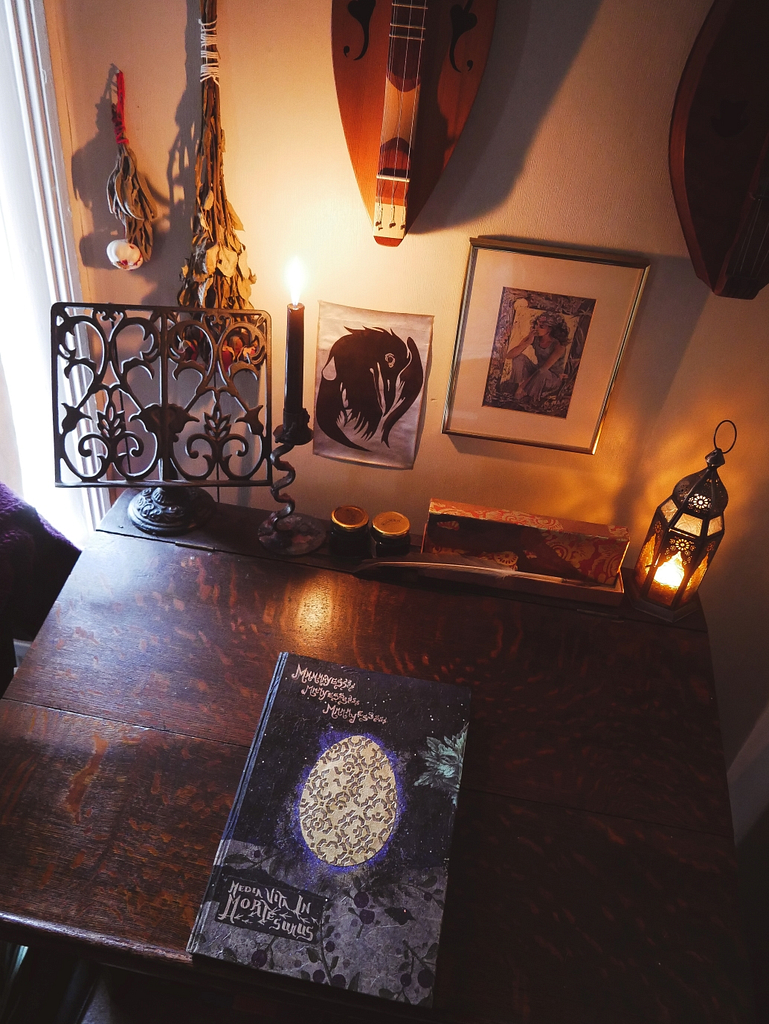
What if Madame Nostradamus, our “witty little knitter”, wanted her OWN scarf? Things are gonna get properly nerdy with this one. Strap in – I have no chill!
Note ~ my knit gauge was a little tighter than called for in the double knit weight, so I used the inches chart. I preferred the slightly denser look so I didn’t bother adjusting my gauge too much.
Paintings featured (anti-clockwise):
The Arnolfini Wedding by Jan van Eyck, 1434
Portrait of Christina of Denmark by Hans Holbein the Younger, 1538
Portrait of a Young Woman/Isabella of Spain and Denmark by Jan Gossaert, 16th c.
Portrait of a Lady by Rogier van der Weyden, c. 1460
Cornelis Aerentsz van der Dussen by Jan van Scorel, c. 1535
The Wedding Dance by Pieter Bruegel the Elder, 1566
A Young Princess (Possibly Dorothea of Denmark) by Jan Gossaert, 1530
Music featured:
Je suis d’Allemagne – Je suis trop jeunette by Ensemble Unicorn (Album ~ “Art & Music: Raphel – Music of his Time”)
Comment qu’a moy lonteinne by Falsobordone (Album ~ “1350 Music for a Plague”)
The issue of lacking social terminology to define my own sexual identity and preferences for expression is pretty perennial for me. For some context, I grew up in a town known (at least in that general set of townships) for being a *relatively* inclusive place… we were one of the early towns in our part of the state to have a rainbow painted crosswalk etc. However, the language of most parents and highschoolers I encountered was not only highly heteronormative but also rather homophobic and … honestly well ignorant of anything resembling fluiditiy of identity, expression, or lived experience. I and my friends spent a lot of time watching and attending Rocky Horror but didn’t have access to too much else… and most understandings of sexual expression were contextualised along lines of ‘promiscuity’ rather than a more sex-positive outlook.
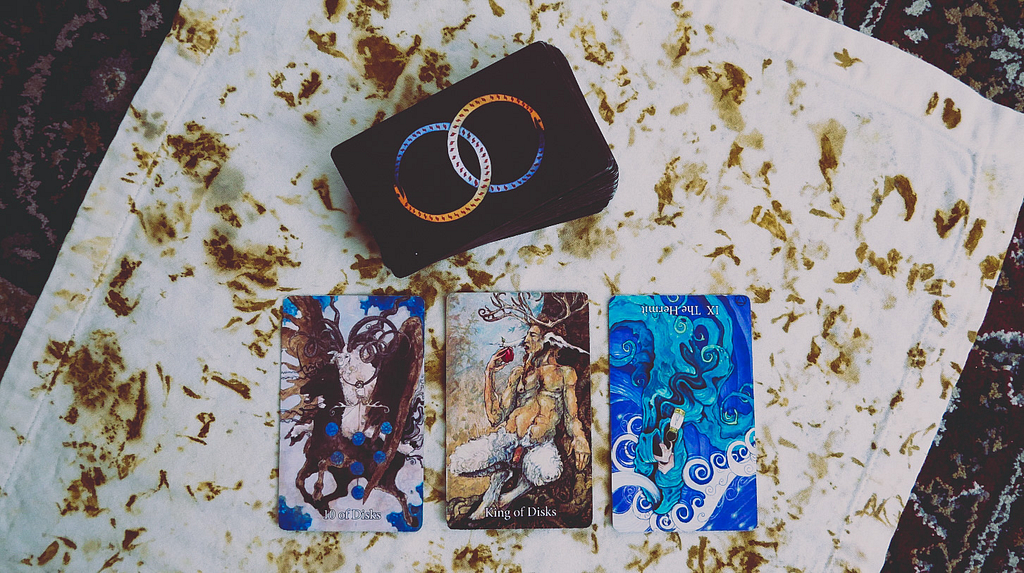
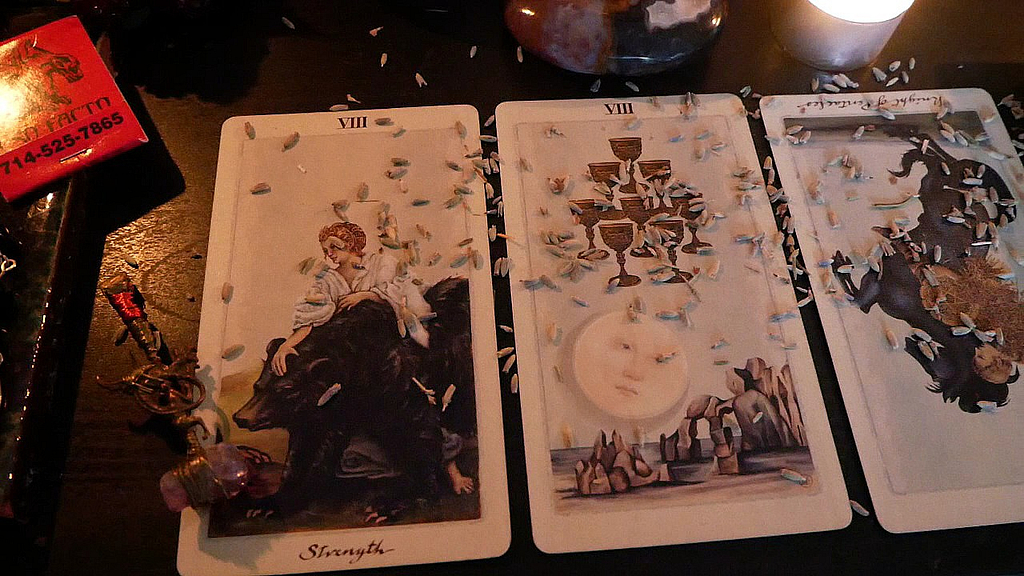
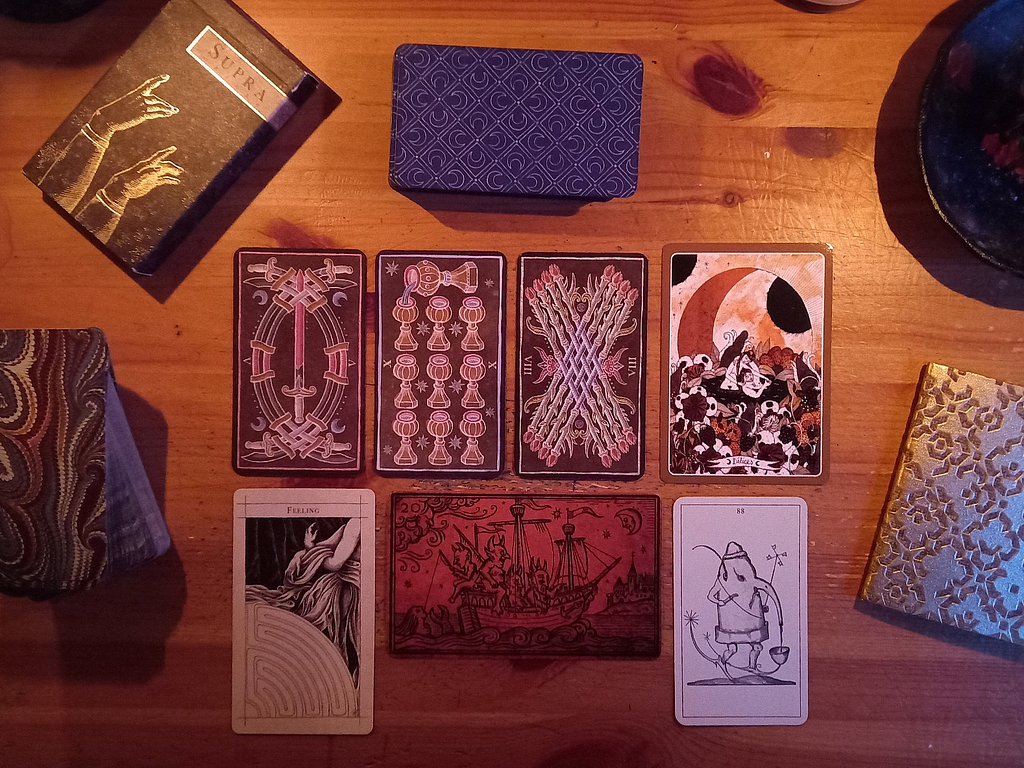
This was this morning’s tarot reading… It’s what inspired me to write this post.
My college – at least at that time – was fairly unusual in that there were no bathrooms segregated by gender identity. All dorms, bathrooms, and shower areas were gender neutral. Asking for pronouns was considered a totally run of the mill polite thing to do. People had classes to go to and life to explore and nobody gave a shit whether you were prone to monogamy or followed any specific paradigm of any kind at all. Coming back to my home town/area for work after college was a massive culture shock.
Years later, I remember having a conversation with my BIL over pints about how the secondary school one of his kids was attending was talking to the parents about possibly introducing gender neutral bathrooms and (at the time) he was really against it for a man who seemed only to have unanswered questions. A lot of ‘what if’s’… to which I was able to say, ‘Well, I can tell you from personal experience [insert anecdotal answer here]… and that was 10 years ago.”
The same night (over more pints) the discussion around consent came up. It was a topic newly in circulation at the time (the #metoo movement had arrived in the awareness of the slightly older generation in Ireland by then) and I heard the usual stock answers of ‘Isn’t it a huge turn off to just ask someone if you can kiss them?”
Jesus CHRIST on a split banana, I had things to say.
So here’s my perspective on the benefits of promoting diversified vocabulary along with some musings on my own identity.
Personal preference is like a favourite colour. We don’t have bathrooms only for those who pick green. We don’t care if someone used to be purple but now they’re silver. We don’t have to have full blown personal crises if ‘suddenly’ we don’t get to assume everyone loves blue. You can ask or be interested in the world… and you will find that some people *do* love blue. Just blue. Nothing but blue. Other people don’t care about blue but they’ve noticed they like blue things… blueberries (with a purple tinge), the sky in late summer, the dark slate blue of the glistening sea. Other people will verge more toward periwinkle. Other people will swear that they don’t mind blue but they’d NEVER wear it… and still other people will be somewhere else in the colour wheel entirely and, as a matter of fact, don’t engage with cool colour shades at all.
What matters (of course, this is not revolutionary) is that we give people language and vocabulary while also communicating that words are allowed to be an approximation.
So, personally, I find very little terminology to express what I feel I am in social terms. Usually this doesn’t bother me – I benefit from a lot of intersectional forms of privilege. But it really irks me when it comes to the erasure of daily lived nuance.
In the past, lacking better words, I would have described myself as a ‘nympho’ or ‘hypersexual’. I’ve been ‘boy crazy’ since I was 5 but my understanding of (loosely speaking socially male or socially masculine) beauty is highly sensory in nature. I love line, texture, movement, colour. I love expression. I love embodiment. And I love these things physically and sexually… My creative impulse is strong, constant, and sexually expressive. It’s amazing I’ve ever been called a ‘tease’ given that I am and always have been ‘easy’ as fuck.
As a teen, there were certain partners (and especially one particular individual) who would have used this term ‘tease’ but at the same time were operating on the assumption that there was no such thing as a ‘woman’ who just said ‘yep! let’s go’ if you asked her directly if she’d be down for various things. They’d resort to indirect forms of emotional manipulation – verging on coersion (pouring my drinks etc.) – to get me to ‘put out’…when all they had to do was just ask and we’d have gotten there already. If anything, messing with my boundaries made me clam up. Once, I can remember literally already being naked by the time someone felt they needed to get me more drunk…which had the effect of making me put my clothes back on and call my mother to come pick me up. For the record, we still did it generally, just not that night. My attitude has always been – don’t insult my intelligence, it’s a turn off.
I struggled to find concise terminology for my own identity. I have a long and dark history of ED so some of this is complicated by learned shame around my natural embodied reality. In a recent google search, trying to find something other than ‘hypersexual’ (which comes with connotations of compulsion and addiction in the clinical sense, which doesn’t apply to me) I came across an article where someone invented the term “flammasexual” to imply easily ignited and with gusto. Like, frequently and merrily aflame with sexual impulse and desire. Sex like spiritual fire in the solar plexis. Sensory experience like visionary ecstasy in the finger tips. Magic pouring from carnal portals.
If we think of that in ‘Wands’ terms, I think that makes excellent sense. It makes for a good descriptor.
However, if we then turn to qualifying identity in ‘romantic’ terms… I’m not sure I have a suitable word yet. I don’t always know what ‘romantic’ means. For me, it’s never been proposals, rings, monogamy by default, roses and candlelit dinners. I’m more of a ‘explore an old crypt with a loved one and talk enthusiastically about medieval mysticism over pints later’ kind of person. A let’s live through things together and have fun kind of person. These are things one can do with friends. So, for me, my ‘romantic’ relationship is down to longevity of closeness, dedication to mutual development and growth, shared language, and… sex! Certainly I think there is a romanticism to how friendship at least *can* work. I really enjoy seeing the sensory beauty of my friends. I love seeing the colour and temperature in someone’s face or the way their hair sticks up in the wind. I love the suddenness of some people’s humour or the gentle slow burn of a joke that takes ages to be gotten in full. And the level of disappointment I feel when someone I thought was a friend turns and all but says “yea we share interests but I’ve decided to be mean to you about something or to forget that you matter” cuts deep… Perhaps, I romanticise friendship too much then?
So, personally, I understand a romantic perspective on life… I understand romanticism… but I’ve never overtly linked them with sexual interaction and expression. They can and do co-occur but they’re not interdependent. Would that be… ‘aroflux’? Or ‘abroromantic’? One term seems to emphasise the fluctuation and the other the romanticism… Neither have ever been as constant a part of my identity as sexual desire, attraction, expression, and sensory experience.
I’ve been romantically in love with fictional characters (‘fictoromantic’) with whom I can’t ‘consummate’ anything except on the astral so… Thoughts in the comments if you know terms that approximate what I’m trying to get at here!
Is ‘Gomez & Morticia/Laszlo & Nadja with a healthy dose of Leonard Cohen’s carnal mysticism thrown in’ a sexual/romantic identity? Because if so, that’s what I’d align with best.
Lastly, the emphasis for me has always been on clear, useful, and honest communication. On not pushing boundaries where they aren’t willing to go. Perhaps this is because I am autistic and am oriented toward seeking clarity over hoping I can risk passing something off as smooth and cool.
A final example of what I mean. I had a conversation recently around the lack of opportunity and cultural permission to speak openly about things – especially as a non-binary* person with what is often perceived as a feminine style of dress. (The binary is a system very few benefit from, if anyone really, so for clarity I am xenine/xenogender – my pronouns are they/them.) My marriage is also ethically non-monogamous (in our case, open sexually but not romantically – so actually not polyamorous, specifically.) As an introvert who has been in the same romantic relationship for over 16 years and is now socially perceived as an ‘ageing woman’… there aren’t many people who get to hear the way I talk about things on a natural daily level or understand that my worldview doesn’t necessarily match their assumptions.
In this example, a person was surprised to hear that I don’t emphasise monogamy by default and that I see no practical use for society being so rigidly founded on monogamous partnership. The ‘polyamory is just an excuse to cheat’ clause came up and I said NO – polyamory [or any other non-monogamous relationship structure] is not cheating because it’s founded on open communication and consent.’ If a person enters, say, in to a relationship on the explicit understanding that their consent is founded on a condition of exclusivity, then their partner ‘cheats’ in so far as they violate those terms for consent. In this case, if ‘the lads’ (mates of the person I was talking to) have sex with someone else (sticking with the sex-based example here) knowing their wives are not okay with it and then return home to conceal that truth… they are tampering with the conditions of her consent. Could not this kind of problem be avoided if we placed less automated emphasis on ‘everyone should get married, in specifically this kind of ceremony, in this one kind of partnership, spending this certain amount of money, within this narrow range of ages regardless of inclination or practical maturity…so we can all complain of the ball and chain later like it’s some kind of rite of passage!?”
I value art and card based divination. I value witchcraft… I value the power and embodiment that witchcraft and paganism have helped me teach myself. At some point I may talk explicitly about how my devotion to the Morrígan plays a role in this. But I do not value exclusively ‘sanitised’ imagery, absence of physical diversity, rigid gender essentialism and so on. People of course do their shadow work and come to terms with different worldviews at difference paces and on their own journeys… Tarot meanings and symbolism must reflect that if it really is to be ‘the book of life’.
Is the tarot capable? Only as capable as we think we are…
Recently, I have been trying to give form to certain ideas. At a snail’s pace, my kind of speed. One of these ideas has to do with a burgeoning awareness that something I have always been able to feel and certainly always yearned for is taking shape… Simply put, it can be called ‘lifestyle’ or ‘vocation’. It’s about the sensory experience of every day. It’s about how that intermingles with the hopes and dreams of the past. It’s even about certain life goals that have recently become a little more tangible.
It can be glimpsed in my thoughts about ‘between’ spaces. I’ve been calling this place ‘the Labyrinth’.
In the Labyrinth, rooms are often arranged according to discipline or genre. Style of activity. Or by medium. It has places that are dominated by memory. Or by myth. Rooms and halls devoted to presence. It has a rotting fairy Versaille, sidhe mounds lie just beyond the walls of it’s outer gardens. I know what grows in it’s crevices. I know what areas get built vs. which simply materialise and I know why – I know what I’m trying to do there. It can only be entered or exited from this side of reality… on the far side it might be infinite. I have not checked.
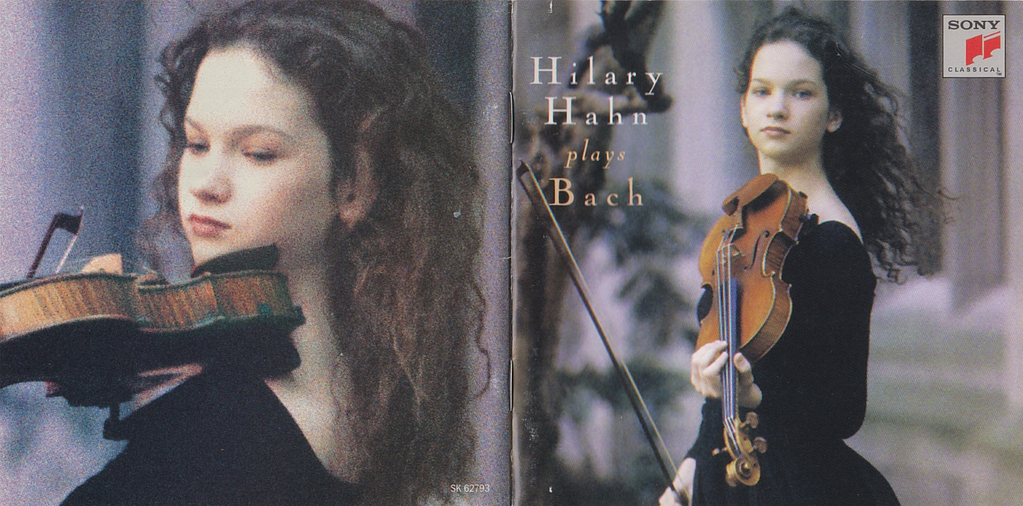
Though Hilary’s performance style isn’t my favourite now, her work & THIS ALBUM were deeply formative… This cannot be overstated.
In the Labyrinth are all the scariest saddest most soul crushing things I have ever personally encountered. In the Labyrinth are also the scariest saddest things my loved ones have encountered…
In certain rooms in the Labyrinth, it has windows to Nazi Germany. To two little girls in the rubble of Cologne. In other rooms hang portraits of Sarah Chang, Ani Kavafian, Hilary Hahn, Nathan Milstein, Andrew Manze – the violin room. In another, Carter Brey, Andre Emilianoff, Rostropovich, and Jacqueline Du Pré… though I hasten to say the cello room is much scarier than the violin room. More horror and shadow. In the violin room, baroque music echoes from an old scratched record player that I can’t find. It floats between sage green curtains with gold fringe, it gathers in gusts of dusty leaves strewn along the floor. It’s faded tiles are arranged a little like a chess board (but not quite). The violin room has a fallen wall that leads outside. It’s almost always Autumn from that vantage point.
Imagine… Sibelius echoing through the ghostly gallery of memory.
There is joy in the Labyrinth. Some of the most beautiful sunlit gardens I have ever seen. Bright and fresh of a cool morning. In some parts of it I have lots of little demon fairy friends… absolutely inspired by the work of Brian and Wendy Froud, Jim Henson, and others.
“Step out of the page into the sensual world.” ~ Kate Bush
Many parts of the Labyrinth give me the eerie feeling I have seen them before. If you have seen The Storyteller series with John Hurt (and Brian Henson as his dog!) you’ll recognise much of the look of my Labyrinth – including the way a room filmed from a different angle looks like a different story.
If I have something big and overwhelming to face, I walk the number of steps and turns and corridors and gardens it takes to get there. And then I come back.
And therein lies an important nuance – Big and Overwhelming Things. These are not just bad things. Not just lost things.
Yesterday, I sat down to work on sketching out wardrobe ideas. The goal has been taking shape in my mind for quite some time of what colour palette I want. What silhouettes I like that also work on my body and my sensory preferences. What works where I live and what I can have ethically shipped or acquired? What layering? What technique? What cheeky little references? How shall I paint myself? Where will I hide symbols & sigils? Which tattoos will I allow people to see? How semi-permeable do I want my persona to be? What kind of variations do I want to build into that without always causing getting dressed to be such a cognitive burden (as fun as it ALWAYS is – I even enjoy pjs!)
JEEZUZ! 7 of Cups, this is getting personal!
It’s hard to go from basic learning to a cohesive finished result. I’m convinced a practiced artist is able to make something and 51% of the time say to themselves, “that was deliberate”. >_< In performance, they always said that the true masters spend their whole lives practicing to make the hardest things seem easy. No one wants their audience to wince in anticipation of a famously difficult passage!
But if I have a flare for aesthetics and a knack for getting my hands to make what I envision, that’s all I have. “Flare” and “Knack”. Good fairy names, to be sure… good to have on side, but not synonymous with a finished project. Not yet the bit where I’ve crafted and lived in my visions. Not yet corporeal. And the tension or dissonance of this arises in a few key places:
Clarity of vision requires honing and specification. Decisions in favour of one thing at the expense of another. Do I have ‘talent’ for this kind of executive functioning?
NO. (It’s one of my specific autistic ‘traits’ that I suck at this.) It will not just take practice. It will require a lot of frustration, erasing (::gasp!::), paper with pencil dents in it that won’t erase any more, bad stitching… and quite literal ‘blood, sweat, and tears’ because I really shouldn’t be trusted with so many sharp implements.
Do I know how to manage my fabrics to minimise waste without being over precious?
Ehhhhhhh… always a question, never an answer to that one.
What happens if I change my mind?
What happens if my tastes change?
What if my body changes?
Should I plan contingency into these patterns?
Could I remake them into something else?
Where should I store repair-remnants so they don’t get eaten by moths?
Shit, I ripped something… again.
But if I draw something after a lot of work and swear words (while also being happy and absorbed in the process) and I show that sketch online and “it looks well enough to the untrained eye” (as it has been drawn by an untrained person!) and some people like it… is that ‘talent’? Or is it burgeoning skill. Is it diligence? Or is it bare minimum that I managed to draw it at all…
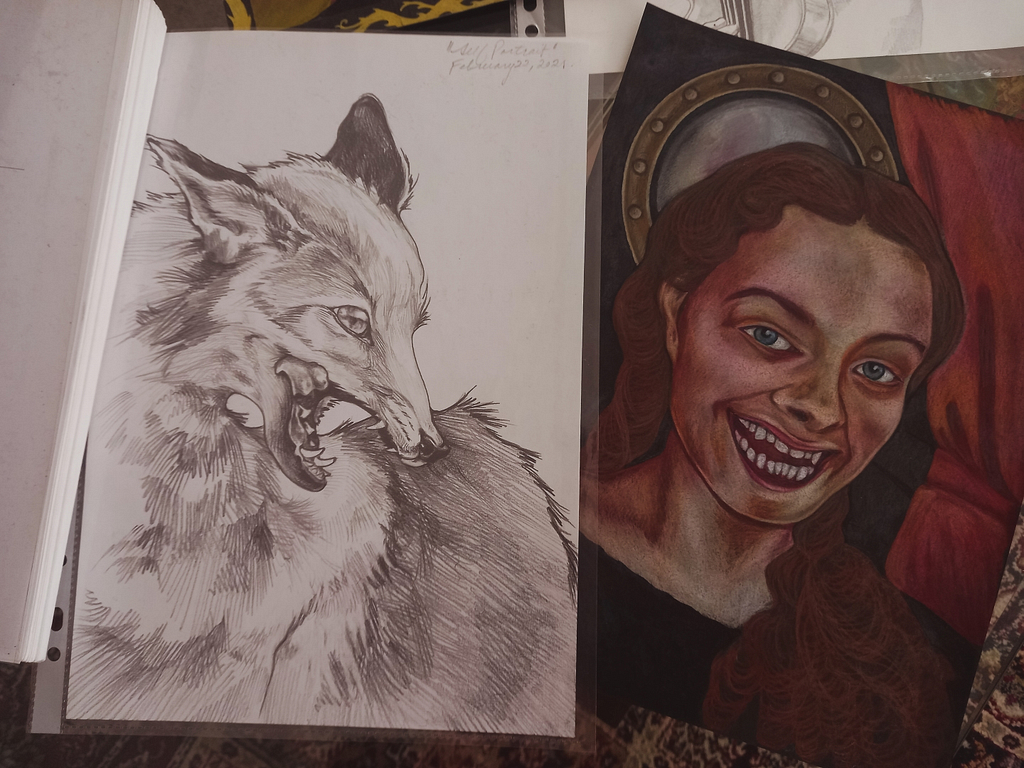
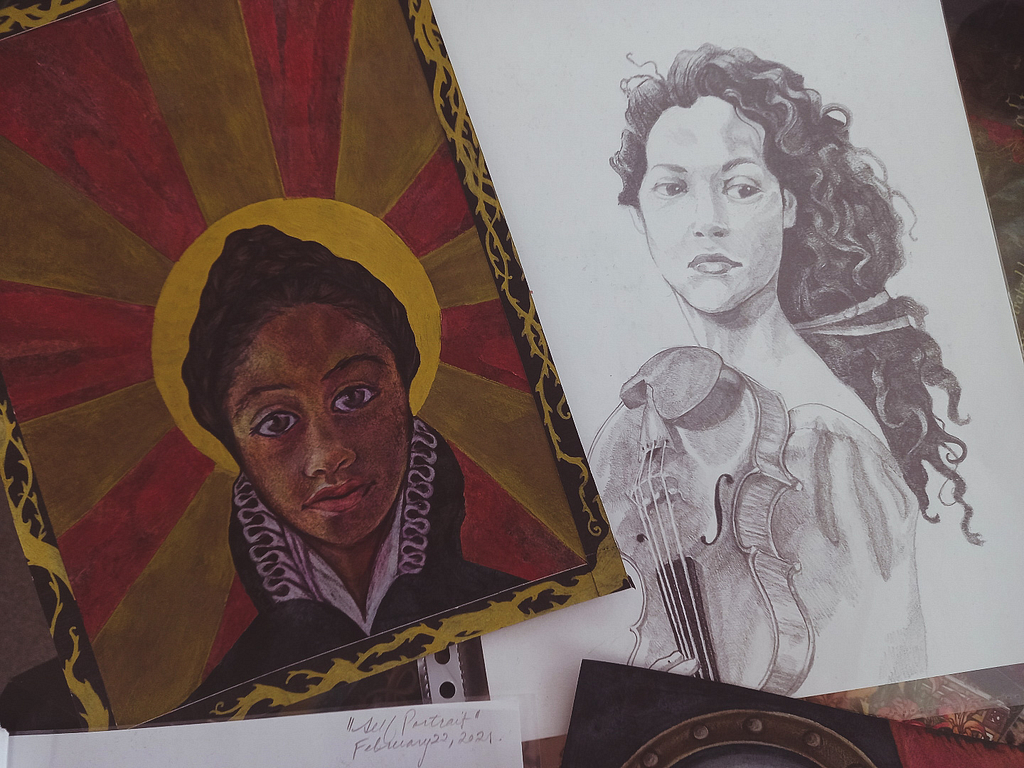
Found some old stuff!Self-portraits. 2021 & 2023?Experiments – derivative but useful!
What then if the drawings truly do become clothes. (Doesn’t that sound like magic!?) Is THAT talent? Or is it… propensity? Am I pretentious? Am I ‘talented’ or am I just a fucking handful? Who’s gonna hoover up the trail of threads and linen dust…
Maybe I have a talent for being a handful!
If I share process online, who is my audience?
I literally have no idea… but I HAVE always felt that documentaries about creative process, textbooks and lectures about the preparatory sketches and intentional symbolism of art, and old photographs of ‘artist in studio’ were the most magical Otherworldly thing on the planet.
I want to make the clothes I find in The Labyrinth. I want to come back along those corridors still wearing what I saw there. I want to help that stuff cross the divide – not just the clothes but the air quality, the poetry, the paintings, the furnishings, the music, the ideas.
It’s a stormy yellow-green coloured day today. Deeply blustry and misting with rain. I have a massive headache. But I want to build Otherworlds and I want to learn what it takes to do that.
The word ‘talent’ is a value judgement that has no objective significance at all. In my experience, ‘talent’ is a word used to diminish not only the hard work of others but also the reality of what it is to try something and kind of suck at it until you kind of suck a little less! Perhaps people accidentally sabotage themselves in using this word. If it’s always someone else that is so talented… What do we think their talent is? Is it the same as what they want it to be or thought it was? Have we ever seen what their work looked like not just when they started but at every point along the way? Good days? Bad days? Days where they had a dentist appointment and forgot to cover their paints so everything dried up? Days where they’ve LOVED baking until they realised they mis-measured their yeast …or the oven stopped working but the light stayed on? Days where the internet told them they were great but a favourite family member grimaced at their ideas?
What if you’re a 60 year old man who wants to learn to swim after years of being body shamed. What if you used to dream of talking to fish and you want to explore that again in the physical realm? I bet you could become an expert at loving water – not just a ‘talented’ swimmer.
Some people have opportunity, privilege, & support. Too many people don’t. Maybe most people have an incorrigible mix of these things. A pervasive paradox.
Culturally agreed upon standards for what looks like talent totally exist… but they are relative at best. Not very nice and of limited use. Picasso, Dante Gabriel Rossetti and other such humans dwell in the realm of talent and genius only because they deny entry to others. Sabotaging others with jealousy and aggression. Their work is good, just not THAT good. The idea of ‘inherent talent’ (to me) just screams ‘big fish, little pond’.
The concept of ‘perseverance’ exists but I think it gets misapplied to the point of losing a lot of what’s useful about it. Can you persevere at being scatter brained? Do we value that word internally or are we waiting for it to be applied externally?
Play TOTALLY exists. But if ‘play’ is ‘talent’, then can talent be ‘lost’? And if talent can be lost, then I think it must not be inherent. Which, to me, means you could be 96 years old and still decide to redevelop it if you chose… just because you can. That sounds more like curiosity and skill-building! Achievable things! Real magic.
If ‘talent’ exists, then everyone must have it. I think it’s down to the inherent tension and dissonance of asking yourself what yours are… and inventing them when necessary!
~ Saoirse.
P.S. It’s a total joke that I put my own work next to all these amazing true geniuses. I laugh at myself, not them!
[CW – there will be reference to symptoms of trauma but I will not discuss details nor will I indicate any specific type of experience other than to discuss how it affects my magico-spiritual process.]
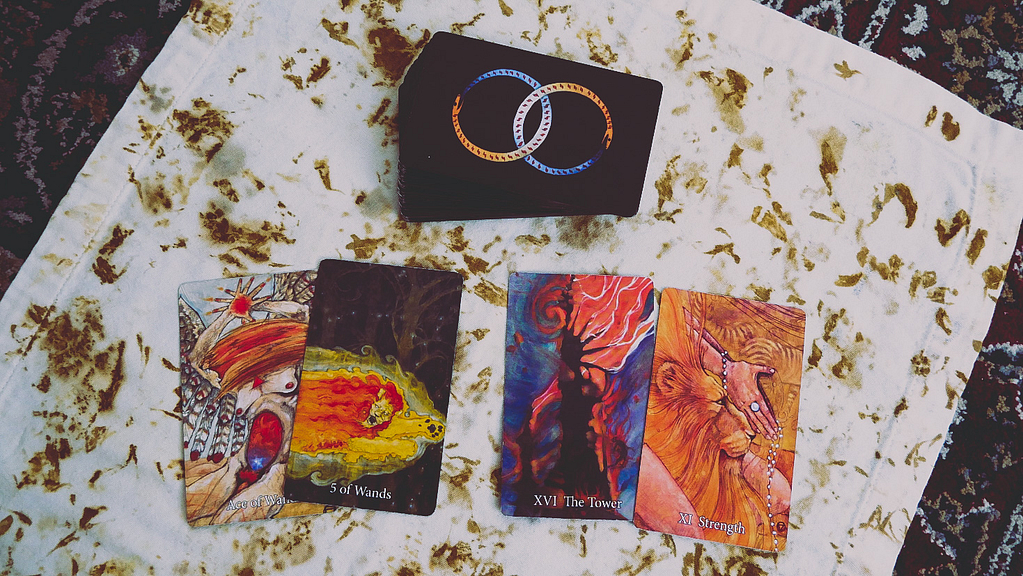
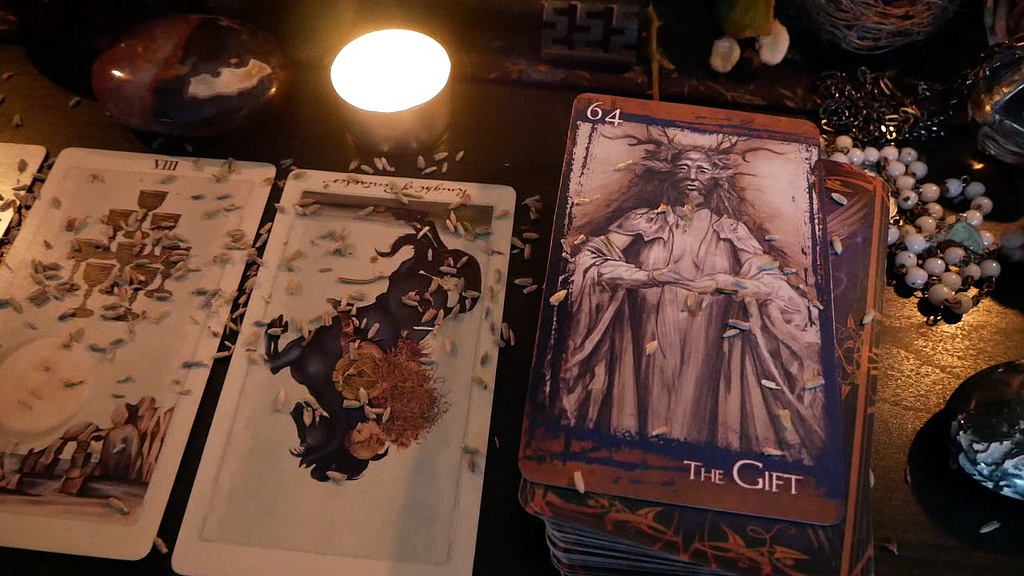
Half moon this morning. Waxing gibbous. Serendipitously, this is the card I received in a single draw from the Pagan Otherworlds Tarot. How apt.
I have been posting a bit more openly about music lately. Mostly here on the blog. I want to talk a little more specifically about why this – for me – constitutes witchcraft and deep magical healing work.
If anyone wants a recommendation for an amazing young musician and singer coming out of the American ‘Old Timey’ Trad world (as distinct from modern bluegrass!) they should check out Nora Brown. Holy shit her work is good. She’s currently collaborating with a fiddler named Stephanie Coleman and equally her style is deep, rhythmic, and rooted.
I’ve known of Nora Brown for a few years now but yesterday I made an attempt to watch the Tiny Desk concert above. I say ‘attempt’ because by the time they started into ‘The Old Blue Bonnet’ I was shaking, hyperventilating and so on. Having too many visceral and deeply loved memories of American-specific experiences… looking up at the moon through pine needles… fireglow shining through a cabin window at the bottom of a mountain valley… a small trickling stream beneath my feet… elk in the morning, bears on a walk. The music of the unassuming – jeans and t-shirts – trading information, laughing, and the deep heartbeat of boots on a floor keeping the tunes flowing. People talking with their feet and singing with their hands…
I couldn’t do it yesterday.
I told my partner it felt like a world had vanished but that I (and only I among anyone I know now) could hear faint echoes of it calling out “Goodbye! Goodbye!”*
So today is the half moon and I drew the half moon card. To me, the card says ‘Now you can do it and I will help.’ I took slooooow breaths, clutching the deck (my bridge between worlds), listened to this gem of a video and let what once was run its course through the channel of my emotions. Tears again but more manageable this time.
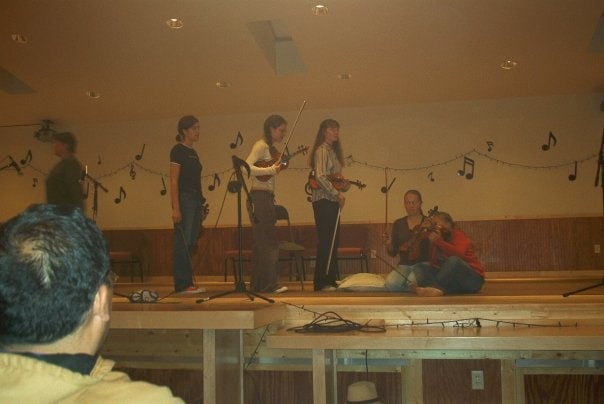
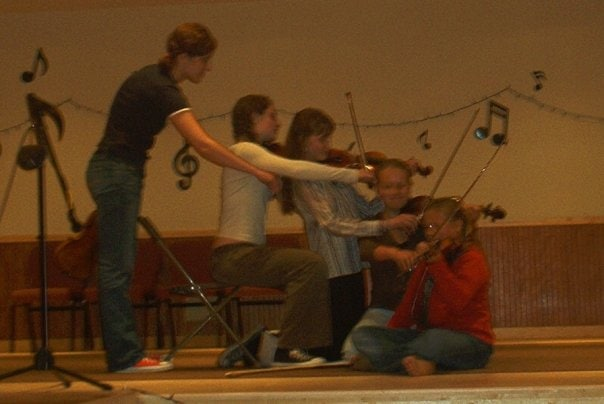
Old grainy photos of a good party trick…if you have lots of fiddlers!
It is, of course, not at all accidental that so much of American trad songs are fixated on war, death, loss, poverty, jail time, labour, loneliness. (The backbone of the ‘American dream’?) When people move too fast over land that isn’t theirs their own pre-existing problems grow with them. I don’t find much to ‘redeem’ about this… but I do find subtlety and nuance, I guess. The tunes I like the most have the least pretense – they’re tunes by and for flawed people. Maybe even the damned (depending on your worldview… I use demonic imagery in my witchcraft for many reasons). They carry no false promises and their dogma sounds tired.
I don’t know if I will ever use my violin for fiddle music again… I have no idea how that would feel in the body. Playing music, by definition, replicates the movements and bodily experiences of the past. That’s what practice IS… taking what you have already done and keeping it alive. Maybe that’s what makes it so hard and so rewarding at once. I am comforted by the knowledge I have of different forms of music and the fact that deep down I am fortunate to have some access to those skills and worlds… but I tend to feel shattered by the awareness that I come from a world in which I did not fit and I live now in a world that doesn’t know about any of that – at all. And I still do not fit.
This, incidentally, is how trad music is formed. Traditions carried. Stories retold and reworked. Sources cited (as is done so amazingly in the Tiny Desk video!)
To be a witch for me (among many other things) is to go to the altar and lay my music at Her feet. To carve a space that is mine… with bits and bobs of my story – the stuff that makes me howl and cry; the stuff that makes me dance; and the stuff that I know emerges syncretic and flawed… and to let it emerge and take its new form anyway. I take it all with me. These things are in my satchel. It’s painful to perceive, now, that no one around me knows it. I’m a person with no context. It must be enough that I know it.
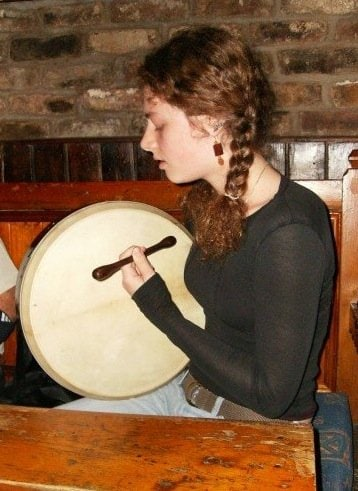
Baby-face Saoirse playing the bodhrán in Ireland. Think this might even have been in Cork!
The half moon will help me see that and shift my perspective back towards joy. And, I’m not totally alone… I can still light a bonfire on occasion and surround myself with other music makers. I know I’ve left things behind for a reason and I guess I’ll keep the practice of fitting into nowhere at all. Chronically transatlantic like so many before me… but hopefully reckoning a bit better with empathy and collective responsibility!
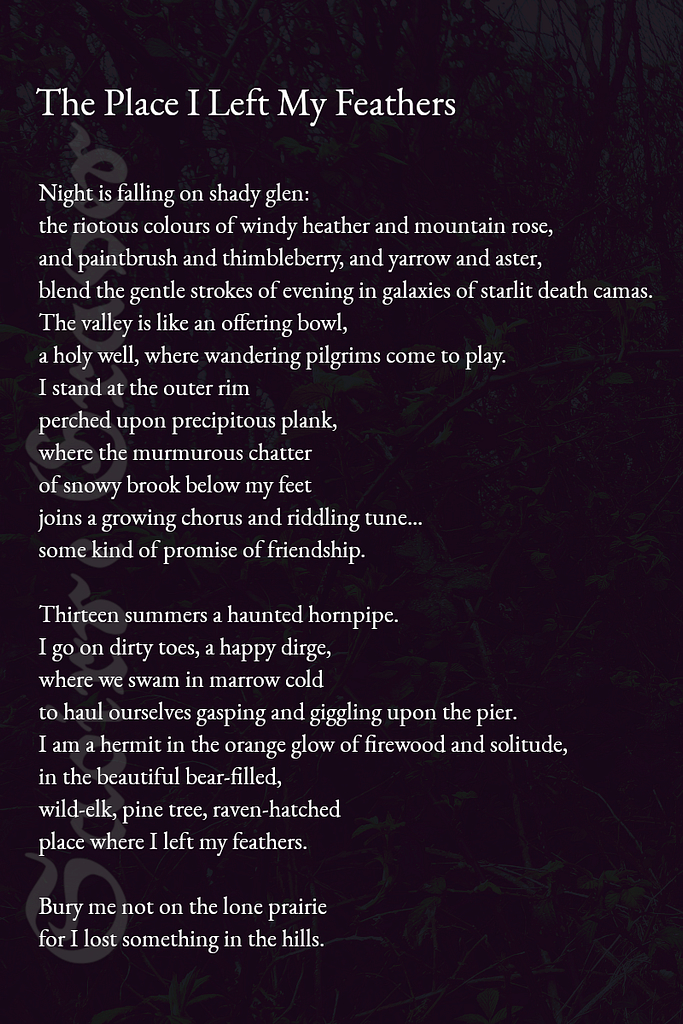
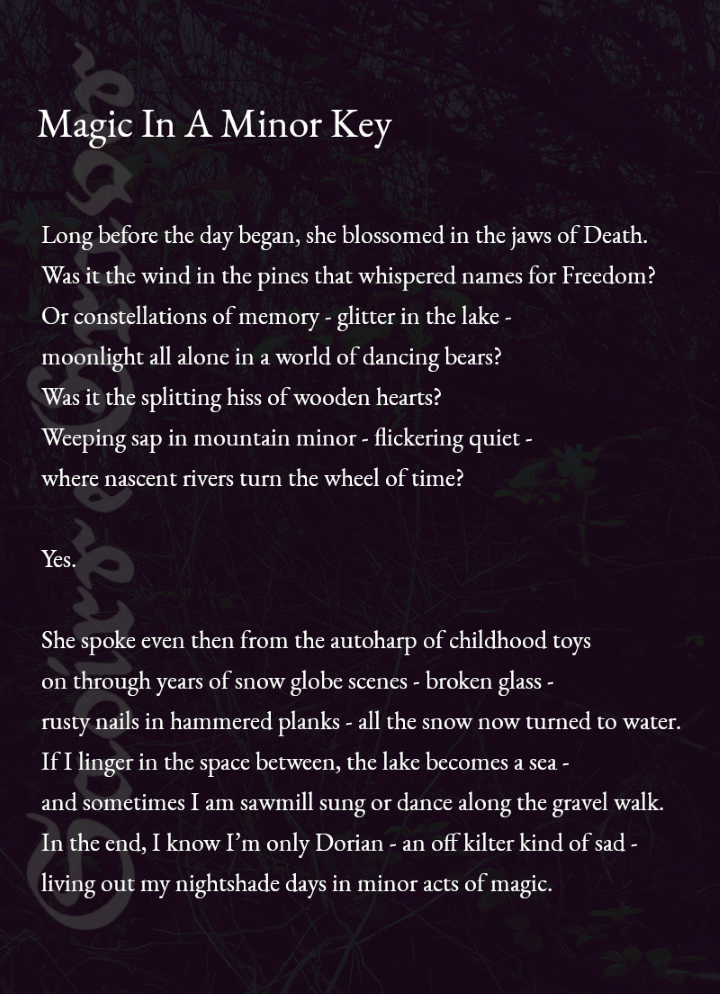
Below, a couple poems I wrote a few years ago, during an earlier phase of processing these things:
The Morrígan often ‘speaks’ to me through verse (UPG) and the following poem felt like an answer to wondering if she was there ‘even then’.
From 2022, it makes reference to John Prine as well as “Blackbird” performed by the Lonesome Sisters (written by Debra Clifford about her mother… Debra herself passed away in 2022.)
Another old photo. Wistful whistle tunes and homemade wings…
~ Saoirse.
* Rayna Gellert*** has composed some great songs out of this tradition that capture many of these feelings for me – “Strike the Bells” from her album ‘Workin’s Too Hard’ and “Nothing” from her album ‘Old Light: Songs from my Childhood and Other Gone Worlds’ come immediately to mind. Whew!
** This link is to a live performance (including the only mistake I’ve ever heard him make! ^_^) This is important firstly because I think his live renditions have a more dirge-like quality than his recorded version (which is on his album ‘Soon Be Time’) and secondly because he performed this song live for the first time one night at my college (a few years after I had stopped going to the mountains each summer to a camp where he and others taught) … I was talking to him after the gig and he asked me how the tune came across. I told him it was beautiful and made me cry and he told me it was the first time he’d done it on stage!!!
*** Incidentally, the same summer location was where I first had the privilege of meeting Dan Gellert, Rayna’s father. Holy shit that man can play and on the most gorgeous fretless banjo to boot!
I would love to hear your responses, thoughts, etc. in the comments. But please note, I’m not soliciting for comfort or validation. I’m wary of encouraging what I so often interpret in comments as codependent language. I’m fine! I am me and you are you. Concepts & practices such as witchcraft are shared but also truly individual – this is what makes them so potent! 🙂
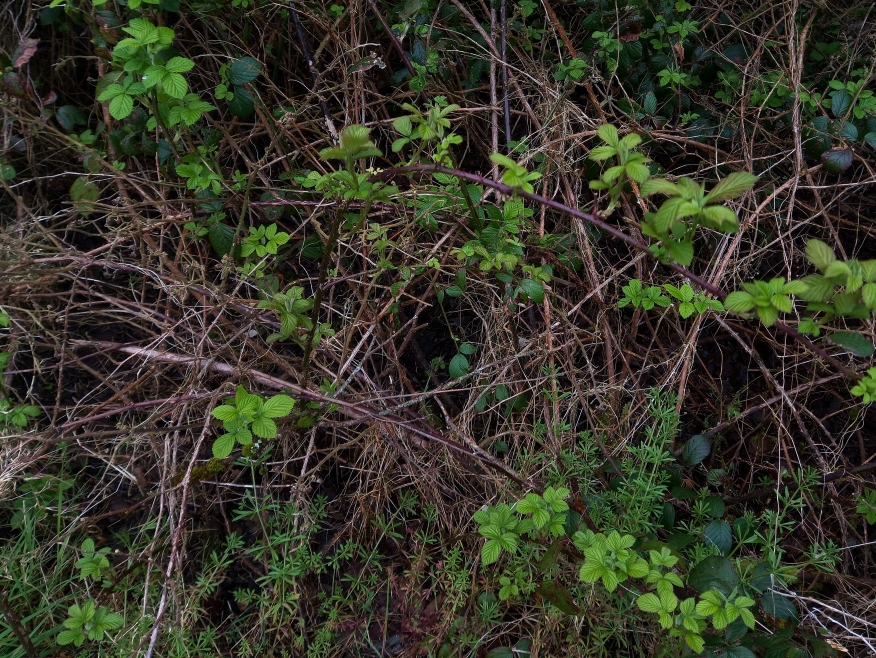
I wanted to share some recent moments of simple joy & presence. These photographs were not necessarily taken for the purpose of sharing in a public format. However, I am in the habit of taking constant photos of brambles, for example… Such photos in turn make up a good back catalogue of plant/animal material to from which to practice drawing**, to practice seeing, and to practice layering concepts.
Whether something gets shared or not is rarely planned (at least rarely planned fully) and the follow-through on any such plans also rarely correlates to the intent in taking the photograph. It’s all a bit loosey goosey up in here.
For me, it has become increasingly clear that the intent to share (or not?) is not so binary… Thus, some recent moments of craft, joy, & sensory immersion.
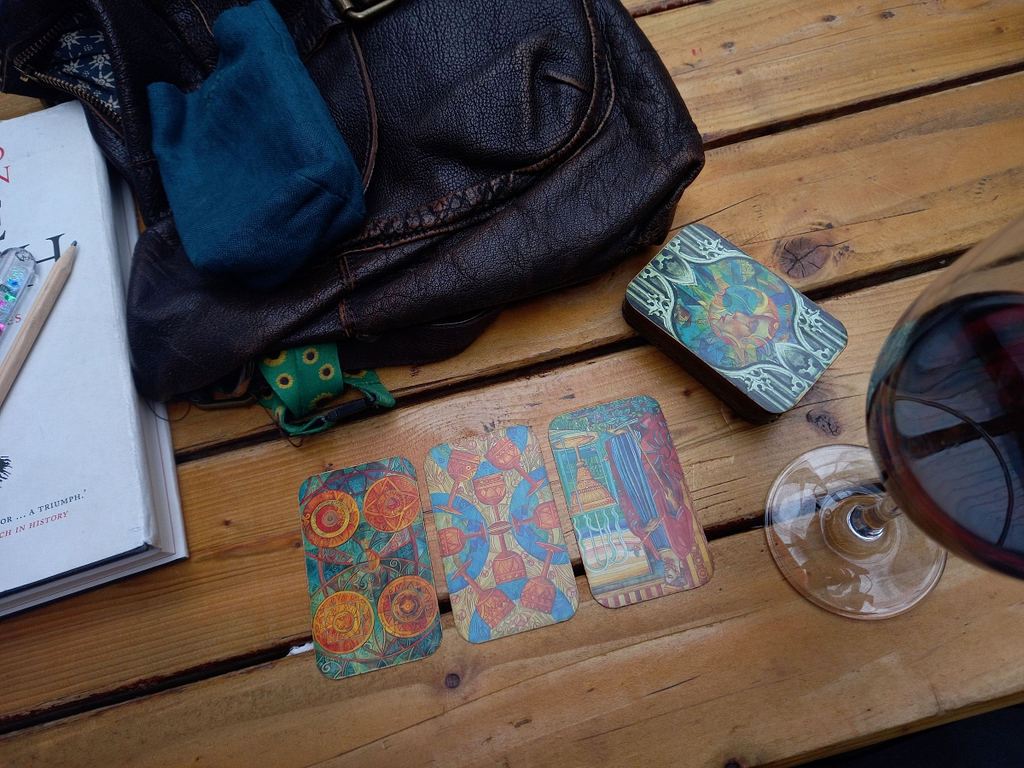
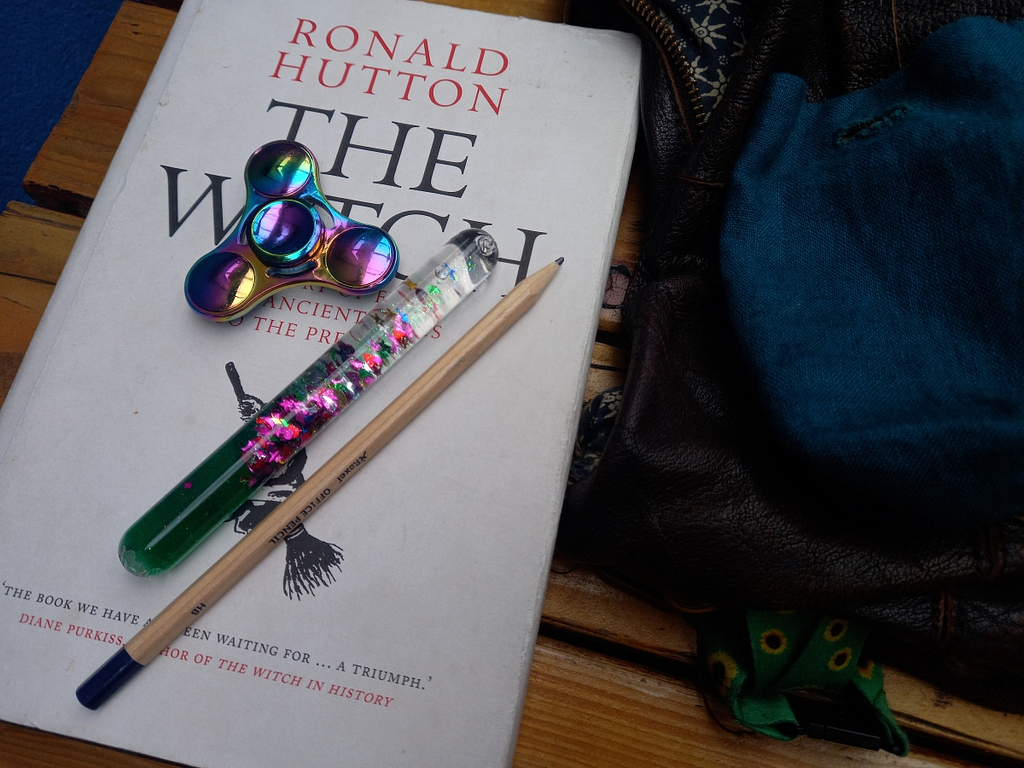
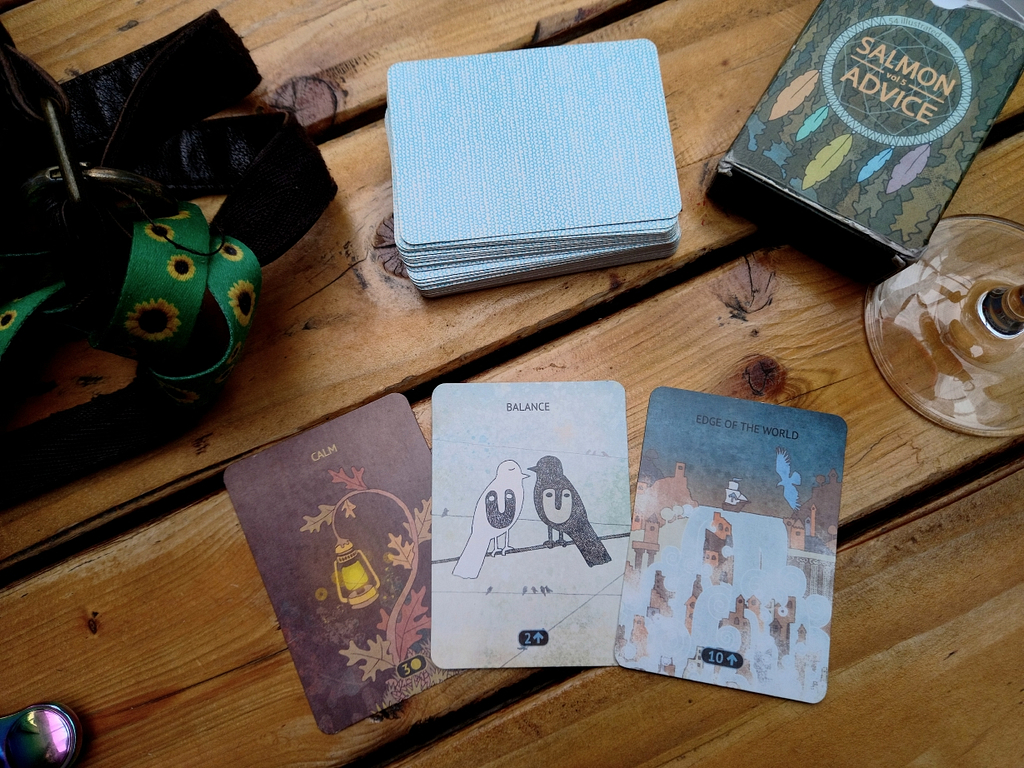
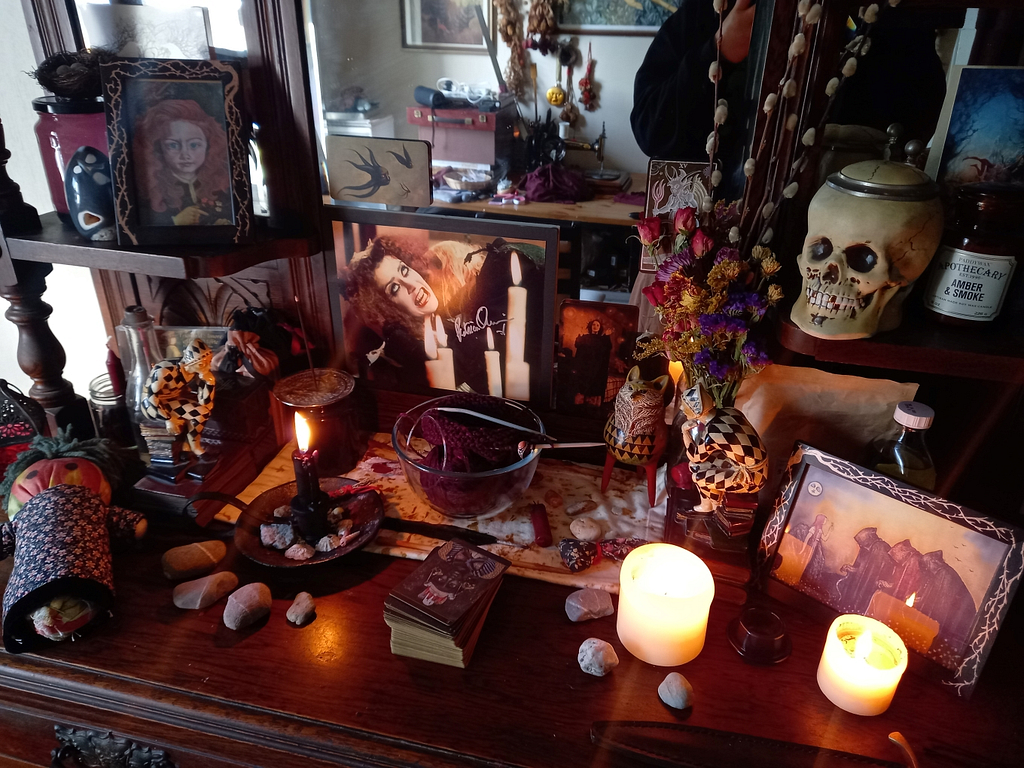
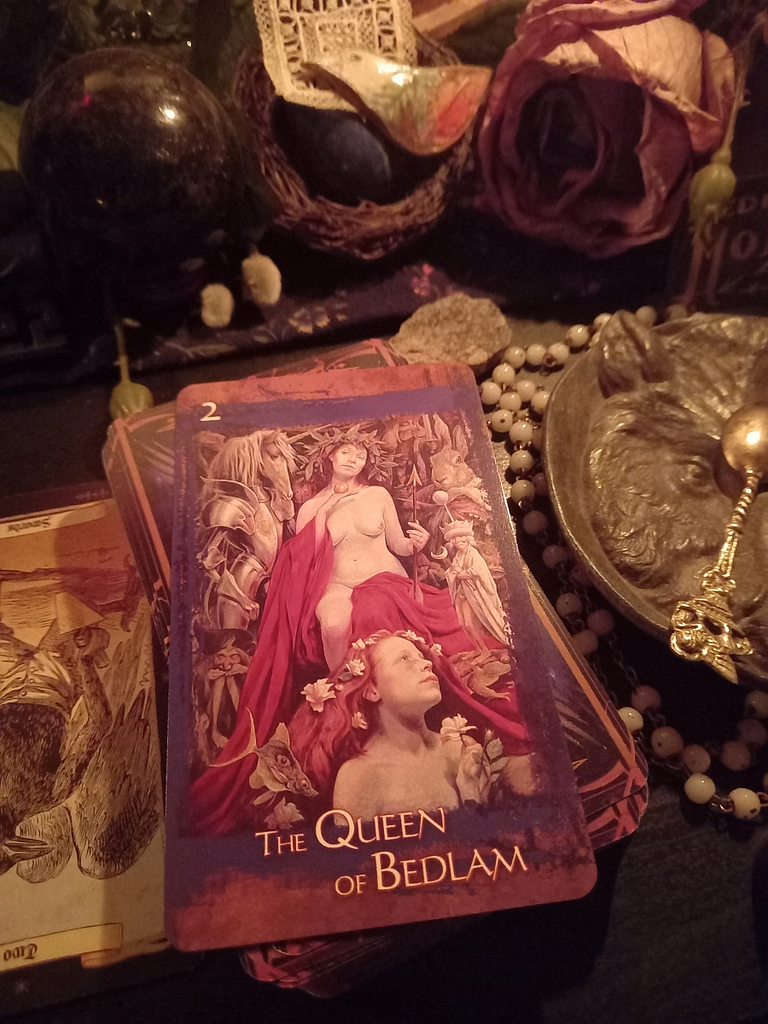
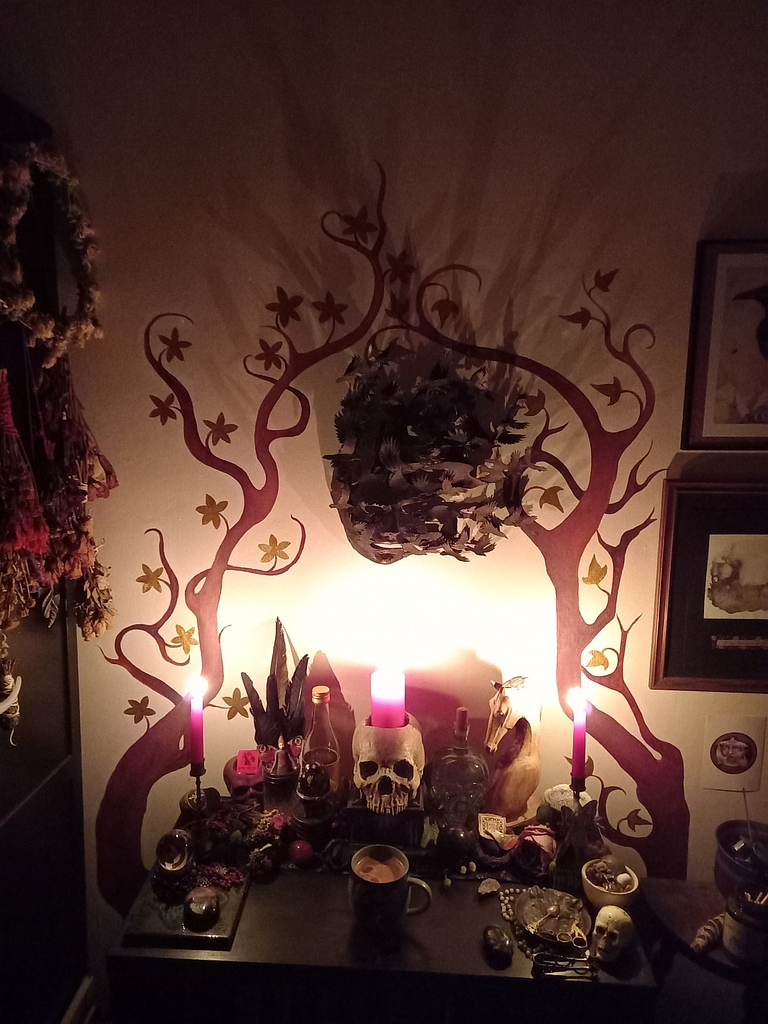
Little doors…“Down among the weeds, down among the thorn” (‘Tam Lin’; Child Ballad 39, Roud Index 35)Looking for Miss Tittlemouse…Tarot decks ‘in sa phub’! (Crystal Tarot, my trusty travel deck.)Salmon Advice cards …not sure this is the correct Vol. box though…The Glamour altar… among other things.A moment of ‘synchronicity’ with a friend 🙂5 am, after nightmares.Colour, texture, & lots of hidden flora & fauna amidst curvilinear existence.
For some context on what I’m doing with the header image, you might like to watch this video of mine on The Hush Tarot & it’s references to Arthur Rackham/the Golden Age of Illustration:
An oldie but a goodie…
~ Saoirse
* A reference to the highly influential (1970s) art historical work of the same name by John Berger. You can watch it for free here. I’ve actually not watched all of it myself yet but the significance of this was two fold – to challenge what was up to that point a more traditionalist method of interpreting art historical work & to introduce the viewing audience to ways of questioning & analysing the art they take in or experience.
** The header image is a composite of my own photography of birch trees and a print I own of “The Fairy Tightrope”/”Fairy Dancing on a Spiderweb” by Arthur Rackham. You can see an early version of this image in a 1912(?) copy for free from the New York Public Library here. I guess you can also be glad I’m not sharing my photographs of dead rats and such 😛
*** Check out the album Child Ballads by Anaïs Mitchell & Jefferson Hamer. It has a *gorgeous* version of Tam Lin that keeps the pregnancy/poison narrative in! …I mean, check out Anaïs Mitchell in general ::drool::
As with so many things, a simple mental association double checked through the lens of a ‘quick Google’ yields a seriously mind-boggling rabbit hole. This blog post serves as a contextual supplement to this video:
I have had the topic of names on my mind for a long time. Anyone who plays traditional music will know that the name of any given tune is, shall we say, flexible. The way in which a lot of trad music works is that any given player or performer and certainly the more reputable recording artists will cite who’s version of a tune they play, where they have introduced changes, and will often also indicate if their own regional style has affected their playing or not, etc. A living folk tradition needs both that kind of flexibility as well as that kind of connectivity and accountability.
Recently, I decided to approximate a version of Shady Grove, pilfering most of my style and technique from this OLD video by “Gretchenman” (just look at his fingers fly!!!):
In doing so, I did a quick search online to refresh my memory about the lyrics (because I do sing along sometimes when I play) and check in on some basic background information on the song. Shady Grove (Roud 4456) is mostly considered an Appalachian tune [1,2] and there is a possible link with the English/Scottish tune Matty Groves (Roud 52; a famous version of which was recorded by Fairport Convention, for example) [3]. The two songs share the same melody and the fact that one is a murder ballad and the other a song in which a woman’s name has seemingly toponymic qualities interested me from a personal gnosis perspective. Drawing wild and highly metaphorical connections in my own head, I liked the familiarity of something that sounds like a place having an almost euhemerised quality… certainly Ireland abounds with such locations and its medieval literature/mythology has whole genres and stories centered on naming places after people and people after places, or just blending the two entirely.
Now, I’m NOT claiming that there is any such analogy to be drawn in historically viable or collectively verified ontological* terms. It’s just a fun poetic exercise. Creative license, as it were.
However! The rabbit hole referred to earlier drew me from link to link: first investigating the lyrical content of Shady Grove; then to it’s Roud Index Number and associated articles about the development of the song over time (including various collections in which it is annotated as well as different known recordings of it); then to re-acquainting myself with some of the basics on Cecil Sharp (because it’s been a while). Lo and behold… I forgot a) about his nationalism and the troubled legacy of his methodology in seeking out ‘Englishness’ in music, especially in Southern Appalachia [5] but also b) that he was in other ways influenced by William Morris’ socialist lectures and …potentially also approached his work through the lens of spiritualism at some point!? 🤯
This last bit seems totally unclear to me and I am finding it hard to validate until I can actually access some of the academic articles I’ve found online [6]. (This is where I am REALLY happy to have a free external reader’s card with UCC Library…ah, the perks of living in a Uni town!) But in scrolling through the Roud listings on Matty Grove, I saw they had an entry in Sharp’s diary from the 29th of August, 1916 in which he makes use of the word “séance”.
It’s strikes me that it’s possible this word has some other meanings or context of which I am not aware (I yielded no obvious or immediate answers from a quick search online) but it would seem there are a few articles out there at least that might make this clear once I’ve had a chance to read them. In theory, it doesn’t strike me as too unreasonable because this IS a time period in which a lot of academia (especially those with nationalist or otherwise politicised interest in folk movements) drift in and out of spiritualist circles and ‘methods’ of inquiry**.
I am not sure how all of that will go yet but I also hope to read a few more recent assessments of the problems in Sharp’s legacy.
Magickally, one of the things I am doing in playing such a tune (in which I usually face my altar, by the way) is reshaping identity. Drawing creative connections on the euhemerization of names, of nouns as names/names as nouns, and asking questions of my own anthropopathism and ‘pathetic fallacy’***.
At this point, the choice to play “Flatlands” by Chelsea Wolfe and Mark Lanegan over the first part of my video should begin to make added sense.
It all comes back around to walking the razor edge between what seems appealing as a creative or metaphorical idea and what is actually academically and historically viable work. We have to be okay with their inherent dissonance. You might even call it… an art.
* Here I am using the philosphical defintion of ‘ontological’ rather than the metaphysical one!
** Giving the Golden Dawn, Theosophists, and soooo many 19th and early-20th century artists and thinkers bombastic side-eye. Criminal offensive side-eye.
*** Oop! Hello, Ruskin!
§ 9. And thus, in full, there are four classes: the men who feel nothing, and therefore see truly; the men who feel strongly, think weakly, and see untruly (second order of poets); the men who feel strongly, think strongly, and see truly (first order of poets); and the men who, strong as human creatures can be, are yet submitted to influences stronger than they, and see in a sort untruly, because what they see is inconceivably above them. This last is the usual condition of prophetic inspiration.
§ 10. I separate these classes, in order that their character may be clearly understood; but of course they are united each to the other by imperceptible transitions, and the same mind, according to the influences to which it is subjected, passes at different times into the various states. Still, the difference between the great and less man is, on the whole, chiefly in this point of ‘alterability‘. […]
§ 11. Now so long as we see that the ‘feeling‘ is true, we pardon, or are even pleased by, the confessed fallacy of sight which it induces: we are pleased, for instance, with those lines of Kingsley’s, above quoted, not because they fallaciously describe foam, but because they faithfully describe sorrow. [7]
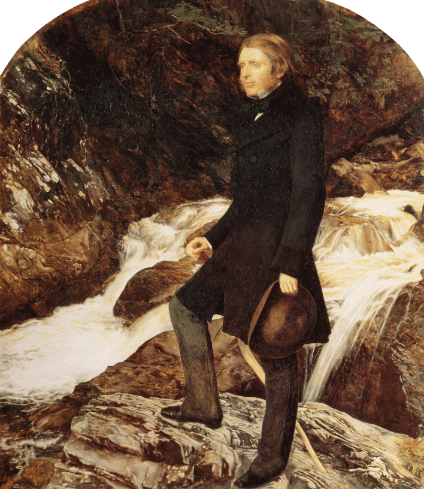
John Ruskin at Glen Finglas by John Everett Millais, 1853-1854 (Public Domain)
(1) Shady Grove (Roud 4456), Mainly Norfolk: English Folk and Other Good Music, mainlynorfolk.info/folk/songs/shadygrove.html. Accessed 6 Feb. 2024.
(2) “Vaughan Williams Memorial Library: Shady Grove.” English Folk Dance & Song Society, http://www.vwml.org/search?q=Shady%20Grove&is=1. Accessed 6 Feb. 2024. (Of note, the English Folk Dance & Song Society owns the Cecil Sharp House.)
(3) Spiegel, Max. “Origins: ‘shady Grove’ a Mondegreen ?” The Mudcat Cafe, mudcat.org/thread.cfm?threadid=131461. Accessed 6 Feb. 2024. (“Mondegreen” is my new favourite word now. Story of my hearing impaired life!)
(5) “Cecil Sharp.” Wikipedia, Wikimedia Foundation, 26 Jan. 2024, en.wikipedia.org/wiki/Cecil_Sharp#Political_Views. (Yes, its Wikipedia ~ but the citations at the bottom of the article look like they’re worth exploring.)
(7) Ruskin, John. “Of the Pathetic Fallacy from ‘modern Painters’ (Volume III, Pt. 4, 1856) by John Ruskin.” The Pathetic Fallacy, Ruskin (1856), http://www.ourcivilisation.com/smartboard/shop/ruskinj/index.htm. Accessed 6 Feb. 2024. (I have no interest or affiliation with the author of this site as a whole, this link is simply where I have accessed an online free readable copy of Ruskin’s writings on the Pathetic Fallacy.)
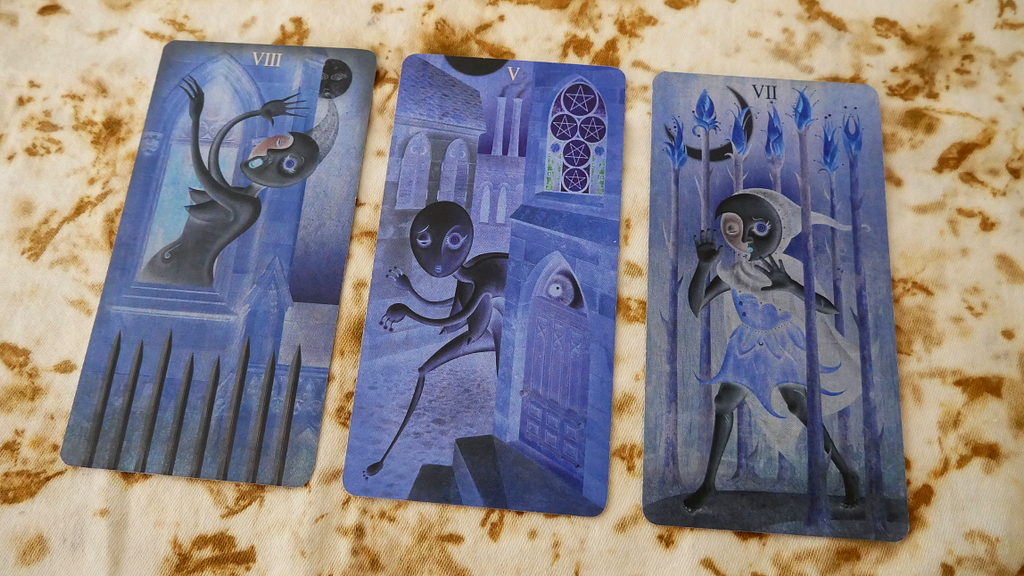
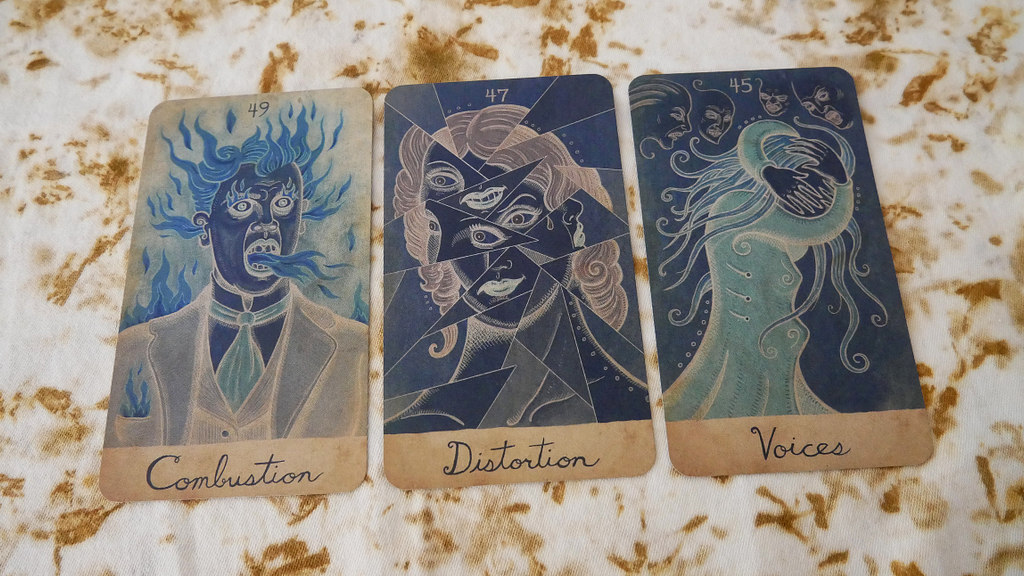
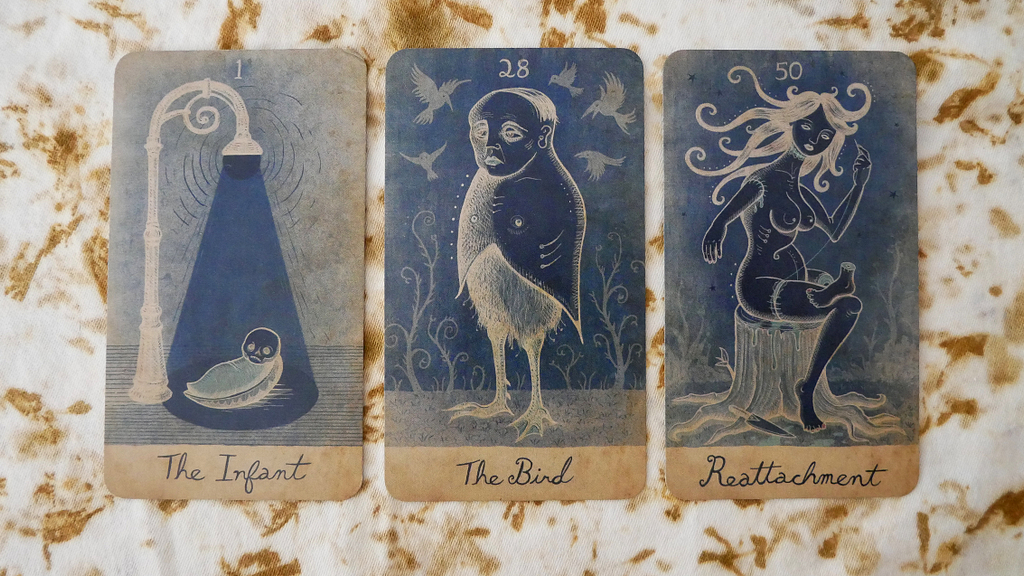
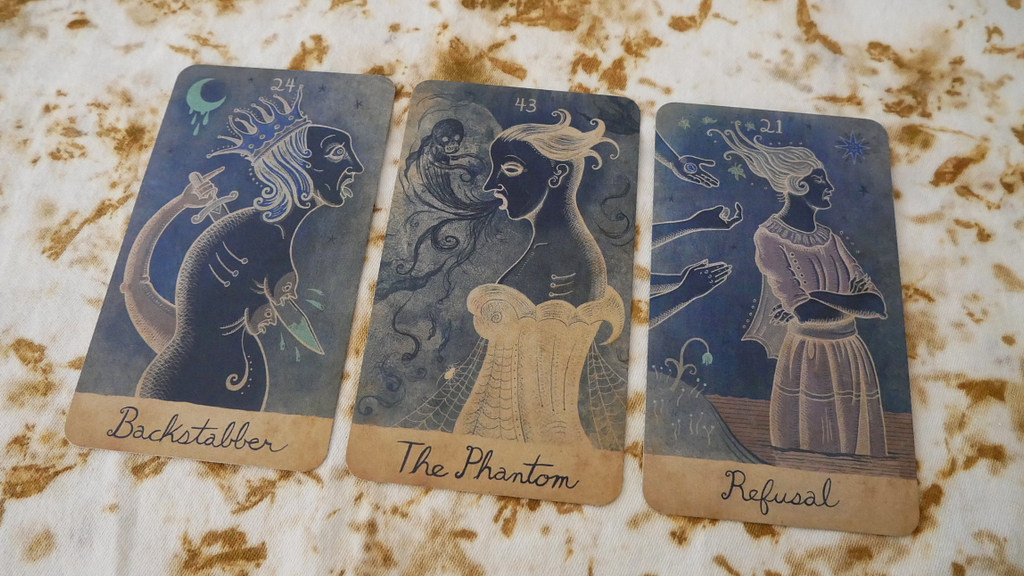
It’s birthday month… and for the last few months I have been working away on what visual links I can find in certain tarot and oracle decks, who created them, where they were created, and what I think that means about the experience of place on the minds of those prone to nightmares. I’ve been calling this the “Nightmare Children of the Tri-State Area” project… but of course if we approach it art historically, it will always be rather Beksinksi or Bosch-like in this realm too. (Also Escher…)
“In Hoc Signo Vinces” by Zdzisław Beksiński. Reproduced here under Creative Commons Licence (Attribution Non-Commercial Share Alike 2.0 Generic) from “Gandalf’s Gallery” with whom I have no affiliation. Another amazing Beksinski piece to check out is “Figure (1978)”.
For now, here’s a sneak peek into what artistic themes are playing a role here:
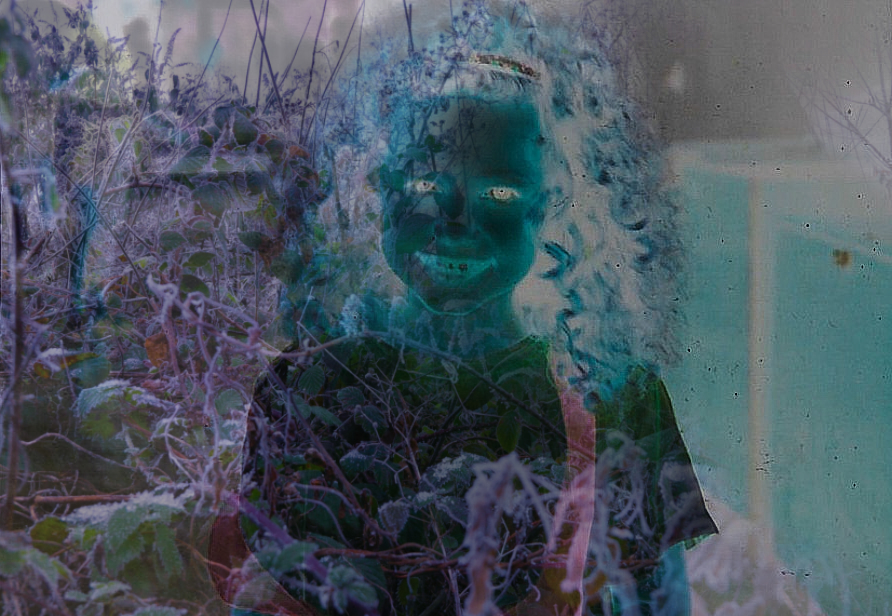
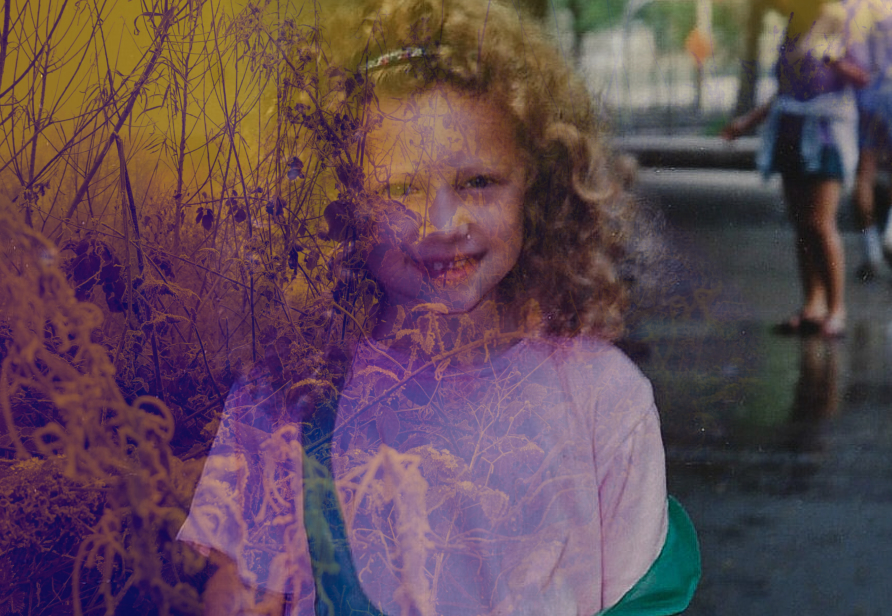
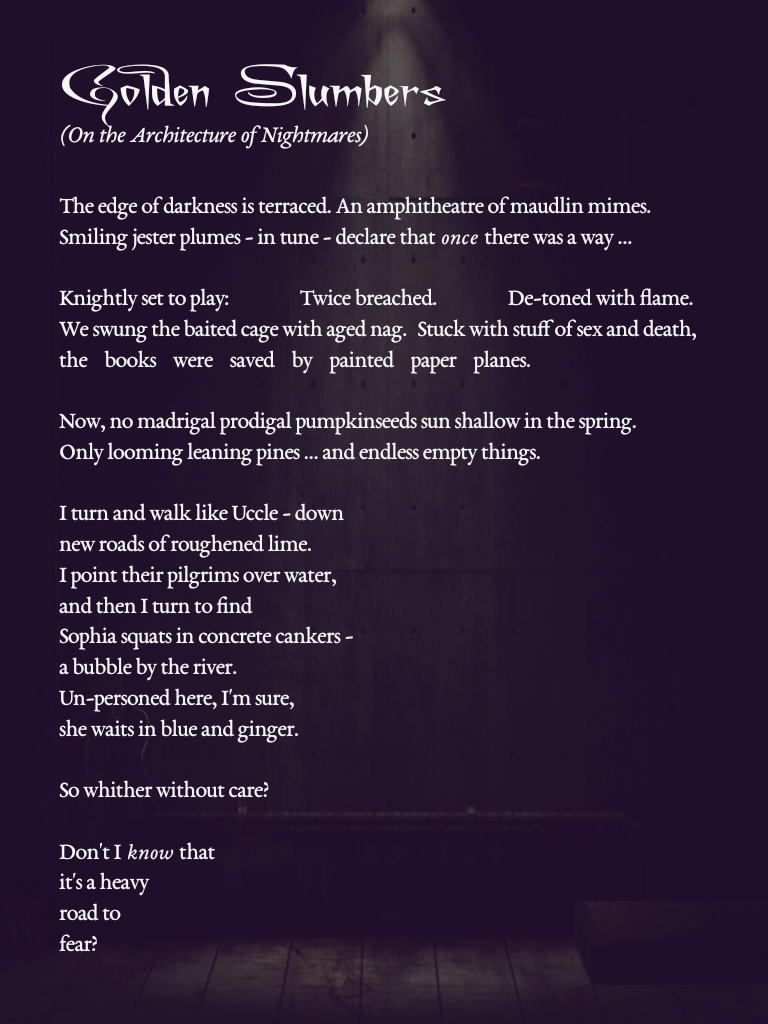
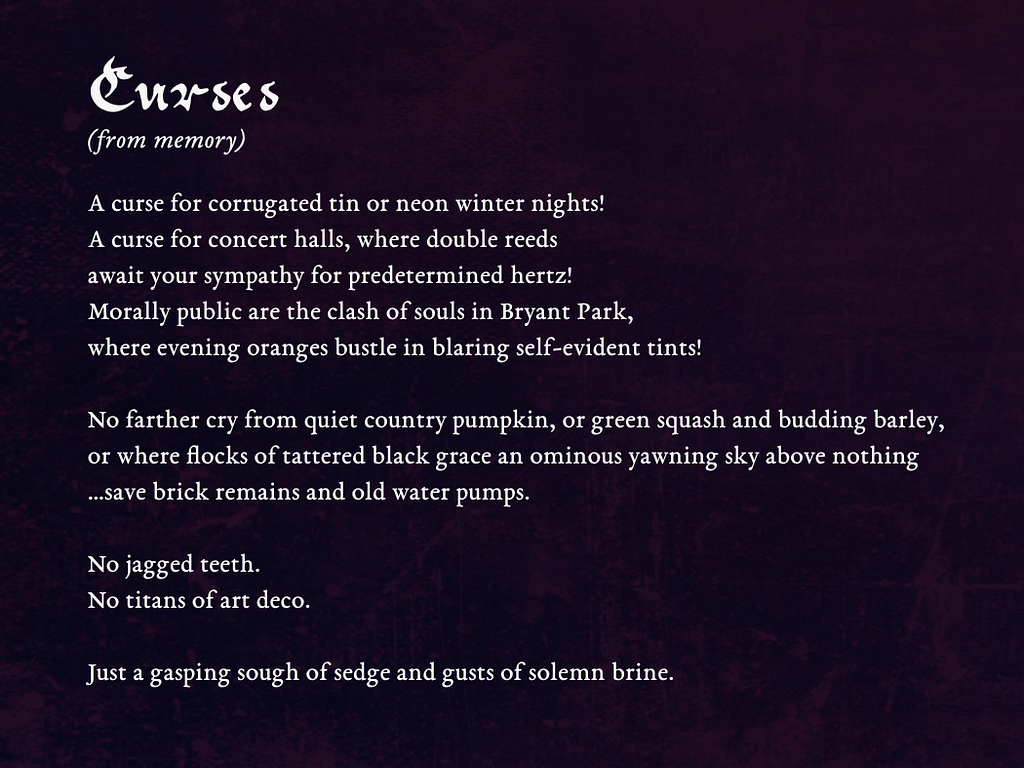
“Six in the City” A & B ~ self-portraits from old photos edited together with my own outdoor photography.“Golden Slumbers” is a poem I wrote on October 14, 2023 while walking through my memory of specific nightmares and giving them more collective language. I have been feeling very inspired by Escher and Piranesi in this, among others…“Curses” is a poem I wrote on November 26, 2023 while walking through my memory of specific experiences in the wetlands around New York and New Jersey… and giving them more collective language.
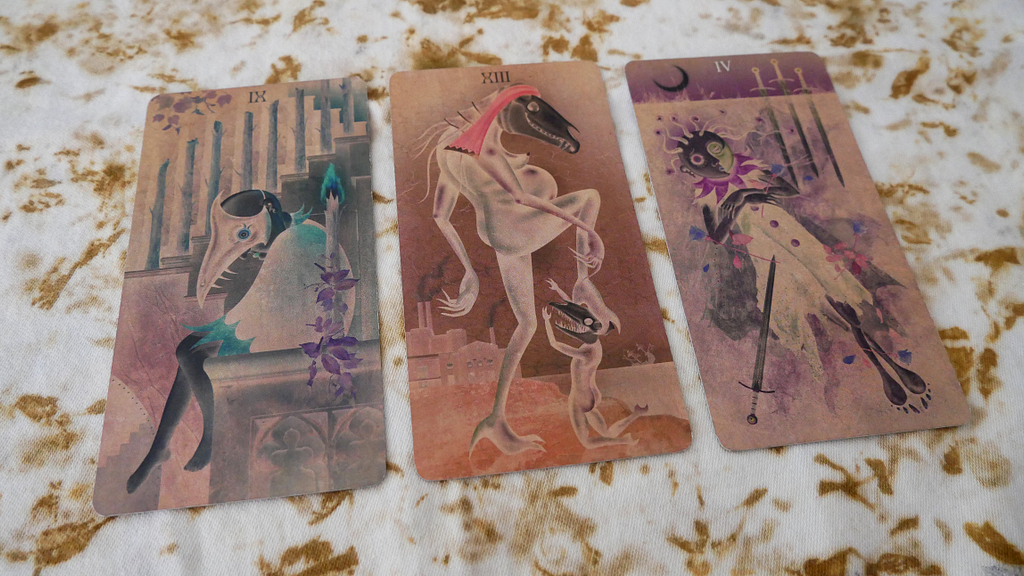
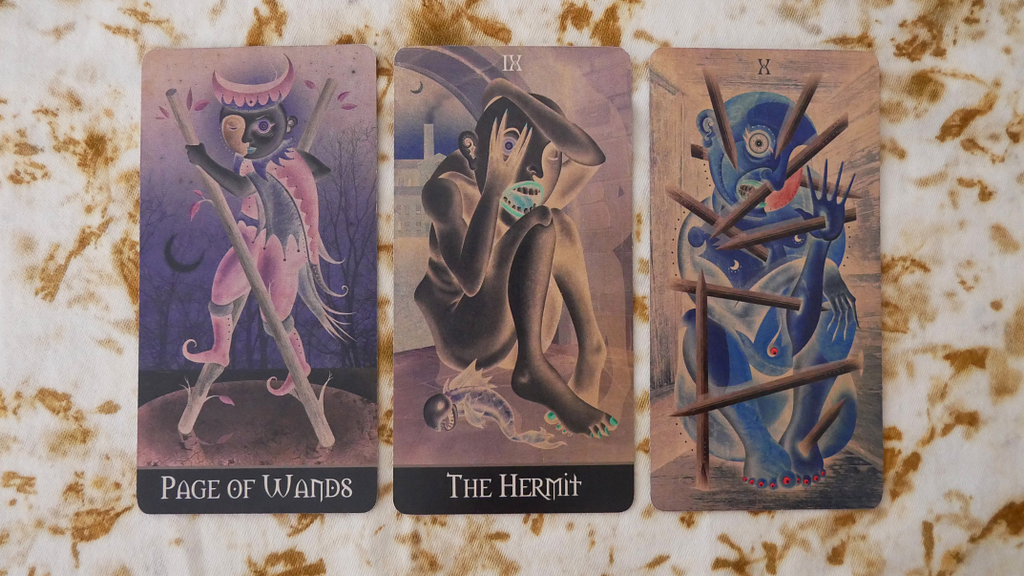
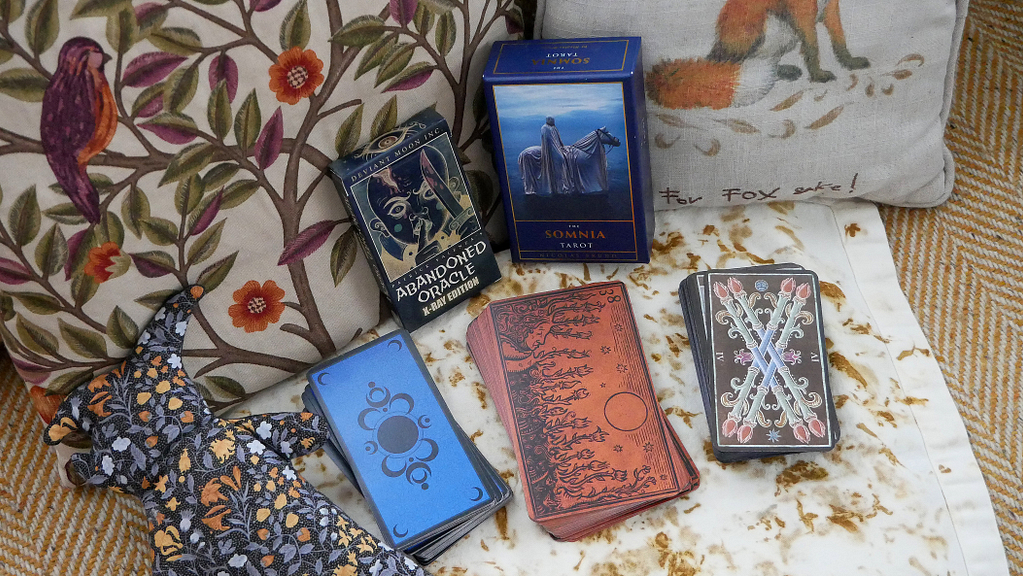
The decks in question*:
More sketches, explorations, and thoughts to follow soon! In the meantime, let me know what you think 👻
Hell Panel (detail), Garden of Earthly Delights, Hieronymus Bosch (between 1490-1510?) Reproduced here from Wikimedia Commons.
Sincerely,
Sorsha.
* All decks featured here of my own volition and arising from my own use of them. I have neither been invited nor commissioned to do so and I have no affiliation with Deviant Moon Inc. or Nicolas Bruno. Apart from having one of these decks (the TdL Paradoxical) given to me by a friend, I have purchased all of these myself.
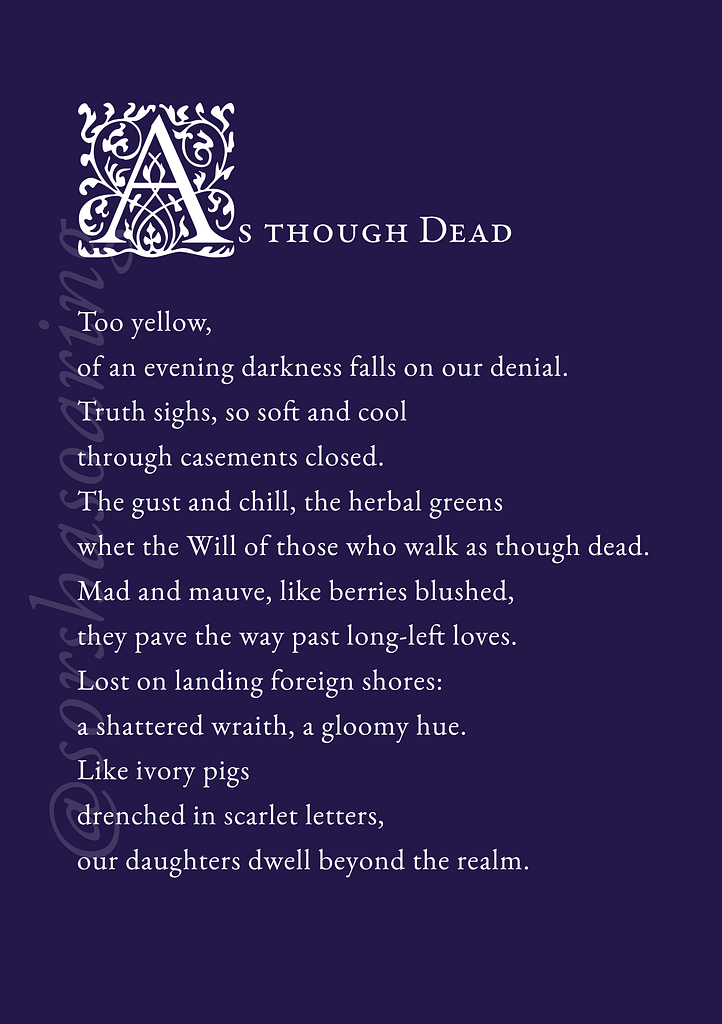
Hello there… a poem conceived ‘of an evening’ in the aftermath of a maddening supermoon in early autumn. Shall we play a game of ‘wake the dead’?
I’d say most of my poetry arises from attempting to describe the place where sensory detail and cognition meet… but please think of this however you choose!
From the Deviant Moon Tarot (Paradoxical)… this card always reminds me of Tom Waits.
~ Sorsha.
*The title is from Tom Waits lyrics to “No one knows I’m gone”.
*Deck featured in header image ~ Trionfi della Luna (Paradoxical)
“The true secret of happiness lies in taking a genuine interest in all the details of daily life.” ~ William Morris
Anyone who has followed my ‘output’ thus far will likely perceive that I spend a lot of my time immersed in the idea of ‘crafting self’, in the creative act of (re)making identity. Sometimes I call this ‘shape-shifting’ and it takes on quite literal ritual significance. Sometimes it finds expression through changeling motifs and the development of a personal mythology of sorts around my neurodivergence. It is, of course, present in all of my magickal workings, many of which manifest into clothing or art work. These are literal acts of creation that have a reflexive nature (in how they shape me) in addition to an outward one (in how I shape them, the effect their expression has on that which is external.) My most recent video focuses on taking attentive delight on beginner applications of paper marbling:
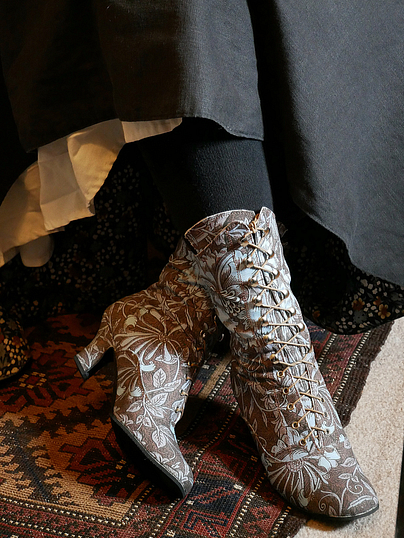
I even made an entire video about manifesting the astral or the realm of the imagination – weaving together ‘Secret Garden’ motifs with Edwardian, Victorian, and Medieval aesthetics… culminating in the commission of a real pair of shoes – in William Morris fabric and loaded with personal significance, magickal potency, and serious gratitude.
Late diagnosis autistics in particular face the challenge of unmasking, self-advocating and self-representing to the world even as they themselves strive to learn the basics of their own needs. There is a lot of discussion in that process of needing to *create a sense of self*… since everything you have been (or were permitted to be) has been focused on fitting in and survival. Personally, in the year or so before I sought my diagnosis, a social worker was talking me through some very serious and destructive circumstances I had left behind and she said “now is your chance to reinvent yourself”.
… One thing I have been working on is rebuilding my reading skills, knowing what I know now about neurodivergence. Non-fiction seems to be working better for me and I want to document some of the ideas I receive through that in occasional installments on this blog. Currently, I have begun reading “How We Might Live: At Home with Jane and William Morris”.
I had been looking online for any resources that might give me more information about Jane Morris specifically. Thus far I am not disappointed. The focus in this worldview, time period, and set of people is not only on making aesthetics a tangible element of daily life but on making that matter. I am excited at the prospect of getting a more holistic picture of the Morris’ family’s works and philosophies – and of those around them – but I am also interested to see flaws, to see where idealism potentially remains unwieldy or takes a less constructive real form. There is a quotation at the end of the first introductory segment that makes me feel so seen I almost cried (one of the reasons I struggle to read, I cry a lot!):
“When I first knew Morris nothing would content him but being a monk, and then he must be an architect, but when I came to London and began to paint, he threw it all up and must paint too, and then he must give it up and make poems, and then he must give it up and make window hangings and pretty things, and when he had achieved that he must be poet again, and then he must learn dyeing and live in a vat and learned weaving and knew all about looms, and then made more books and learned tapestry, and then wanted to smash everything up and begin the world anew, and now it is printing he cares for and to make wonderful rich-looking books: and all things he does splendidly: and if he lives the printing will have an end, and he will do, I don’t know what, but every minute will be alive.” ~ (Edward Burne-Jones after 40 years of friendship with Morris, p.6)
…In the past I have performed on the violin in master classes with the likes of Andrew Manze or in orchestral ensembles at Carnegie Hall and Lincoln Centre. I have spent years throwing clay on the wheel or oil painting. I have immersed myself in learning trad music in the Rockies… or in studying Medieval art and social political history in Ireland. I offered hand painted wearable fairy wings for sale in a shop in Dublin. I have been an archivist in three different countries and a rare books librarian in art historical institutions…
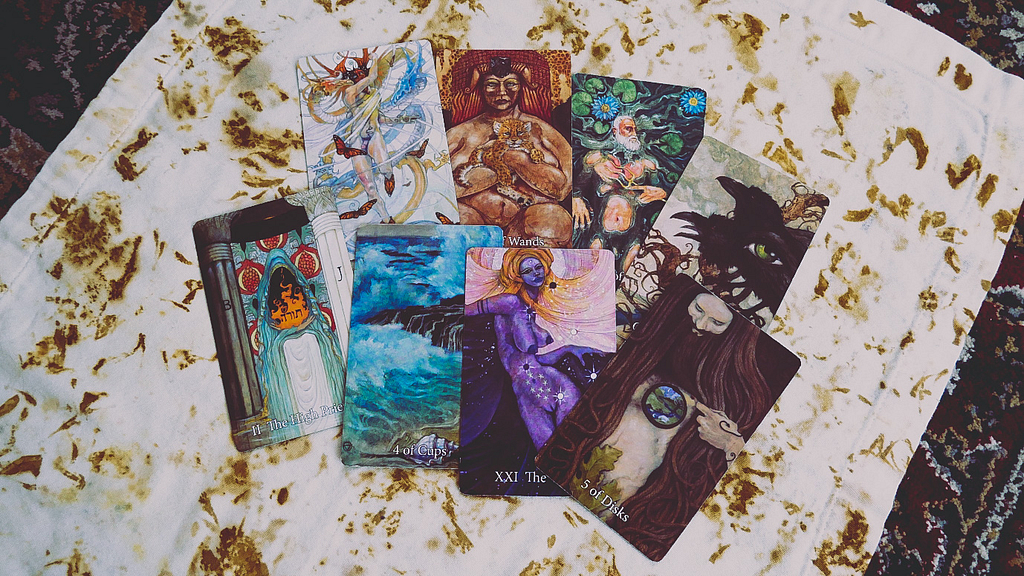
A reading from the Noble Art Tarot by Lennan Smith – a deck that made immediate practical sense to me.
These days my art focuses on textiles or coloured pencil, acrylics, and gouache. I make my own inks. I sew my own clothes utilising historical techniques and all my sewing is done without electricity. I make my own soap to wash my hair and my body. I use homemade hair oils and brush my hair with a boar-bristle brush from 1916 (to reduce purchase of new materials.) The list goes on… But what do I do with this cumulative hodge podge of intensity?! I am aware that such passions may lead to personal dysregulation and can replicate different kinds of personal and professional burn out over time. ‘How might I live’… if what I also want represented in my surroundings is both stable and flexible? (Especially in relation to the numinous world around me?) What does that look like? In my view, answering this question is the business of a witch.
I would love to hear your thoughts in the comments! How do you process your goals and dreams? What do they look like? Maybe you don’t even use visuals to do that! All perspectives are valid and welcome here.
With (potentially stubborn) sincerity,
Sorsha.
*Header image features “How We Might Live: At Home With Jane and William Morris” along with The Noble Art Tarot by Lennan Smith.
*This blog post has not been comissioned or sponsored in any way. Any products shown in my images are in the process of being used and no suggestions (implicit or explicit, direct or indirect) are conclusive or objective. I do not do reviews.