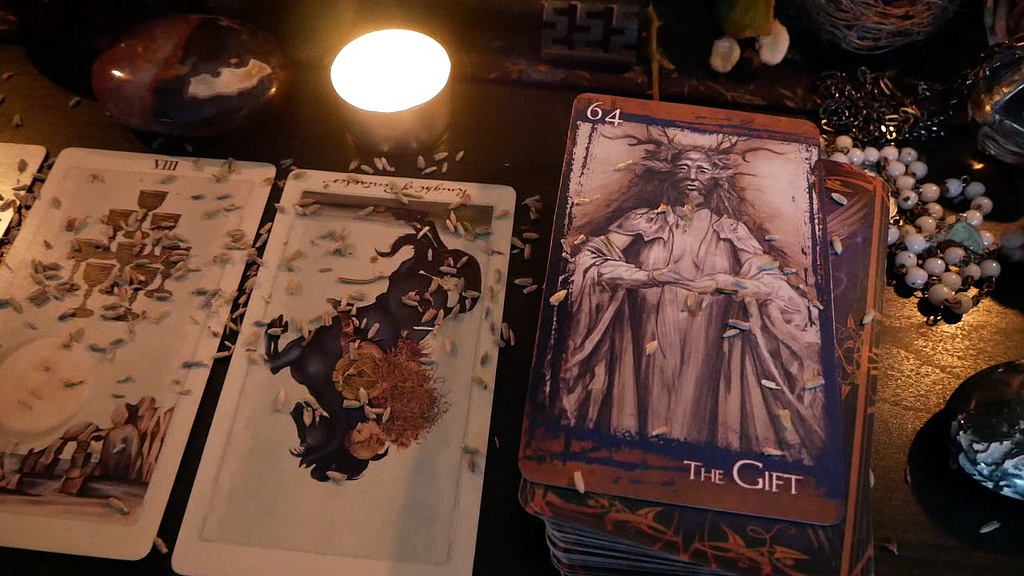
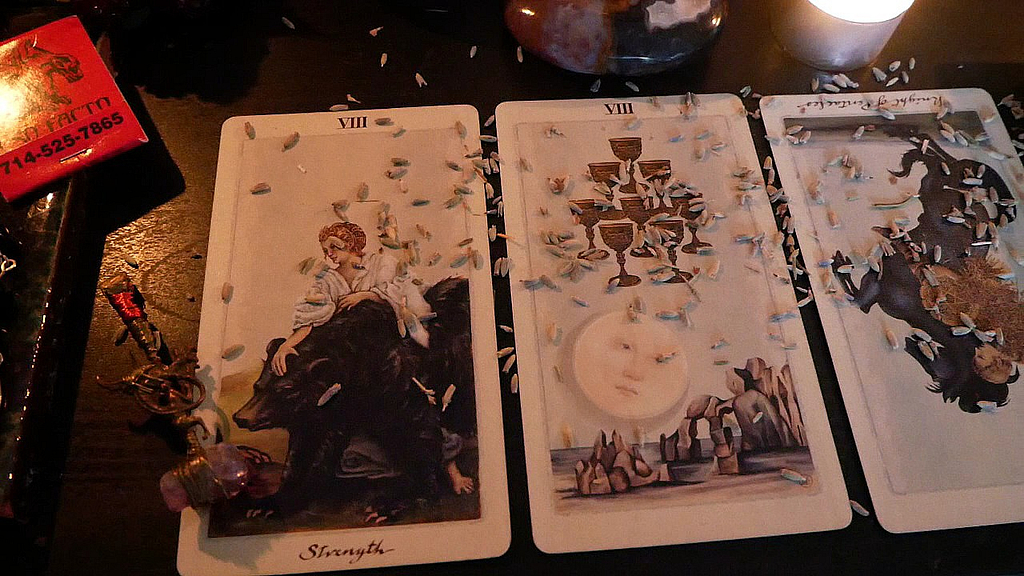
Time for some #spooky #autumnal #fallvibes! Featuring tarot and witchy shit. Call me crazy, but I think there’s something in this group of concepts – something creatively stimulating at least!
Decks featured:
The Somnia Tarot by Nicolas Bruno
The Deviant Moon Tarot (Paradoxical edition) by Patrick Valenza
As with so many things, a simple mental association double checked through the lens of a ‘quick Google’ yields a seriously mind-boggling rabbit hole. This blog post serves as a contextual supplement to this video:
I have had the topic of names on my mind for a long time. Anyone who plays traditional music will know that the name of any given tune is, shall we say, flexible. The way in which a lot of trad music works is that any given player or performer and certainly the more reputable recording artists will cite who’s version of a tune they play, where they have introduced changes, and will often also indicate if their own regional style has affected their playing or not, etc. A living folk tradition needs both that kind of flexibility as well as that kind of connectivity and accountability.
Recently, I decided to approximate a version of Shady Grove, pilfering most of my style and technique from this OLD video by “Gretchenman” (just look at his fingers fly!!!):
In doing so, I did a quick search online to refresh my memory about the lyrics (because I do sing along sometimes when I play) and check in on some basic background information on the song. Shady Grove (Roud 4456) is mostly considered an Appalachian tune [1,2] and there is a possible link with the English/Scottish tune Matty Groves (Roud 52; a famous version of which was recorded by Fairport Convention, for example) [3]. The two songs share the same melody and the fact that one is a murder ballad and the other a song in which a woman’s name has seemingly toponymic qualities interested me from a personal gnosis perspective. Drawing wild and highly metaphorical connections in my own head, I liked the familiarity of something that sounds like a place having an almost euhemerised quality… certainly Ireland abounds with such locations and its medieval literature/mythology has whole genres and stories centered on naming places after people and people after places, or just blending the two entirely.
Now, I’m NOT claiming that there is any such analogy to be drawn in historically viable or collectively verified ontological* terms. It’s just a fun poetic exercise. Creative license, as it were.
However! The rabbit hole referred to earlier drew me from link to link: first investigating the lyrical content of Shady Grove; then to it’s Roud Index Number and associated articles about the development of the song over time (including various collections in which it is annotated as well as different known recordings of it); then to re-acquainting myself with some of the basics on Cecil Sharp (because it’s been a while). Lo and behold… I forgot a) about his nationalism and the troubled legacy of his methodology in seeking out ‘Englishness’ in music, especially in Southern Appalachia [5] but also b) that he was in other ways influenced by William Morris’ socialist lectures and …potentially also approached his work through the lens of spiritualism at some point!? 🤯
This last bit seems totally unclear to me and I am finding it hard to validate until I can actually access some of the academic articles I’ve found online [6]. (This is where I am REALLY happy to have a free external reader’s card with UCC Library…ah, the perks of living in a Uni town!) But in scrolling through the Roud listings on Matty Grove, I saw they had an entry in Sharp’s diary from the 29th of August, 1916 in which he makes use of the word “séance”.
It’s strikes me that it’s possible this word has some other meanings or context of which I am not aware (I yielded no obvious or immediate answers from a quick search online) but it would seem there are a few articles out there at least that might make this clear once I’ve had a chance to read them. In theory, it doesn’t strike me as too unreasonable because this IS a time period in which a lot of academia (especially those with nationalist or otherwise politicised interest in folk movements) drift in and out of spiritualist circles and ‘methods’ of inquiry**.
I am not sure how all of that will go yet but I also hope to read a few more recent assessments of the problems in Sharp’s legacy.
Magickally, one of the things I am doing in playing such a tune (in which I usually face my altar, by the way) is reshaping identity. Drawing creative connections on the euhemerization of names, of nouns as names/names as nouns, and asking questions of my own anthropopathism and ‘pathetic fallacy’***.
At this point, the choice to play “Flatlands” by Chelsea Wolfe and Mark Lanegan over the first part of my video should begin to make added sense.
It all comes back around to walking the razor edge between what seems appealing as a creative or metaphorical idea and what is actually academically and historically viable work. We have to be okay with their inherent dissonance. You might even call it… an art.
* Here I am using the philosphical defintion of ‘ontological’ rather than the metaphysical one!
** Giving the Golden Dawn, Theosophists, and soooo many 19th and early-20th century artists and thinkers bombastic side-eye. Criminal offensive side-eye.
*** Oop! Hello, Ruskin!
§ 9. And thus, in full, there are four classes: the men who feel nothing, and therefore see truly; the men who feel strongly, think weakly, and see untruly (second order of poets); the men who feel strongly, think strongly, and see truly (first order of poets); and the men who, strong as human creatures can be, are yet submitted to influences stronger than they, and see in a sort untruly, because what they see is inconceivably above them. This last is the usual condition of prophetic inspiration.
§ 10. I separate these classes, in order that their character may be clearly understood; but of course they are united each to the other by imperceptible transitions, and the same mind, according to the influences to which it is subjected, passes at different times into the various states. Still, the difference between the great and less man is, on the whole, chiefly in this point of ‘alterability‘. […]
§ 11. Now so long as we see that the ‘feeling‘ is true, we pardon, or are even pleased by, the confessed fallacy of sight which it induces: we are pleased, for instance, with those lines of Kingsley’s, above quoted, not because they fallaciously describe foam, but because they faithfully describe sorrow. [7]
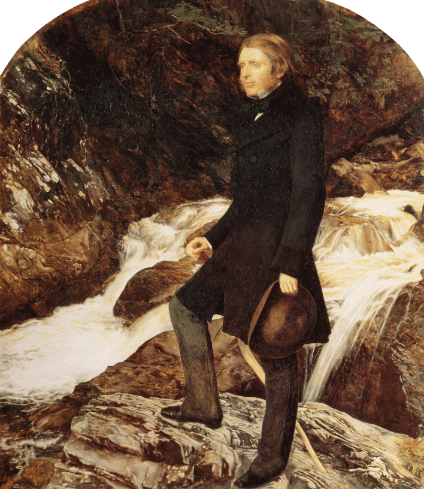
John Ruskin at Glen Finglas by John Everett Millais, 1853-1854 (Public Domain)
(1) Shady Grove (Roud 4456), Mainly Norfolk: English Folk and Other Good Music, mainlynorfolk.info/folk/songs/shadygrove.html. Accessed 6 Feb. 2024.
(2) “Vaughan Williams Memorial Library: Shady Grove.” English Folk Dance & Song Society, http://www.vwml.org/search?q=Shady%20Grove&is=1. Accessed 6 Feb. 2024. (Of note, the English Folk Dance & Song Society owns the Cecil Sharp House.)
(3) Spiegel, Max. “Origins: ‘shady Grove’ a Mondegreen ?” The Mudcat Cafe, mudcat.org/thread.cfm?threadid=131461. Accessed 6 Feb. 2024. (“Mondegreen” is my new favourite word now. Story of my hearing impaired life!)
(5) “Cecil Sharp.” Wikipedia, Wikimedia Foundation, 26 Jan. 2024, en.wikipedia.org/wiki/Cecil_Sharp#Political_Views. (Yes, its Wikipedia ~ but the citations at the bottom of the article look like they’re worth exploring.)
(7) Ruskin, John. “Of the Pathetic Fallacy from ‘modern Painters’ (Volume III, Pt. 4, 1856) by John Ruskin.” The Pathetic Fallacy, Ruskin (1856), http://www.ourcivilisation.com/smartboard/shop/ruskinj/index.htm. Accessed 6 Feb. 2024. (I have no interest or affiliation with the author of this site as a whole, this link is simply where I have accessed an online free readable copy of Ruskin’s writings on the Pathetic Fallacy.)
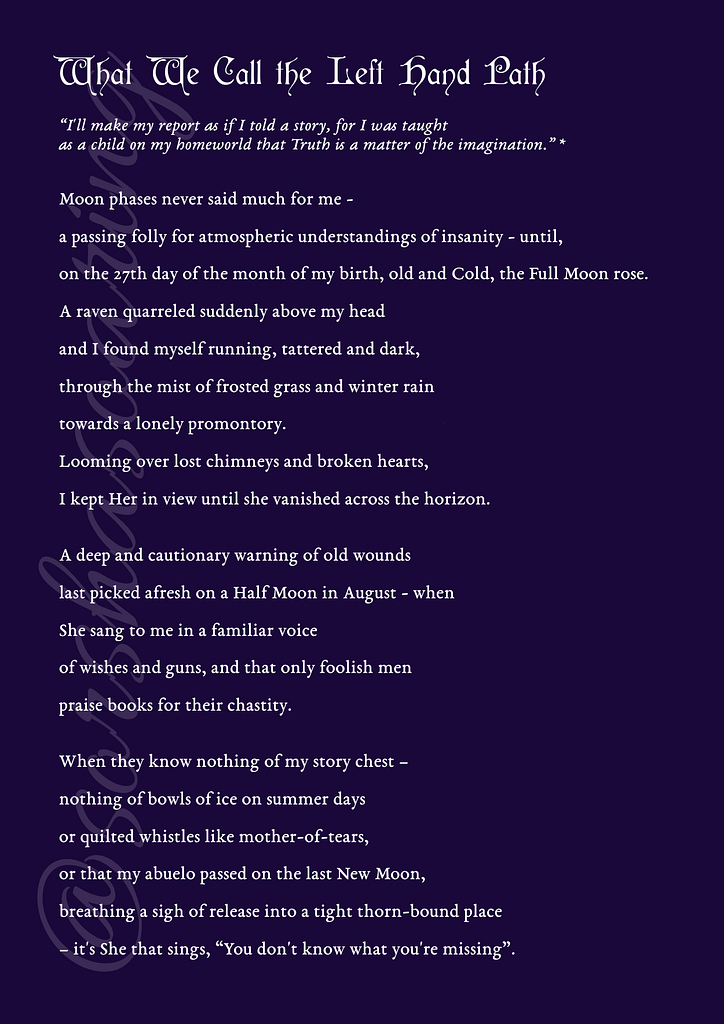
Every now and then – almost unsuspectingly – a poem will emerge swift and nearly full-fledged. When this happens it always reminds me of No Face from “Spirited Away”. I feel that as I emerge from a place of intensity, often a place that’s not so good for me, the poem spews forth like tarry gall – I get the thing out feeling cleansed and returned to self.
Or perhaps the poem emerges like some kind of ectoplasmic gauze with my words already jotted on it. My poetry is always filtered through and/or dedicated to the Morrígan as the medieval literature abounds with (Her) prophecy and sorcery in verse. (A rabbit hole I’ll explore on this blog as time goes on.)
In any case, yesterday I was playing the dulcimer and mulling over a few things and upon striking the last lines of a tune, the poem started coming out. In my distraction, I hit the strings of the last chord in such a manner that a resonant overtone or harmonic sounded loud and clear – like a bell.
Luckily I was already at my desk. Dulcimer placed carefully to one side, pen and paper already in hand.
Here is what I coughed up:
* The quotation at the beginning is taken from the opening line of Ursula K. LeGuin’s The Left Hand of Darkness.
** It should also be noted that there is a version of “Hares on the Mountain” that makes an appearance in this poem. It’s Roud Folk Song Index No. 329 (here’s a link). I don’t know if anyone else finds that certain songs (be they old or new) have a way of following you around in life but this is one such song for me. Specifically, for this poem, you can find renditions of it by Josienne Clarke & Ben Walker or by Shirley Collins.
*** There is only one half-truth in this poem. 🎃
I’d love to hear any thoughts people have on how their gnosis occurs… and does it take time to understand certain parts of it? Is it instantaneous or cumulative? Or both?
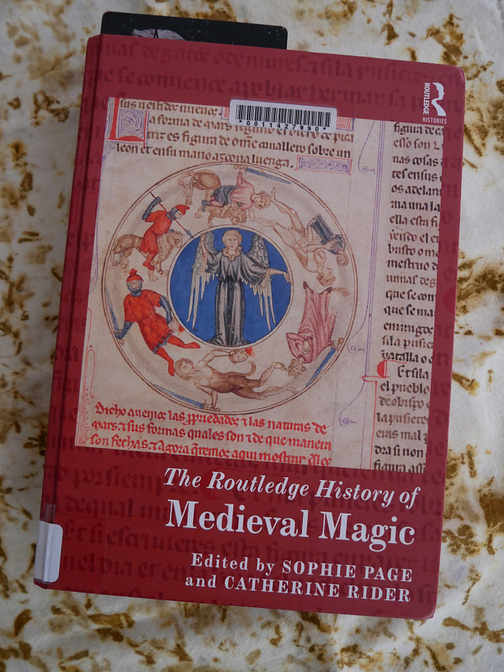
I mentioned in last week’s video (“Who Painted the Lion?” or “Medieval Shadows & Cards of the Year”) that I have begun exploring academic perspectives on medieval magic. The first thing of note is a fairly baseline agreement on the historical distinction between ‘magic’ and ‘witchcraft’ (something we see holds true in the early modern period as well through secondary works by the likes of Ronald Hutton etc.) The second thing to highlight is that, as with most things, this is an entire academic discipline and a developing one. My intention is to pursue the points that interest me and then see how it feels to relate some of that back to my own work as a modern practitioner of ‘medieval-infused’ witchcraft and art magic.
The aim of this post and any others like it (e.g. capering treacherously on the border, with historical research or context on one side and personal gnosis or numinous magic on the Other) is simply to show ‘process’:
How do I gather ideas or inspiration?
When, how, and why does that inform my magick and art?
Why might that lead to further UPG (Unverified Personal Gnosis)?
For now, I’ve started with “The Routledge History of Medieval Magic”, edited by Sophie Page* and Catherine Rider and published in 2019. The main goal of the book is to show the current standing of the field but also to illustrate various directions in which it needs expansion. It’s less an overview of what has come before and more an academic call to action with each chapter serving as useful examples, or signposts, for further research. Yes please!!!
Part I, Chapter I: “Rethinking how to define magic” by Richard Kieckhefer presents some interesting ideas surrounding why magic is difficult to define (even for academics! We’ll steer clear of the choppy waters around definitions of magic and witchcraft in modern practice on this blog!)
Concepts that caught my eye came up as he was establishing his main system of “aggregating terms” vs. “constituitive terms” (pp. 15-16) – i.e. the vague umbrella terms like ‘magic’ vs. better defined component parts. He draws a comparison to the term “mysticism”. Like the word magic, ‘mysticism’ resists attempts at explanation and evokes many different ideas or impressions of what it is.
“A comparison may help. It has long seemed to me useful to think of mysticism […] not as a single phenomenon but rather as a cluster of phenomena that may at times be distinct but tend to become intertwined. There is mystical prayer, mystical relationship and mystical consciousness.” (p. 15)
In the medieval Christian context,
mystical prayer – involves “fervent and intense, highly concentrated, focused prayer, cultivated within the setting of the contemplative or monastic life.”
mystical relationship – Kieckhefer represents through Bernard of Clairvaux or “the German sister books that are deeply steeped in “theoerotic” relationship […] with Christ.”** This is the view in which one might ‘burn with love’ for deity.
mystical consciousness – Kieckhefer says can be found in the vernacular sermons of Meister Eckhart “who wants his hearers or readers to gain a lively awareness of God’s presence within herself […] and her own true and eternal presence within God.”
Kieckhefer clarifies that these may all be combined in different ways by a single medieval writer. His example is the writing of Teresa of Ávila. (p.15)
I’m already interested in the murky waters of mystical thinking… not to mention words like “theoerotic” (which, incidentally, might be more readily available to the imaginations of non-Christian devotees of deity or deities).
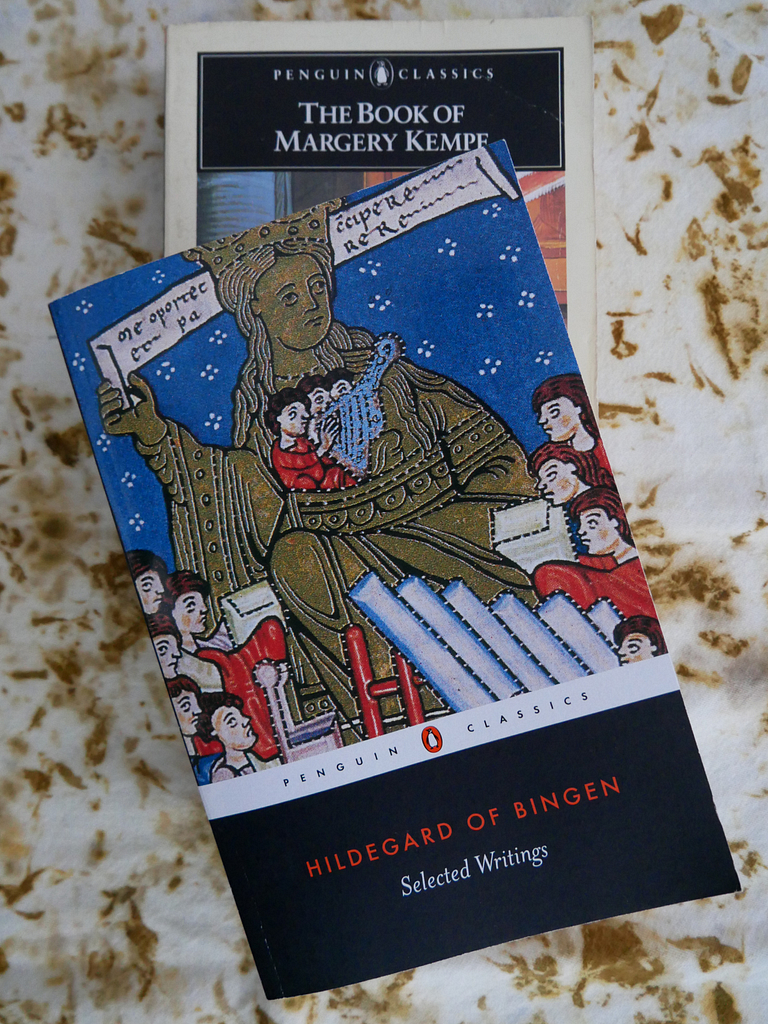
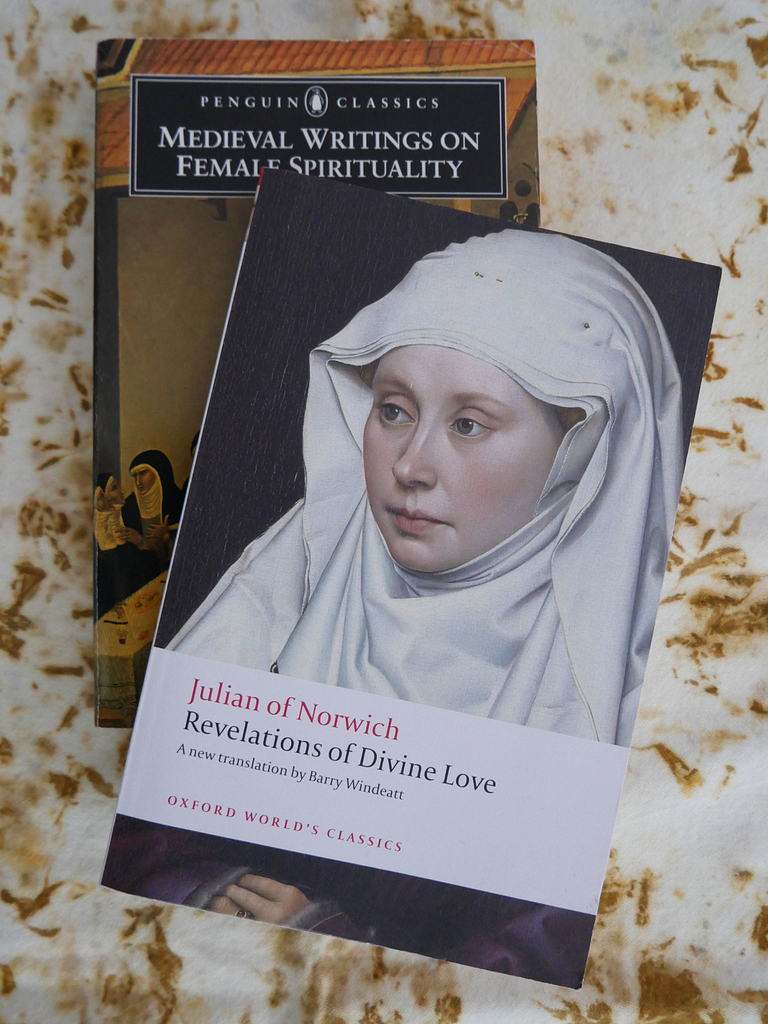
**Some books on my ‘TBR’ taken from my atheist partner’s bookshelf (who’s shelf SHOULD these belong to? Squabbles abound.)
However, coming back to the aggregating term of ‘medieval magic’, Kieckhefer offers at least three options for its constitutive terms: conjuration, symbolic manipulation, and directly efficacious volition. (p. 17-18)
Honing in on symbolic manipulation (hello, art witch here!) Kieckhefer says some really juicy words:
“If a plant shaped like a liver is useful for healing the liver, it is in that sense a sign of what is thought to affect, and the intelligible resemblance is what effects the healing. […] If conjuration is a reprobate branch of religion, symbolic manipulation claims an efficacy like that of science and will be seen by its practitioners as a type of science. The magician who manipulates symbolic links in the natural order might be thought of as tugging on invisible cords that link one level of that order with another. The symbolic links may be articulated in terms of cosmic correspondences and sympathies, at least in sources that provide theoretical grounding for magical practice. If the invisible cords are not thought of as efficacious symbolically, then the process is not magical; the user may not be told explicitly that symbolic links are entailed, and may simply be assured that the results are tried and proven, but in magical operations, the symbolic causality is at least implied by the types of word, ritual and object used.” (p. 17)
Taking this historical analysis and running wild with it in the modern day, I think the analogy of tugging on unseen cords of meaning is just…poetry. This may also provide a very useful visual for what some modern practitioners mean in their discussions of magical correspondences or energetic work. In my view, this perspective posits a model for developing personalised magical symbolism in art as and when it feels creatively powerful to do so. Whether the ‘invisible cords are thought of as efficaciously symbolic’ might be the keystone for agency in that approach. If I were to use the language we have explored here in Kieckhefer’s chapter, then to be an art witch is just as much the work of developing artistic style, an individual (and recognisable) ‘voice’, and recurring visual motifs that – when aggregated – convey an added layer of meaning in the whole that is the finished piece. In other words, they constitute magic.
Art must also speak for itself… but in theory, part of the magick that heightens its efficacy might lie in some of the following: symbolic connections forged by the individual artist; the time spent exploring the meaning of what they want to do or say; practicing techniques for how that might be rendered; and strengthening those motifs (‘correspondences’) over time. Perhaps this is contained in colour choices? Or recurrences in textural play? In different media? Or in more literally repeated visuals like egg symbolism?
I’m reminded of the medieval Irish approach to manuscript illumination and prayer…where the word and all its colours and symbols IS the prayer, IS the presence of the divine in an even more literal sense. (A famous example being the Chi Rho page in the Book of Kells.)
I would very much love to hear your thoughts in the comment sections! How do you feel about the way your creativity or your magick comes together or what that process entails? What do you think about sources of inspiration and how that becomes magickal for you (whether you make art or not!)?
Incidentally, medieval Ireland, medieval Celtic magic, and how that might impact art witchery will be the topic of Part 2 of this post. I’ll leave you with that cliff-hanger – mainly due to space and time constraints – and hope very much to see you there.
Page, Sophie, et al. “Part 1, Chapter 1: Rethinking How to Define Magic.” The Routledge History of Medieval Magic, Routledge, Taylor Et Francis Group, New York, NY, 2019, pp. 15–18.