So, I’m in the middle of a massive change right now and, at the same time, I have also recently done myself the (mixed) favour of getting two full days of colour-work done for a tattoo that covers almost a quarter of my body…
Suffice it to say I’m hecking tired and I’m gonna stay that way for a bit and I did it to myself and that’s what really hurts >_<.
To make up for the lack of posts – but *not* the lack of creativity and general witchery – this post essentially contains a photo dump of (some) recent projects and artistic goings on amidst ::wooooooo:: big change ::woooooooo:: ^_^
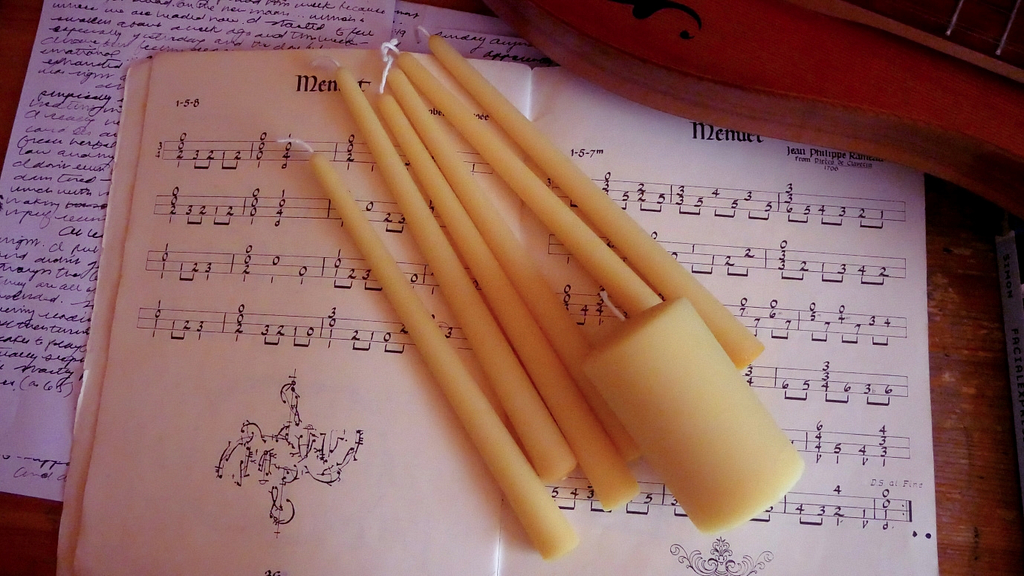
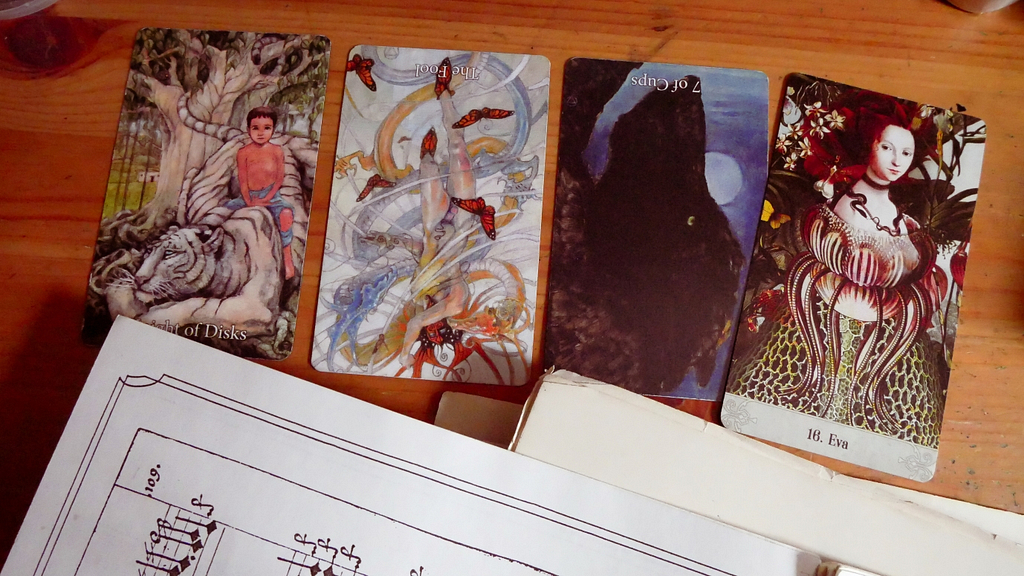
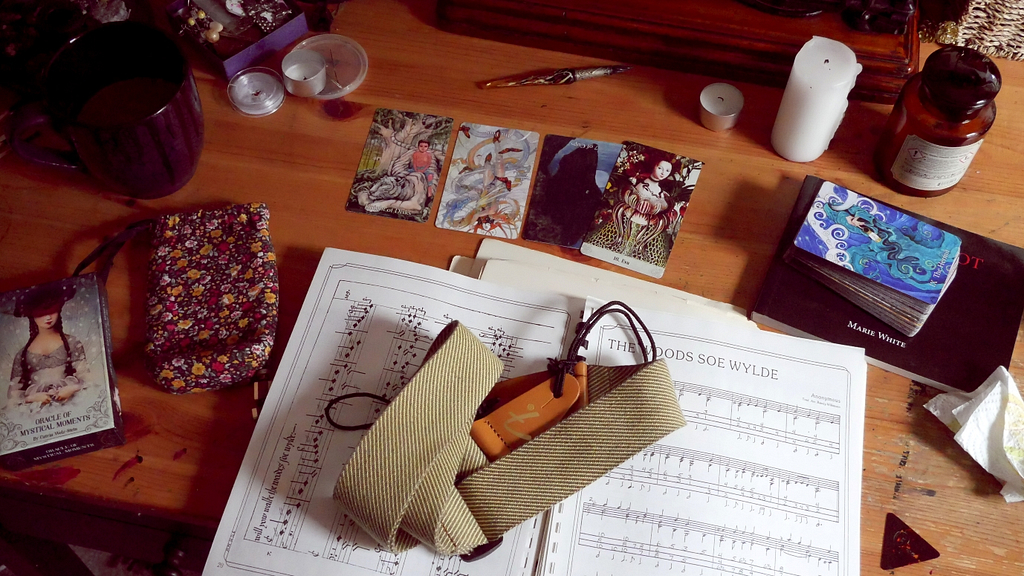
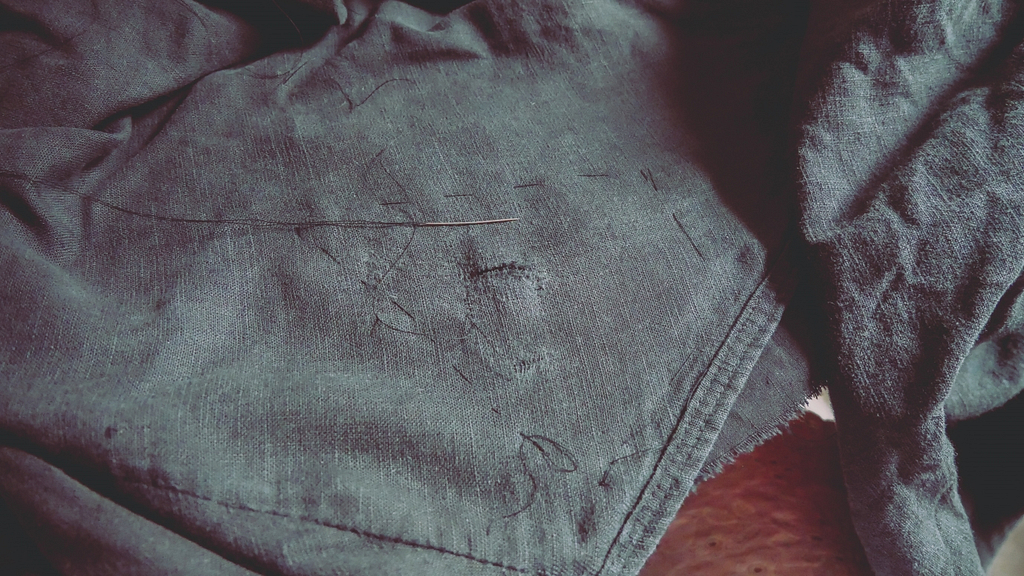
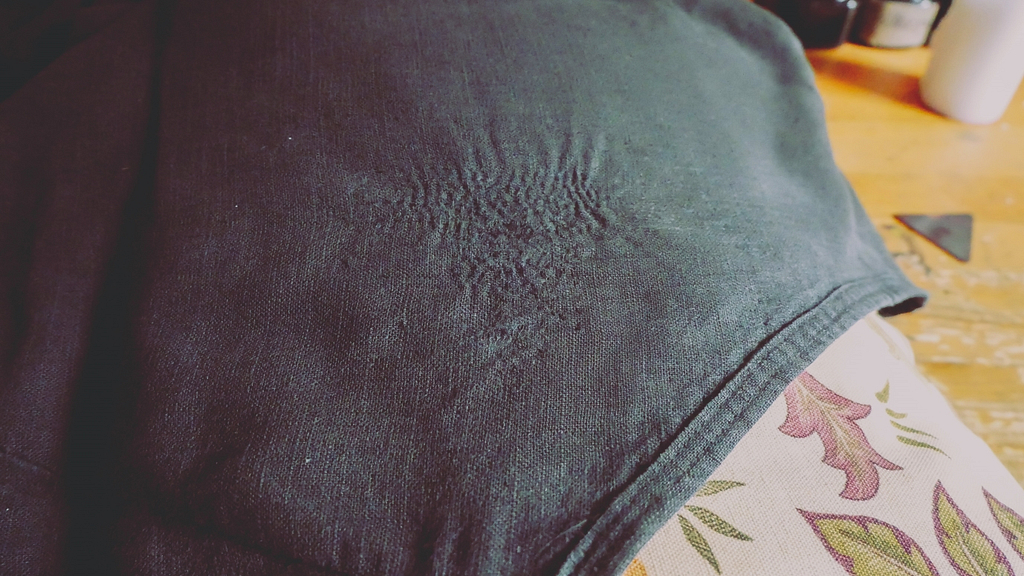
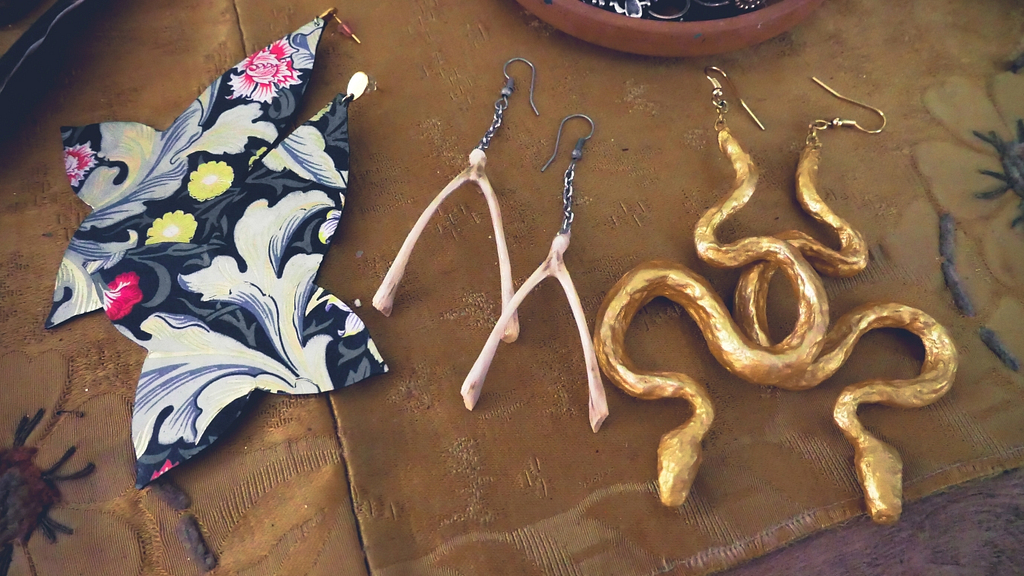
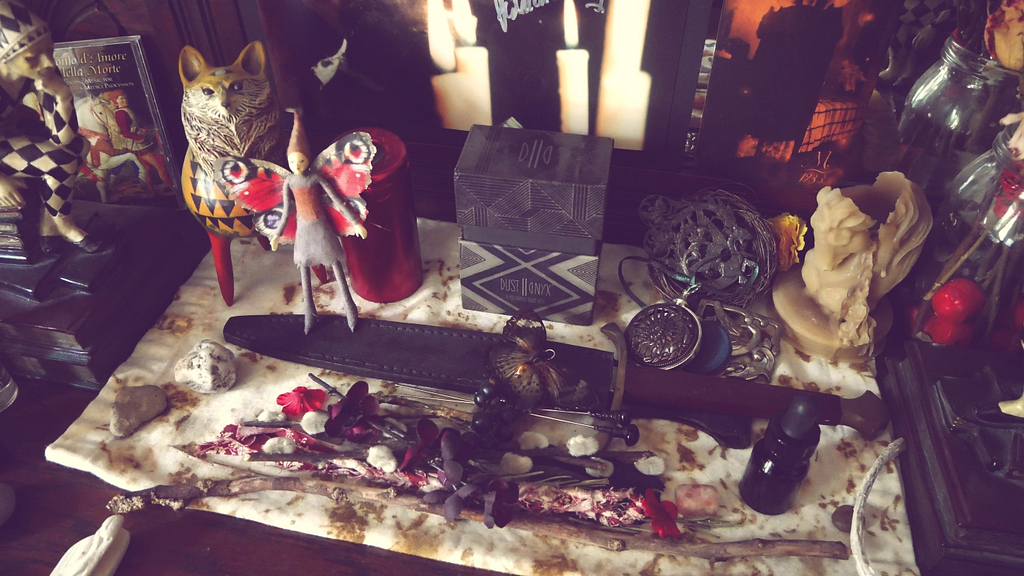
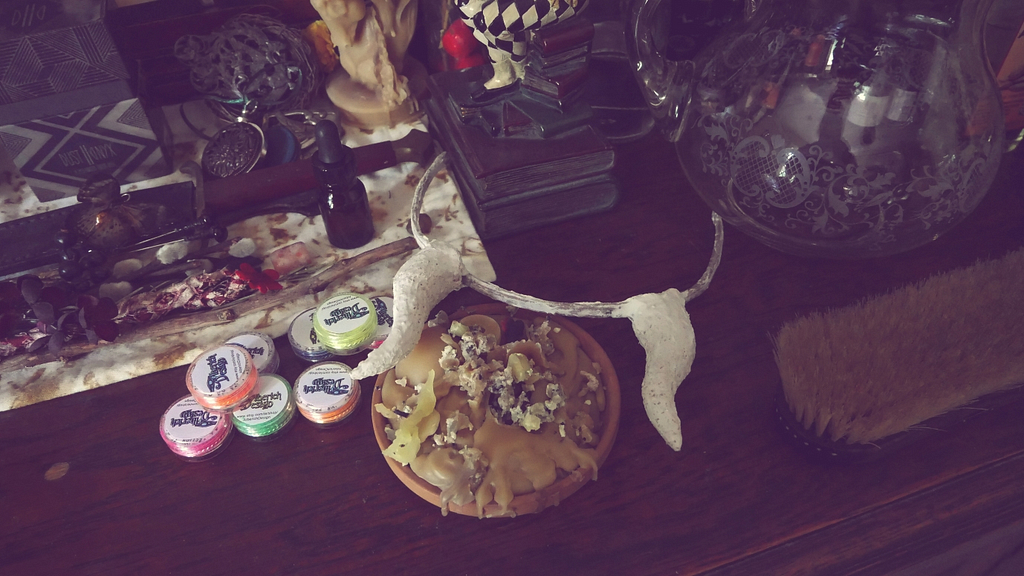
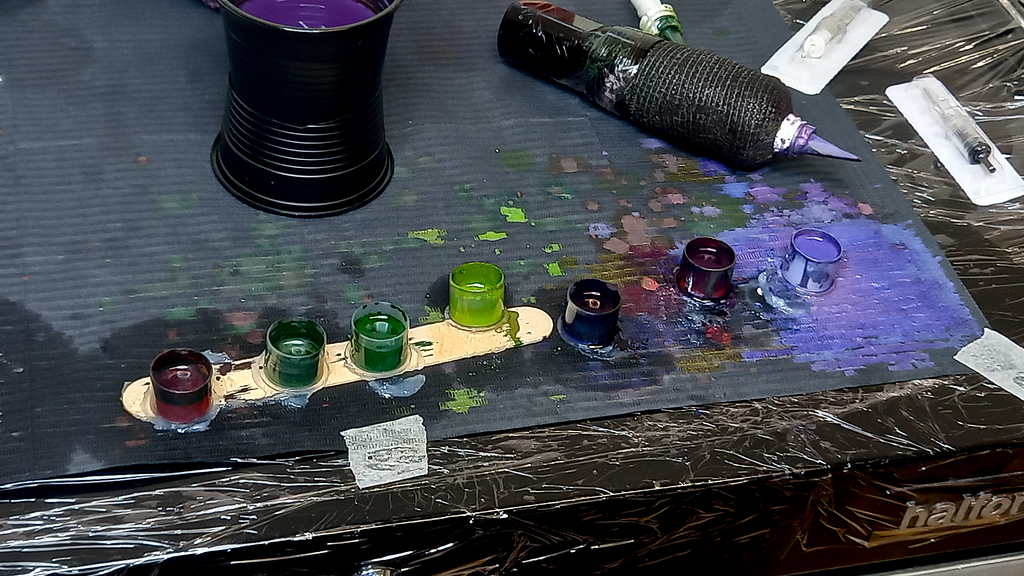
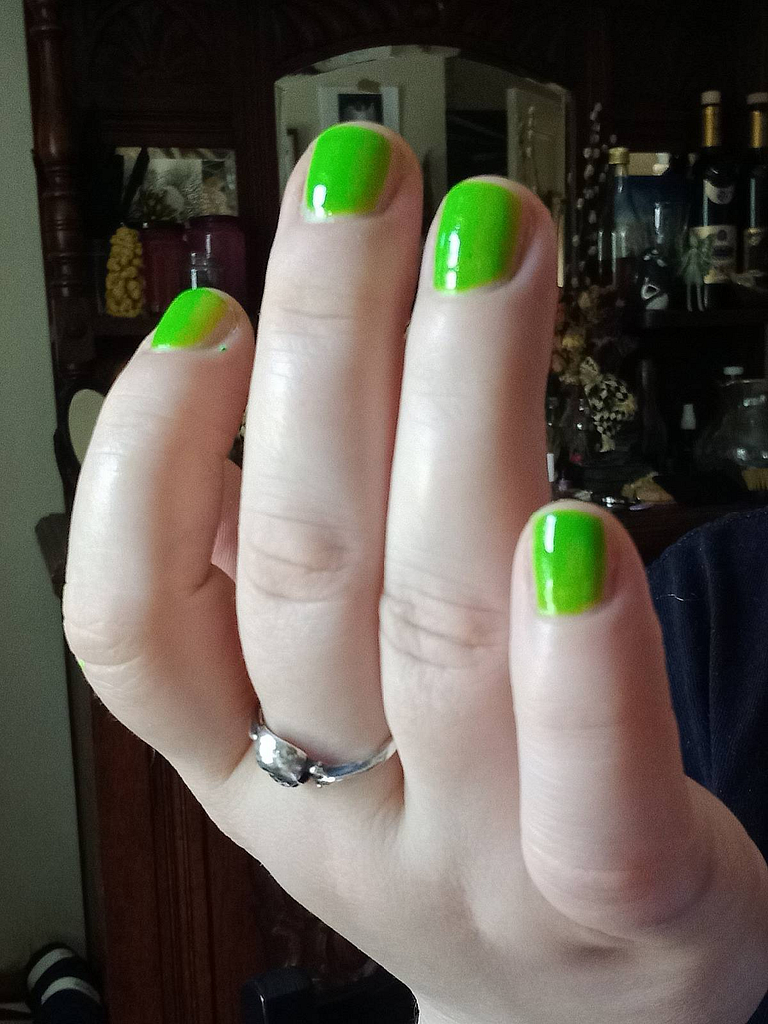
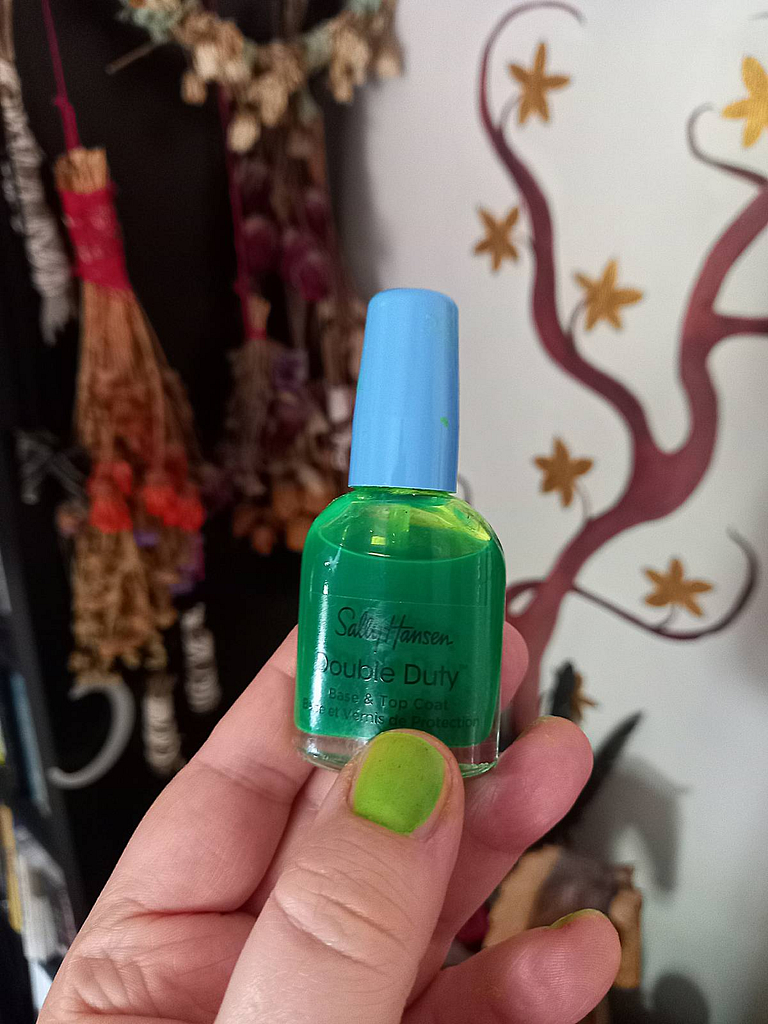
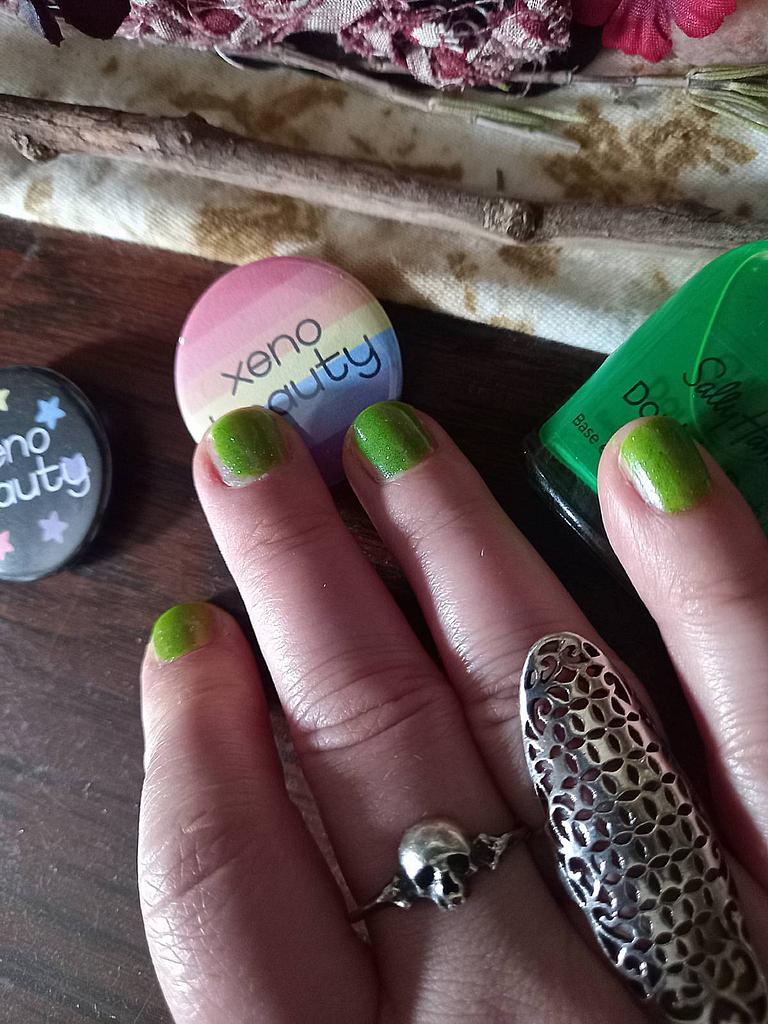
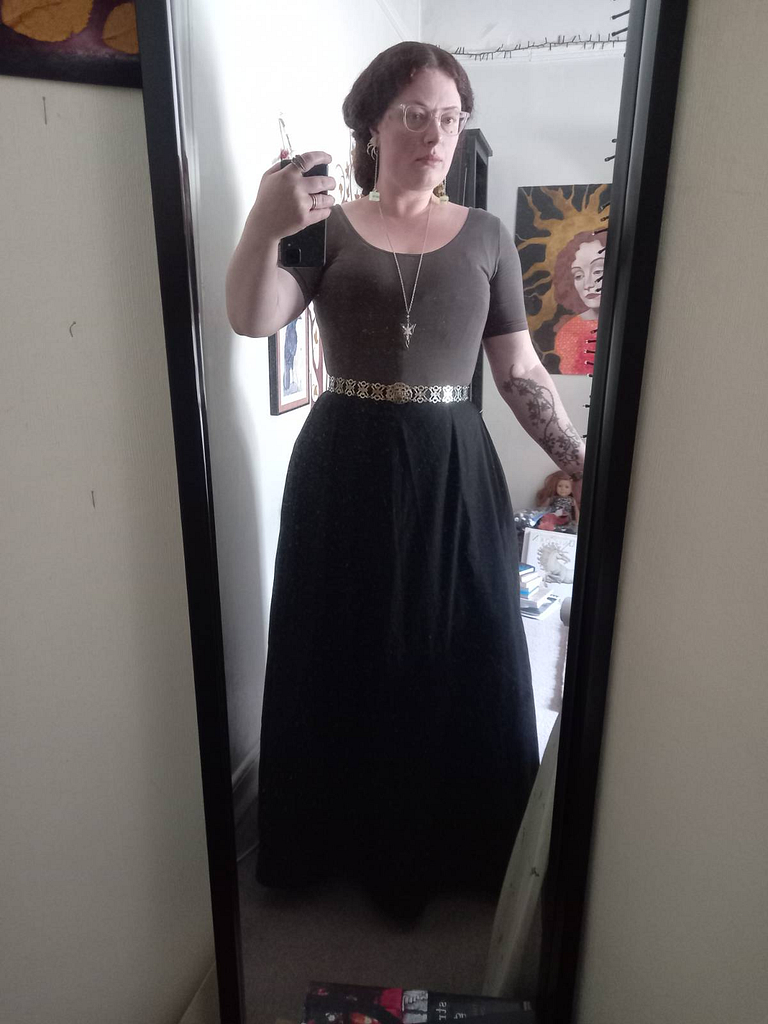
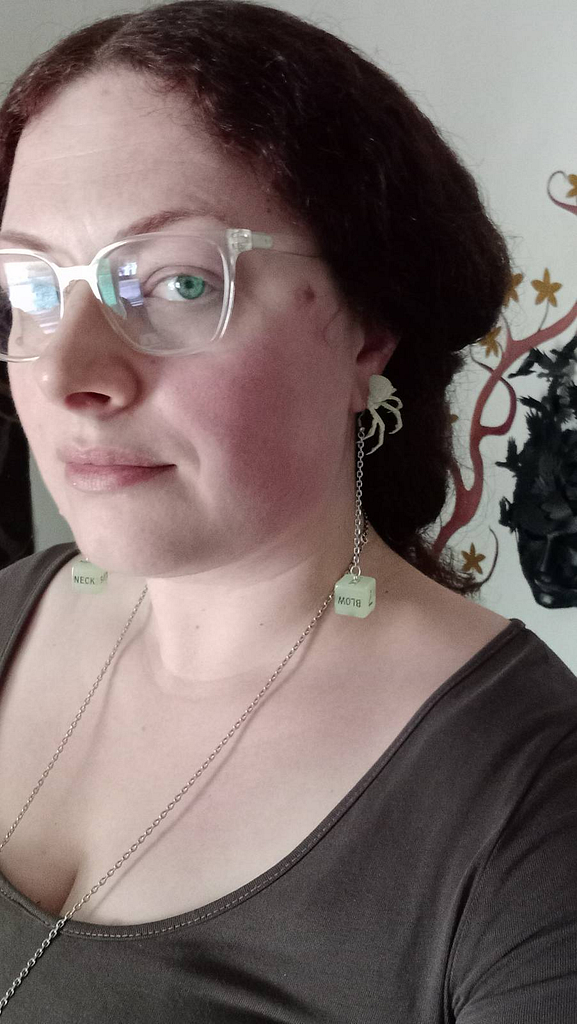
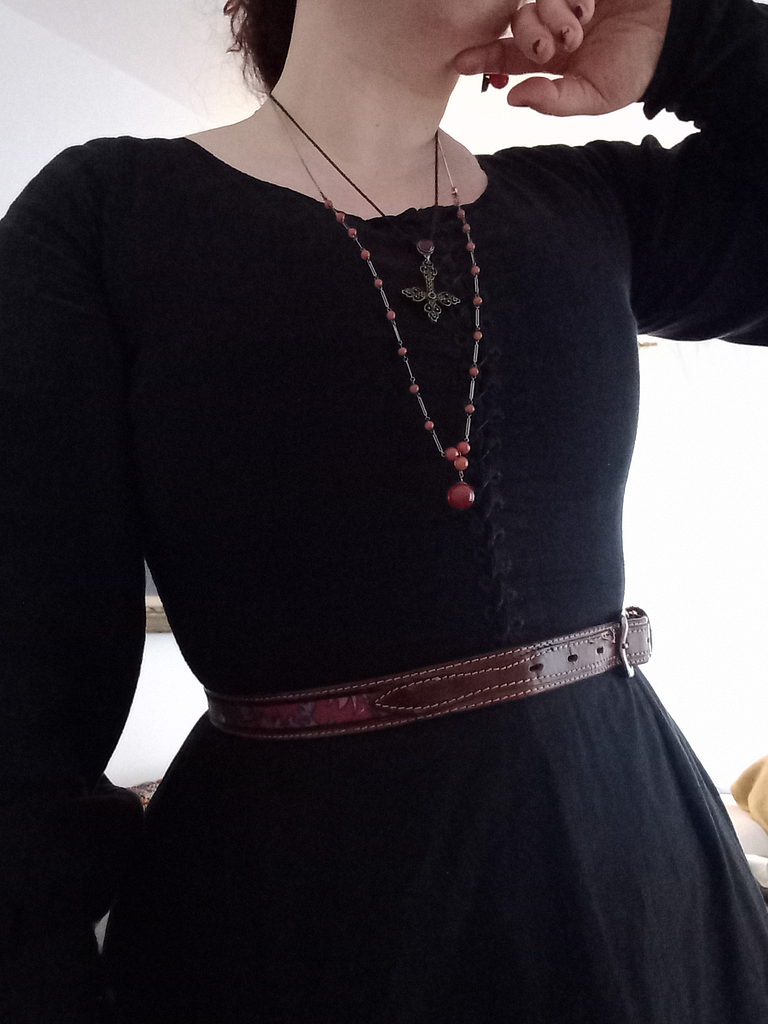
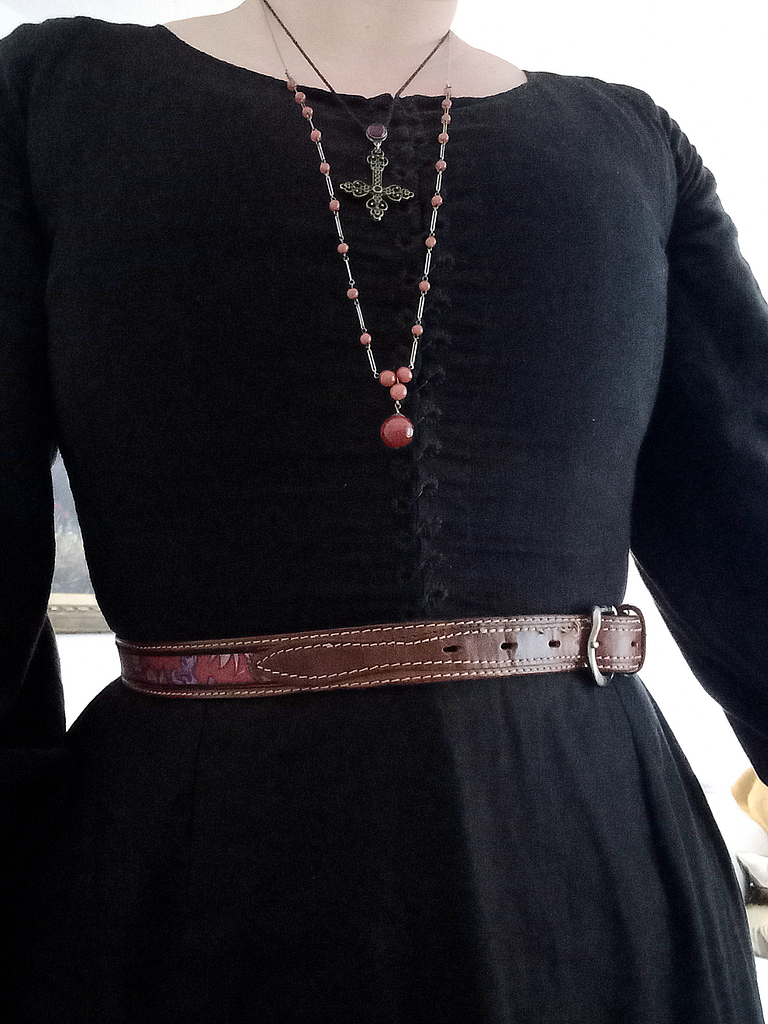
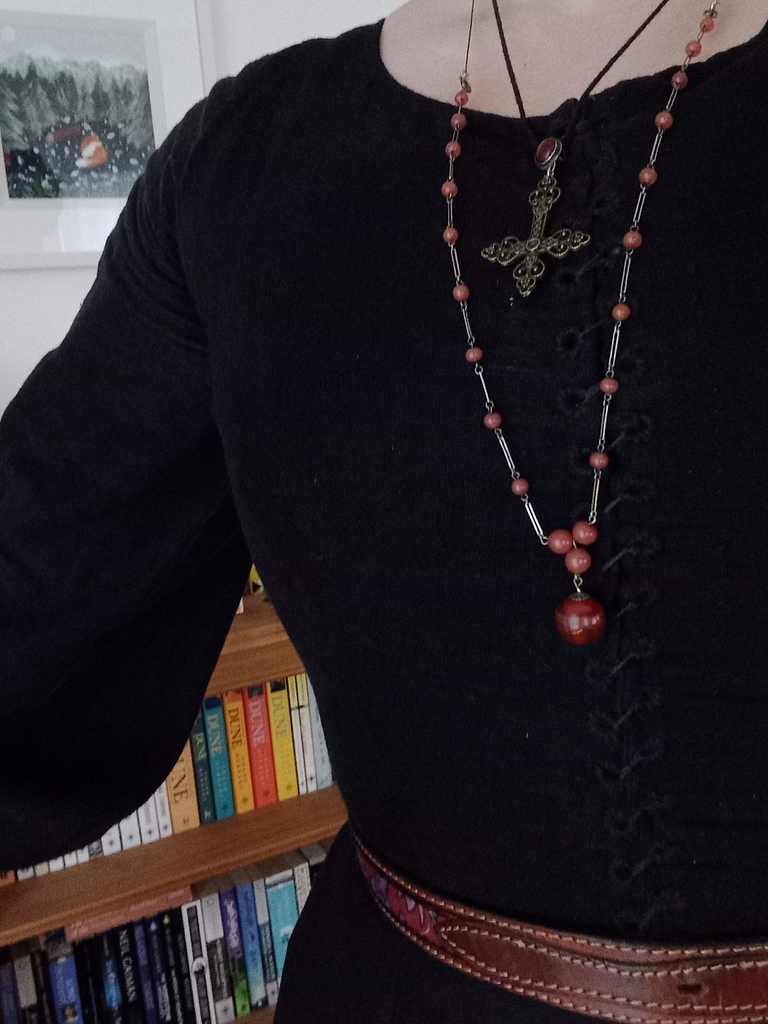
Recent shots of my desk – homemade beeswax candles, card readings, and musical practice. You may recognise the first image as the thumbnail for my most recent video post. Terribly cringey and an algorithmic shot in the foot… sorrynotsorry!Before and after mending a rip in my skirt (not pictured is the black cotton backing I incorporated into the stitching) & some homemade earrings (paper layers, glue, varnish; real wishbones, cleaned and varnished; paper mache clay, gold paint, varnish.)Recent shots of glamour altar (including perfumes, paper mache clay horns, and ultraviolet pigments) & a shot of the colours my tattoo artist was mixing and blending directly onto my skin!Adventures in making my own nail polish colours! Ultraviolet green (in various layer combinations)… I called it “Poison Apple” but my partner wants to call it either “Mutant Ninja Ooze” or “Aggressively Green”… thoughts?Random OOTD shots of the general vibe I’ve beeen going for these days! Complete with Evenstar & glow in the dark bugs and sex dice! ^_^
That’s all for now folks. Have fun storming the castle!!!
What if Madame Nostradamus, our “witty little knitter”, wanted her OWN scarf? Things are gonna get properly nerdy with this one. Strap in – I have no chill!
Note ~ my knit gauge was a little tighter than called for in the double knit weight, so I used the inches chart. I preferred the slightly denser look so I didn’t bother adjusting my gauge too much.
Paintings featured (anti-clockwise):
The Arnolfini Wedding by Jan van Eyck, 1434
Portrait of Christina of Denmark by Hans Holbein the Younger, 1538
Portrait of a Young Woman/Isabella of Spain and Denmark by Jan Gossaert, 16th c.
Portrait of a Lady by Rogier van der Weyden, c. 1460
Cornelis Aerentsz van der Dussen by Jan van Scorel, c. 1535
The Wedding Dance by Pieter Bruegel the Elder, 1566
A Young Princess (Possibly Dorothea of Denmark) by Jan Gossaert, 1530
Music featured:
Je suis d’Allemagne – Je suis trop jeunette by Ensemble Unicorn (Album ~ “Art & Music: Raphel – Music of his Time”)
Comment qu’a moy lonteinne by Falsobordone (Album ~ “1350 Music for a Plague”)
Something that has gripped my imagination my entire life is the idea of ‘Building Other Worlds’. Importantly, I don’t mean only as ‘substance behind narrative genres’. World-building for a fantasy novel or for game play, though deeply interesting, is only one popular iteration of a much broader interdisciplinary creative drive to make and experience other worlds. What of Art? Architecture? Costume? Music? Theatre? Ecological experience? Folklore? What of symbolism or spacial awareness? Where do we get ideas for what our worlds look like and what tools do we use to build them?
I have been wanting to write about this for a long time but have been puzzled about where to start. Do I start by explaining some things about art history? About perspective, image composition, numerology? Do I dig into how tiered worlds in late medieval and renaissance literature make their way into contemporary visual language? What about modern art? What about tarot or oracle? Witchcraft, sewing, or poetry? Would tracing themes of port cities and their proximity to marshland or wetland habitats get the message across? What about folkloric recordings of Victorian vs. Medieval streets in Irish town centres!? Ultimately, I realised I’m going to have to start where I am and, if you wish, you can follow me down each corridor as and when I get there.
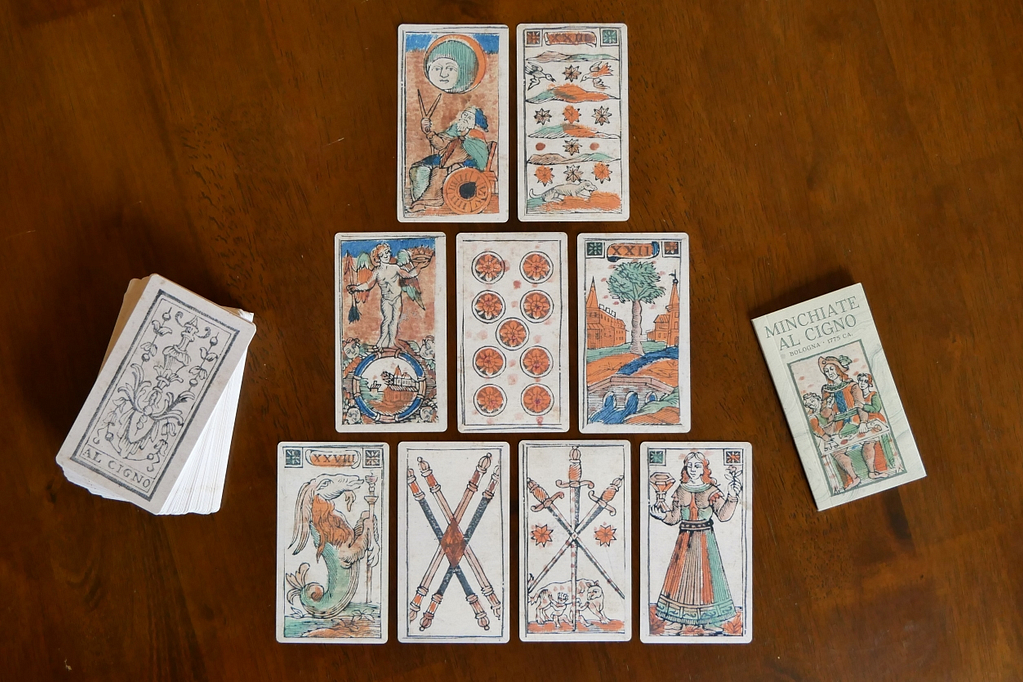
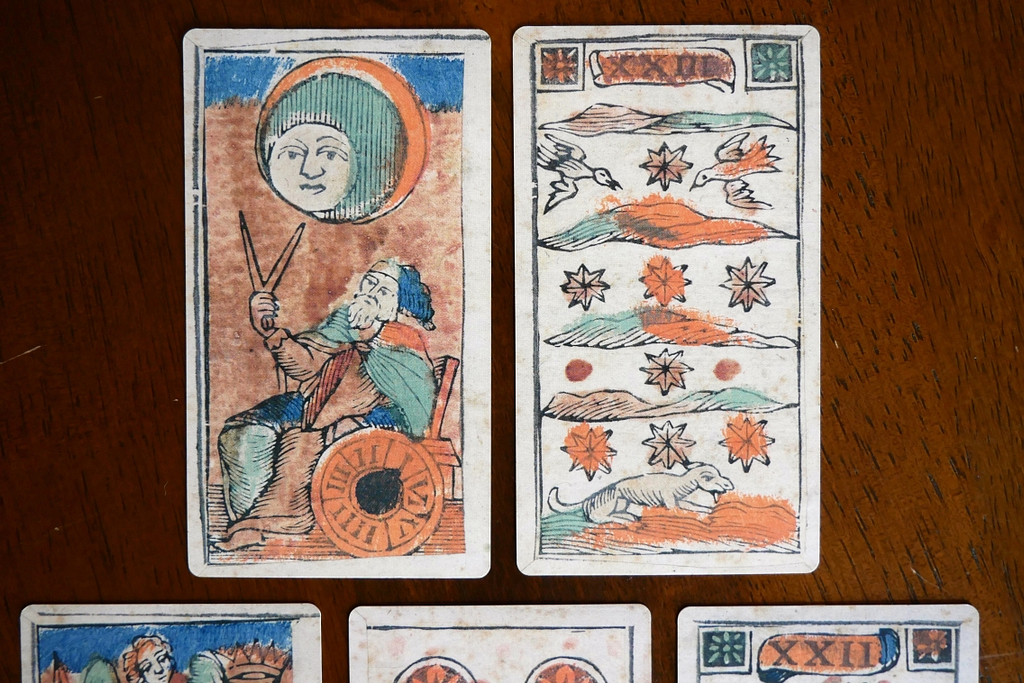
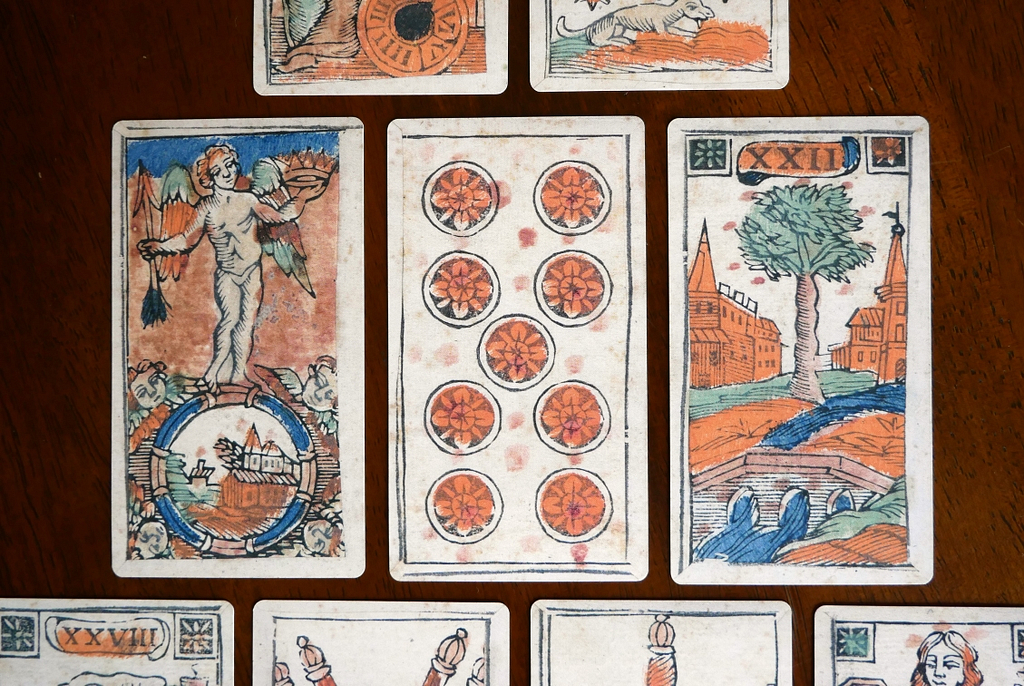
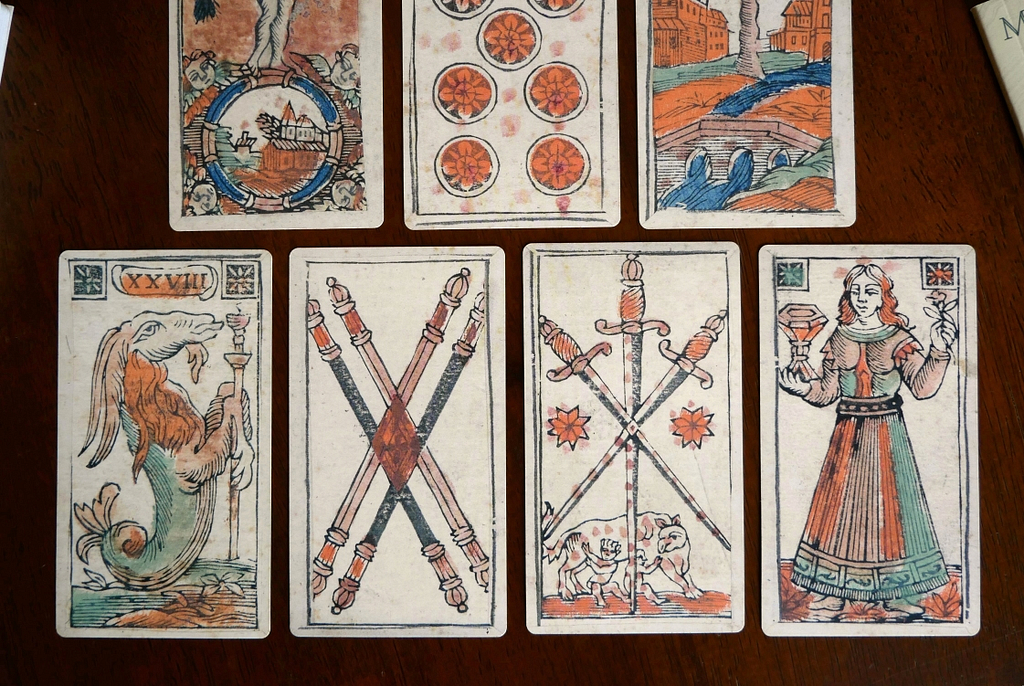
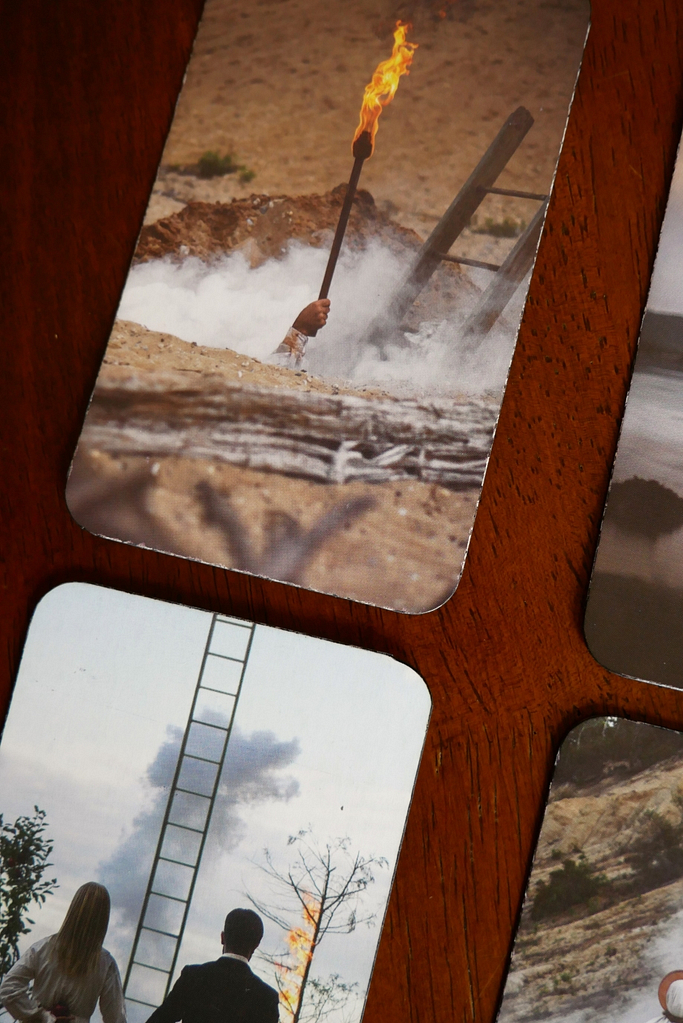
Here are some purposefully drawn 18th c. Minchiate cards illustrating how card visuals can help you construct doors to Otherworlds and populate them in turn with architecture, characters, and landscape …with pips for ‘scaffolding’!
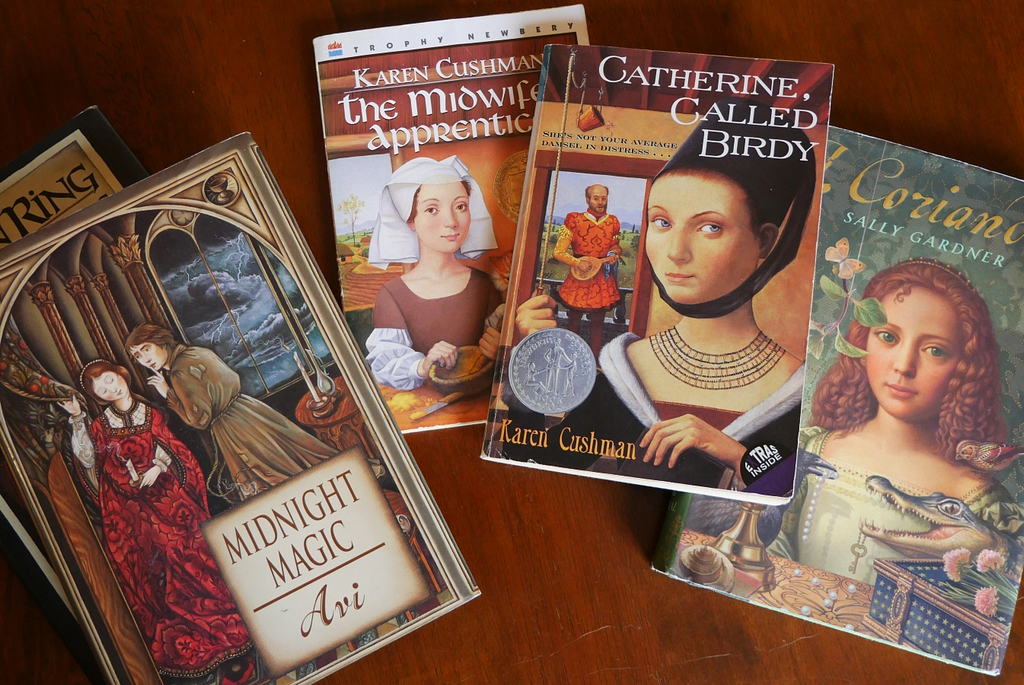
Recently, I revisited some books that were instrumental in helping me to identify myself when I was young. These follow very much in a similar vein to other favourites of mine such as Pish Posh, Said Hieronymus Bosch, The Books of Earthsea, The Chronicles of Prydain, The Hounds of the Mórrígan, or Jonathan Strange & Mr Norrell… and I took special care to obtain secondhand copies of the specific covers I grew up with as well.
I have yet to re-read The Raven Ring although I know I will love it as I can’t remember how many times I would have read it growing up.
There are five books in all (for now) – each of which features scenes relating to tarot, tarocchi, or otherwise emphasise attention to historical detail within their fictional plots.
* Midnight Magic by Avi (part of a series that didn’t exist yet when I was younger. I won’t talk about this one much because – as it turns out – it wasn’t as good as I remembered and it’s representation of tarot is tangential to the plot and seems fairly ignorant of what tarot is. I still LOVE the cover though!)
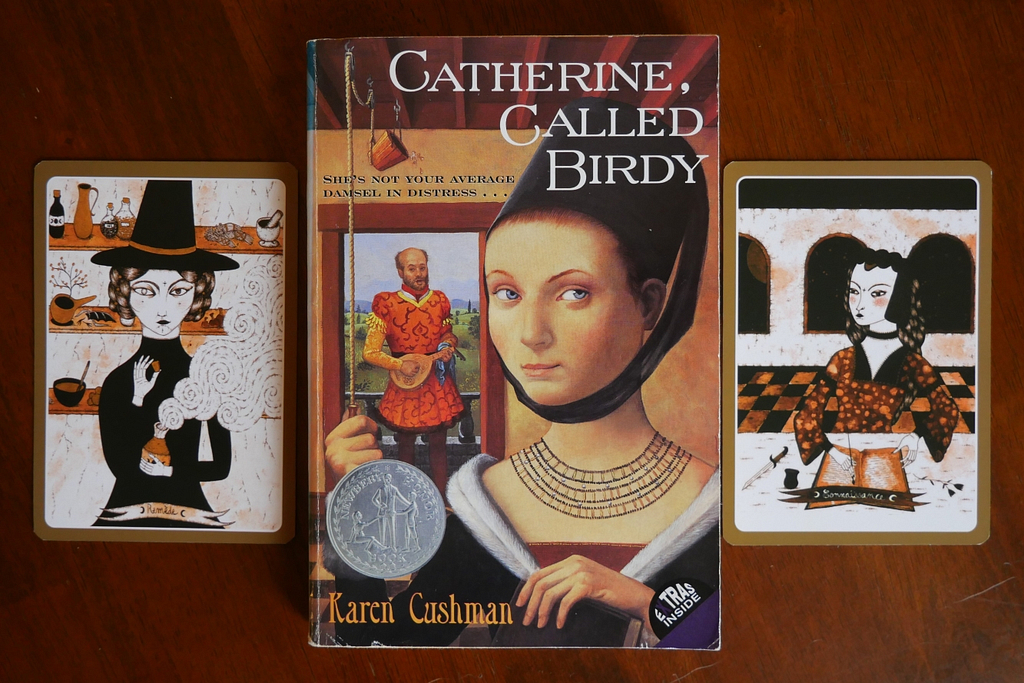
* Catherine, Called Birdy by Karen Cushman (no, I am not going to watch the new film abomina…I mean, adaptation of this beautiful wonderful highly intelligent book.)
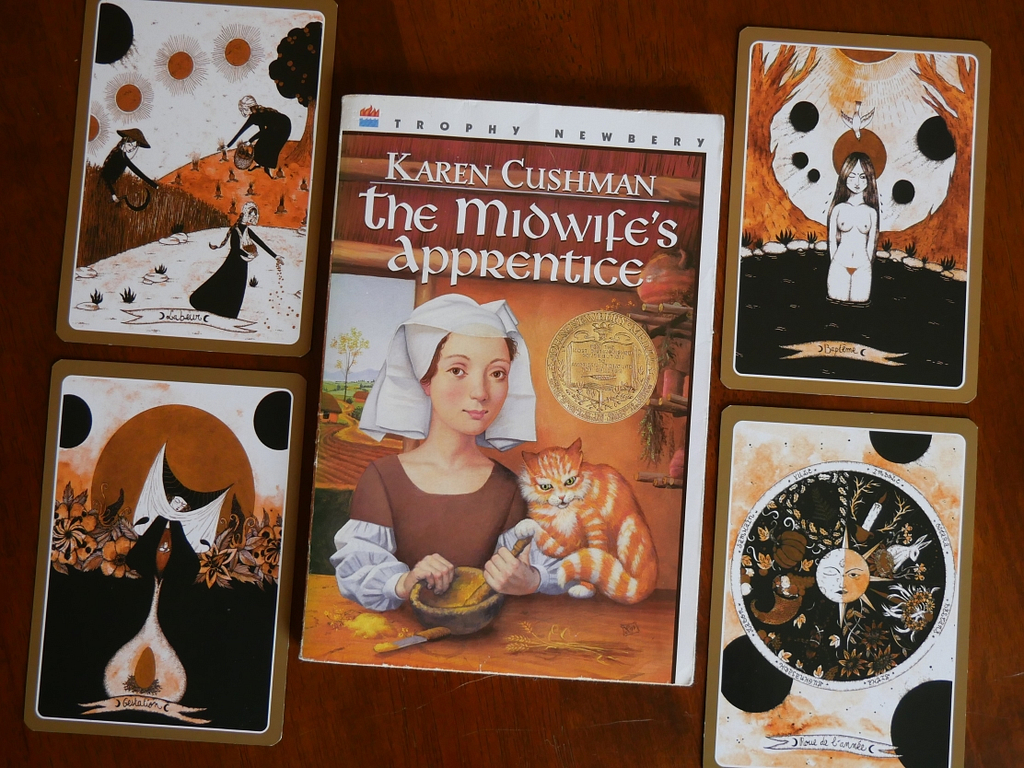
* The Midwife’s Apprentice by Karen Cushman
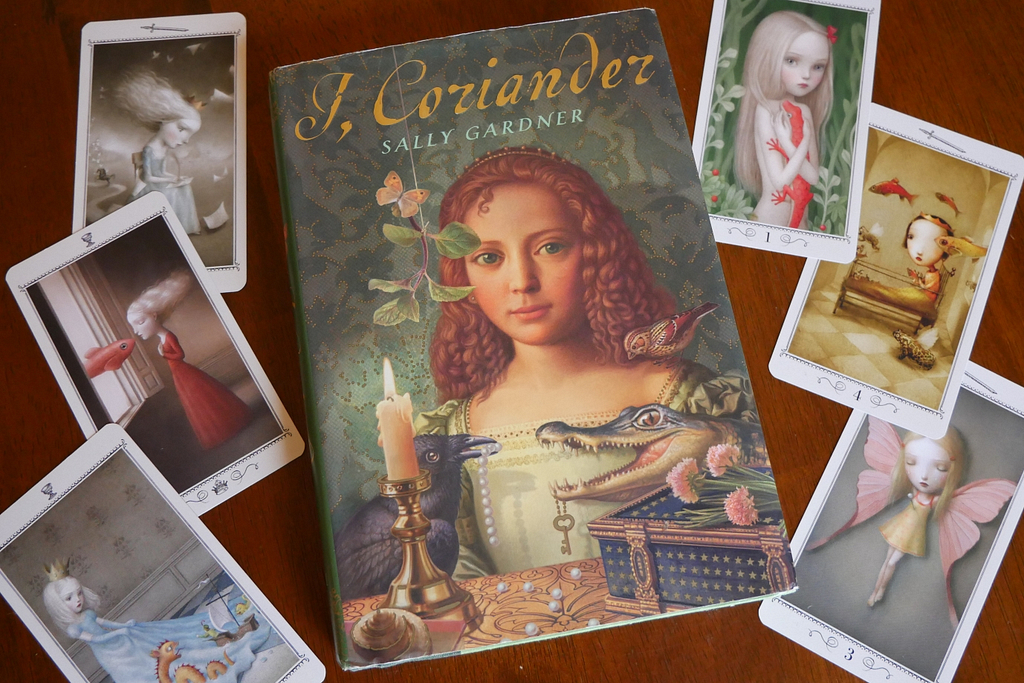
* I, Coriander by Sally Gardner
* The Raven Ring by Patricia C. Wrede (part of the Lyra series but I have not read any of the others.)
The Midwife’s Apprentice is pictured here with selected plot-relevant cards from Oracle Médiéval et Merveilleux by Gulliver l’Aventurière & Julien Miavril. (No spoilers!)
For one thing, all of these books (except Midnight Magic) were aimed, perhaps, at Young Adult readers generally socialised as feminine but at no point did they talk down to them. They were an excellent foray into how creative and narrative detail coexists wonderfully with good historical enquiry. There is an emphasis on trade and commerce. Some of these feature port cities or otherwise thriving commercial principalities and their conflicts with rural living and tradition. They discuss textiles as if their readers can and will care about how they affect plot. And they treat Otherworlds and/or magic with the same expectation: that readers are curious to know detail and will put in the imaginative effort. To me, this is how the imagination grows.
Catherine, Called Birdy is pictured here with two cards from the Oracle Médiéval et Merveilleux that are… relevant to the story. 😉
Artistically, a glance at these covers will possibly explain a thing or two about my own preference for facial portraiture and the art of the late middle ages and early renaissance. The time periods in the books vary a little more widely than the covers. I, Coriander, for example, is set mostly in Cromwellian England and the time period represented art historically on Catherine, Called Birdy is about 200 years later than the setting of the book (i.e. 15th century visuals [1] vs 1290-1291 book setting.) I was lucky enough, however, to have an aunt who overlooked things like that. For example, she focused instead on showing me how the play in perspective with the rope and bucket and the figural proportions on the cover of Catherine, Called Birdy were all little art historical jokes that the artist had borrowed from real historical painters. The implication was that if I was clever and curious, I could find them out …and I did!
Obviously there is so much to say even just about these books… so for now I will draw a few connections between I, Coriander and a few tarot and oracle decks that I have.
I, Coriander pictured here with selected cards from the Nicoletta Ceccoli Tarot. Once again, the penchant for strange emotionally intelligent portraiture!
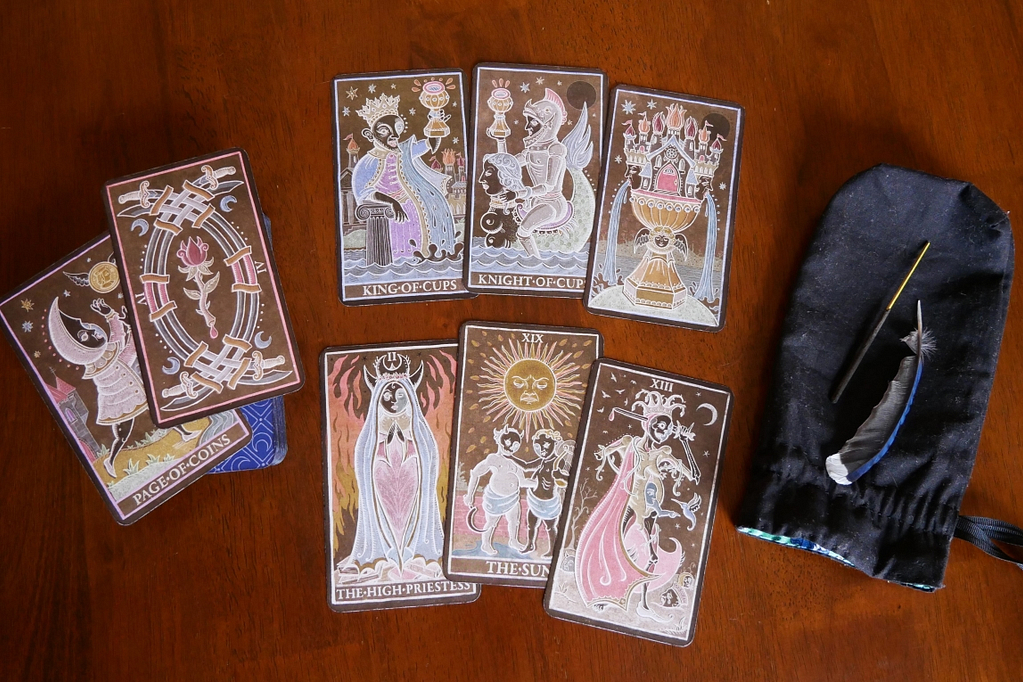
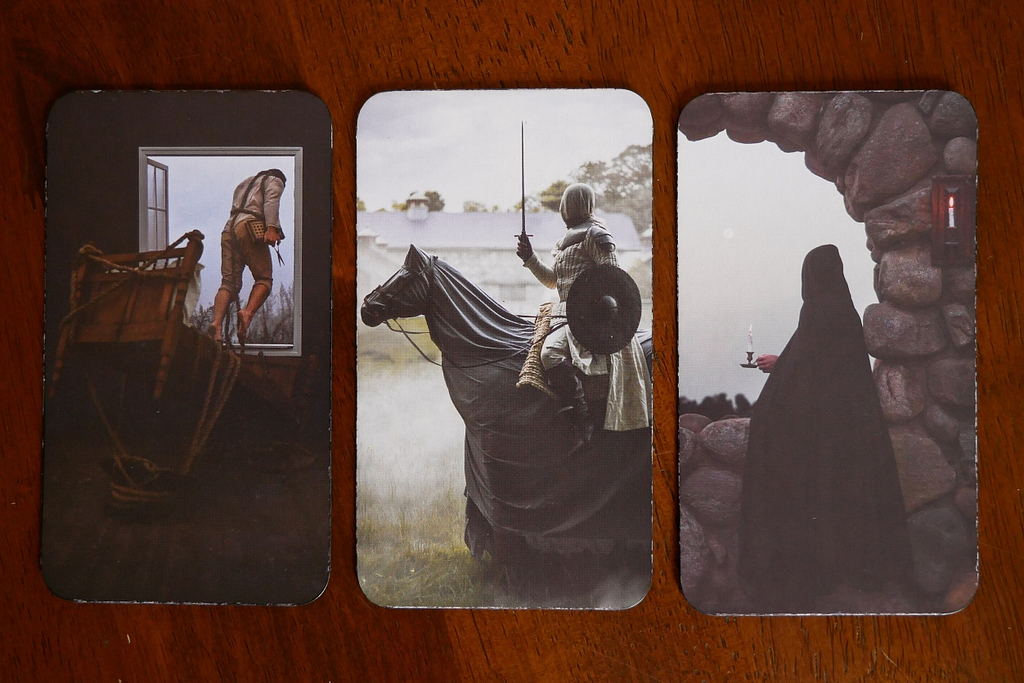
In the first place there is reference to a pair of wedding portraits in I, Coriander …a woman in the foreground holding an oak-leaf, a tiny hunting scene nearly hidden in the wooded middle-ground behind her, and a citadel in the distance. Her spouse is positioned in front of a fantastical city with a river or estuary intended (thematically) to mirror his connection with trade and the Thames. But in this city, there are mermaids and fantastical boats in the water among other things… I couldn’t help but picture certain cards from the Trionfi della Luna (paradoxical pictured below.) Or perhaps wander into a landscape just beyond the borders of such a city… might we find the world of the Somnia tarot there? People in old robes and linen shifts wandering in among the wetlands and sedge grasses gazing at the stars or riding silent sad horses?
Cards chosen from the Trionfi della Luna to mirror aspects of the story in I, Coriander… along with various imaginings of my own about the space we inhabit in the Somnia Tarot.
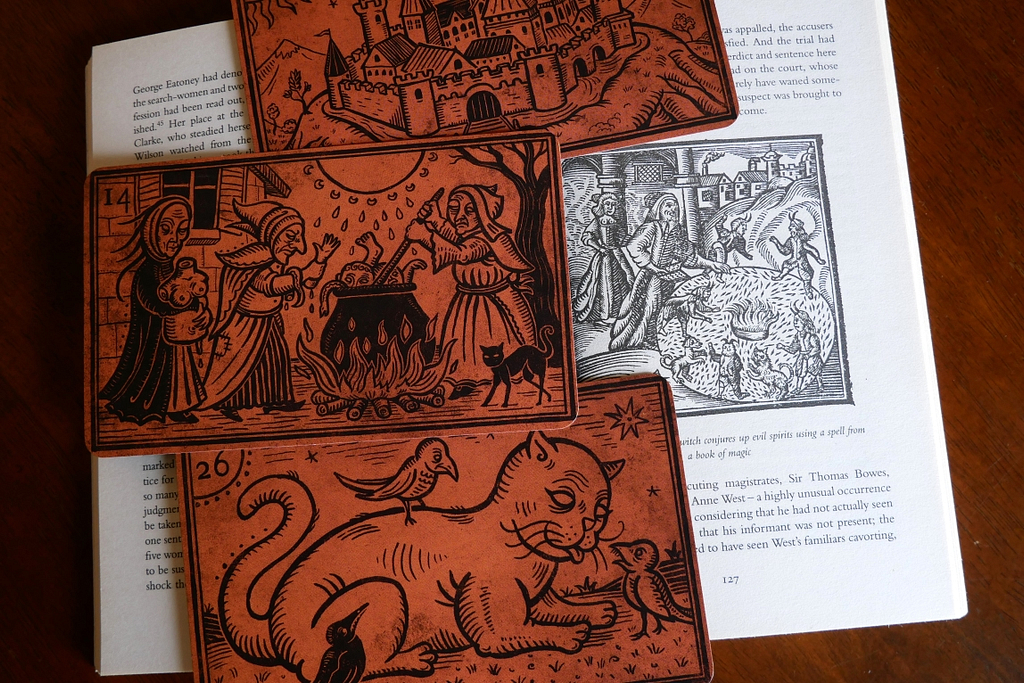
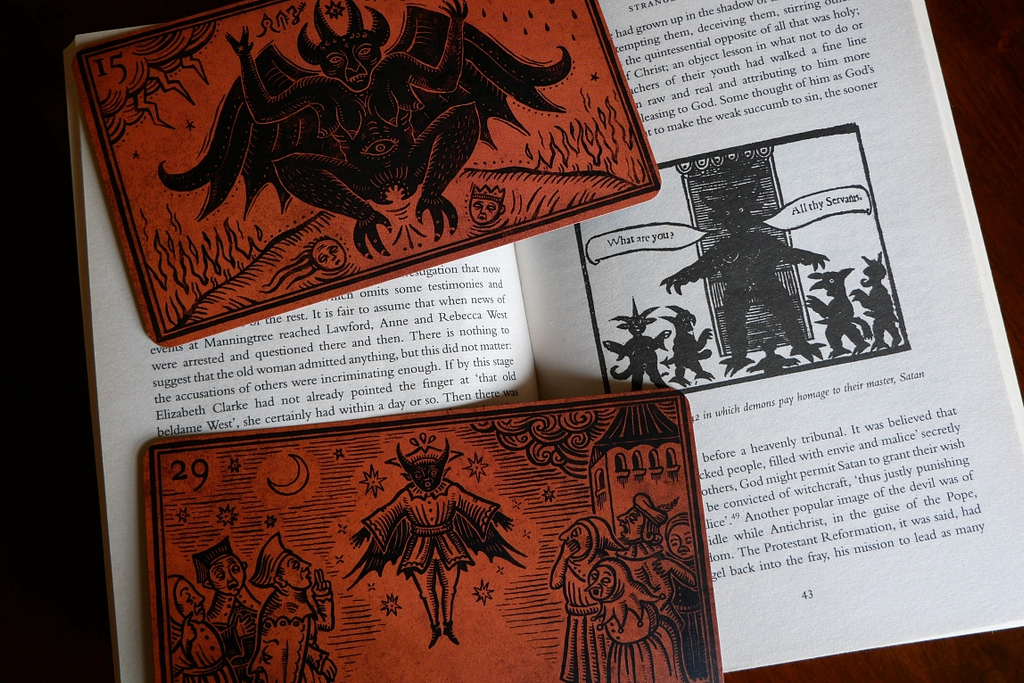
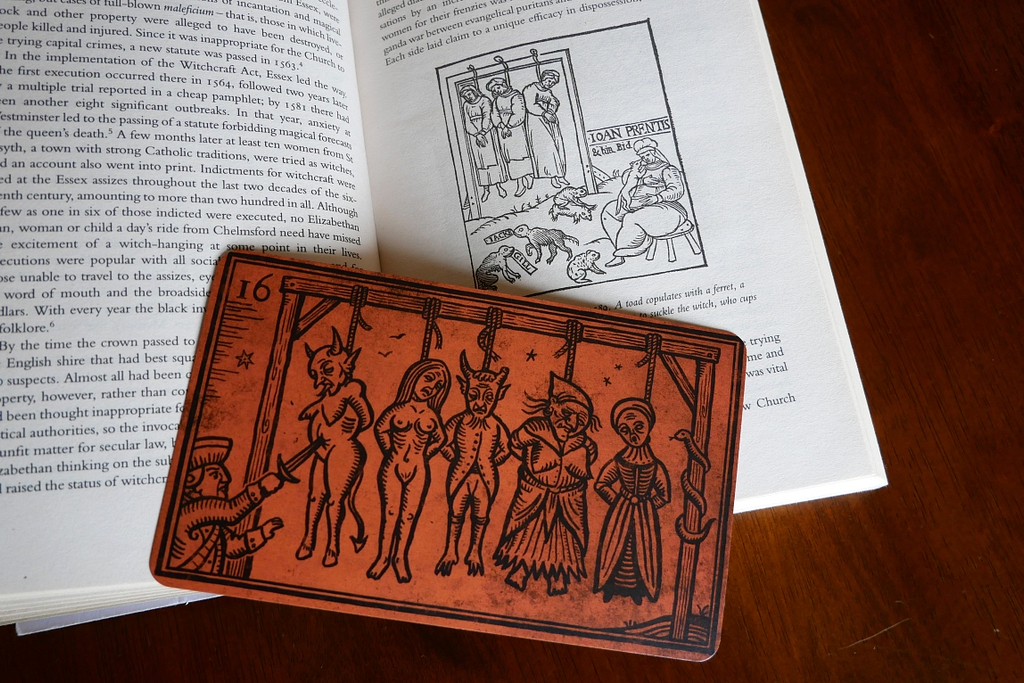
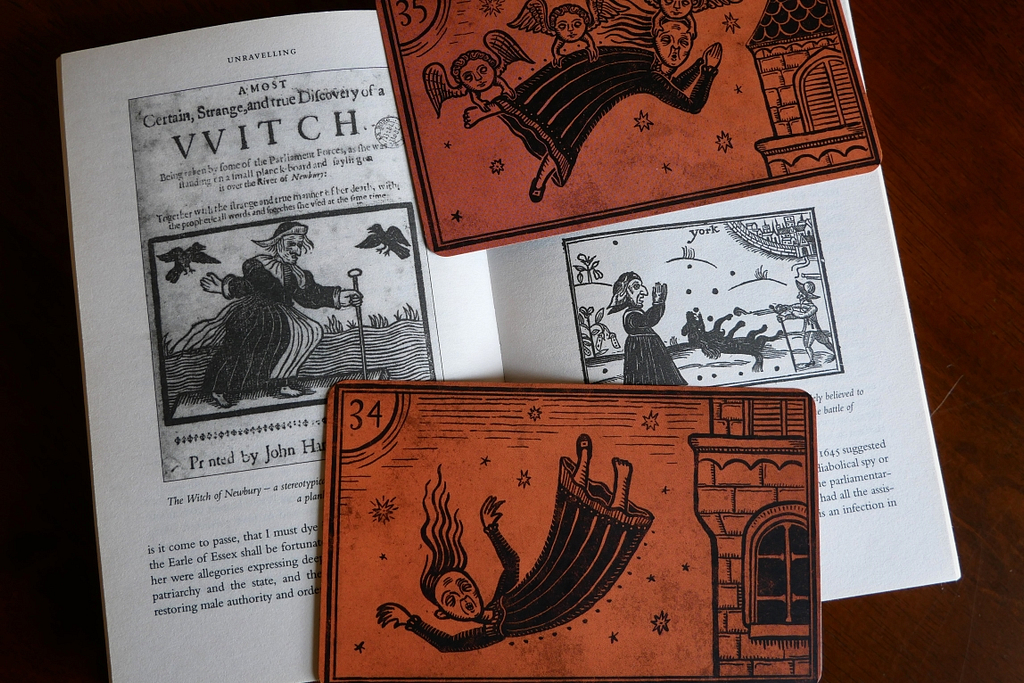
I should note I have also recently read Witchfinders by Malcolm Gaskill and am currently working my way through The Witch: A History of Fear from Ancient Times to the Present by Ronald Hutton… Of course, in so far as witch hunts in England overlapped with civil war tensions between Royalists and Parliamentarians (and occurred along Puritan vs ‘Popish’ lines), I, Coriander made for an excellent fictional backdrop! Also, I really enjoyed drawing cards from the Oracle of Black Enchantment (also by Deviant Moon Inc.) while reading Witchfinders as a visual processing exercise*.
Pages from Malcolm Gaskill’s Witchfinders featured here with various cards from the Oracle of Black Enchantment (Samhain edition.) Patrick Valenza’s art historical source material (at least in part) should be fairly evident…
Lastly, this emphasis on the detail of Otherworlds – their textiles, buildings, landscapes, emotional experiences, social relationships, flora and fauna etc. – is playing a huge role in my current artistic endeavours. I tend to see pip decks as decks full of concepts/characters (in the majors and courts) and their scaffolding and architectural surroundings (in the pips). Sometimes this visual architecture is metaphorical and sometimes it is fairly literal. It depends on the reading. But it’s also helping me to tease out what it feels like to think of tarot decks in this way and what that might mean for creating a tarot deck of my own. Furthermore, I have been rebuilding a former world of mine and have recently begun sewing some clothing that I envisioned there…
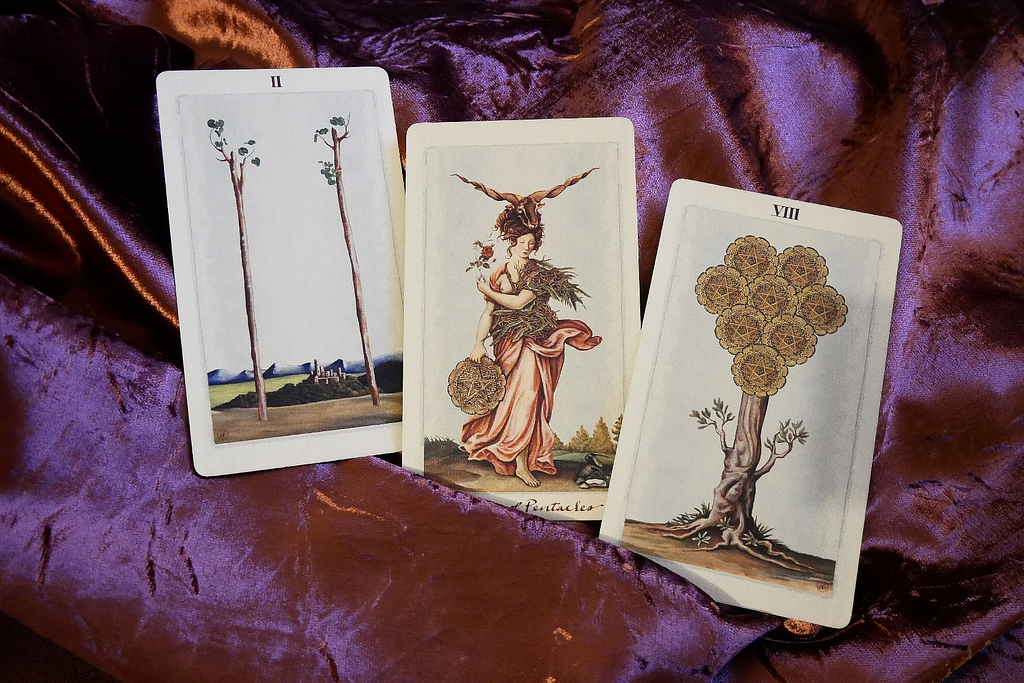
And, of COURSE, the Pagan Otherworlds Tarot… featured here over (deadstock) cognac red crushed velvet ::drool::
Perhaps the act of sewing my own clothes is really the process of bringing fairy clothes over the divide? It would explain the time traveler vibes, don’t you think? 😉
So… this post has mostly been about my own personal explorations and impressions. I plan to return soon, however, with some better grounded and CITED analytical material about art history and technique.
Sincerely,
Saoirse.
* Please note! Literally any deck will aid in visual processing or reinforcing thematic content for literally any book. There is no need to acquire any deck not already within your means or comfort zone. Decks/products/material items are mentioned here for illustrative purposes only! It’s PRAXIS that matters.
** All decks featured here of my own volition and arising from my own use of them. I have neither been invited nor commissioned to do so and I have no affiliation with any of their creators. The TdL (paradoxical) was a private gift from a friend. All others were purchased by me.
[1] See images by artists like Petrus Christus (especially ‘Portrait of a Young Girl’, 1460s) and his contemporaries. The cover here has a very Burgundian look with a single truncated hennin among other distinguishing features…
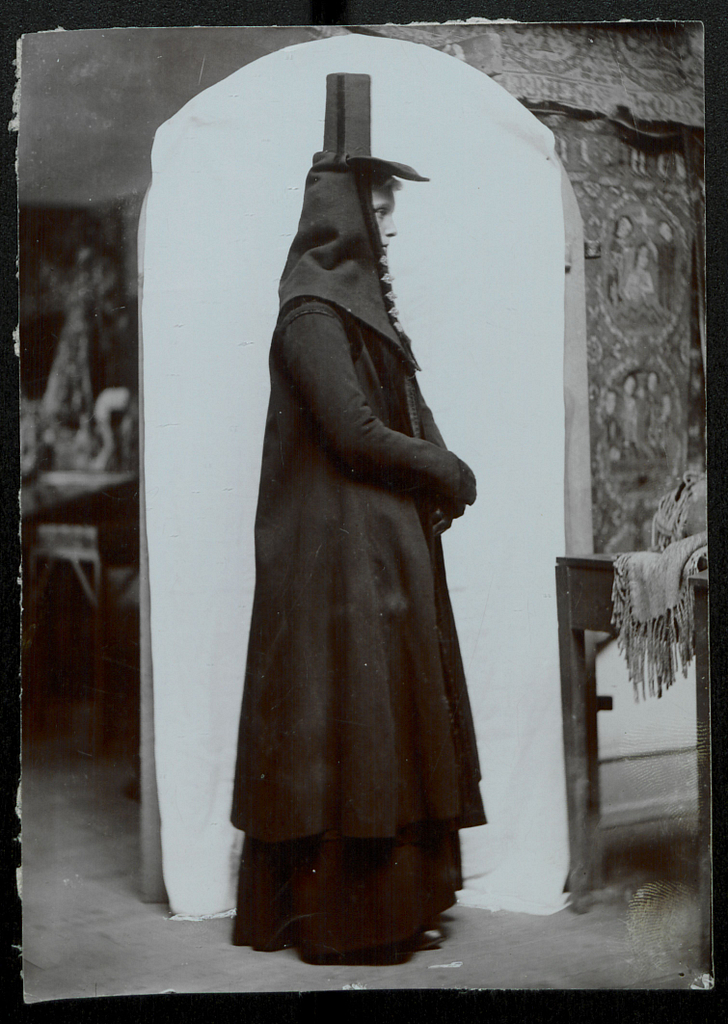
I wanted to discuss some basic inspiration & information that went into this project as well as some aspects of what the reality of sewing historically inspired clothing looks like… and of course some of how this applies to (my) witchcraft.
First – on my channel I have addressed a few of the reasons I prefer corsetry but, at some point, I will write a blog post with a proper explanation of the practicalities of corsetry in my life. That day is not today.
Q: What are my design references and aesthetic aims? What am I hoping to achieve visually?
This tends to shift around a bit but stays loosely within the parameters of 1) my time periods of interest and what potential I think they have for overlaps in design and 2) silhouette and colour blocking. Additionally, I like to evoke a mood and set of associations: a medieval decadence (in terms of color and texture); the proportional strangeness & darker shades of Northern Renaissance painters (Petrus Christus, Roger van der Weyden, Jan van Eyck etc); and a tongue-in-cheek reference to Victorian societal dysfunction (I like inverting value judgments based in puritanical virtue, assumptions around sexual permissiveness and mental health differences, reliance on religious institutional hierarchy etc.)
… A witch, at any given time period, would have existed largely in the same clothing expected of most people around her (and may well have identified with them religiously too). I like to explore that dissonance… An almost severe black silhouette with cheeky splashes of colour, perhaps? Dress me like a puritan but invert my cross!!!
Q: What about construction details? Isn’t it squeezy!? Did you make any mistakes!??!??
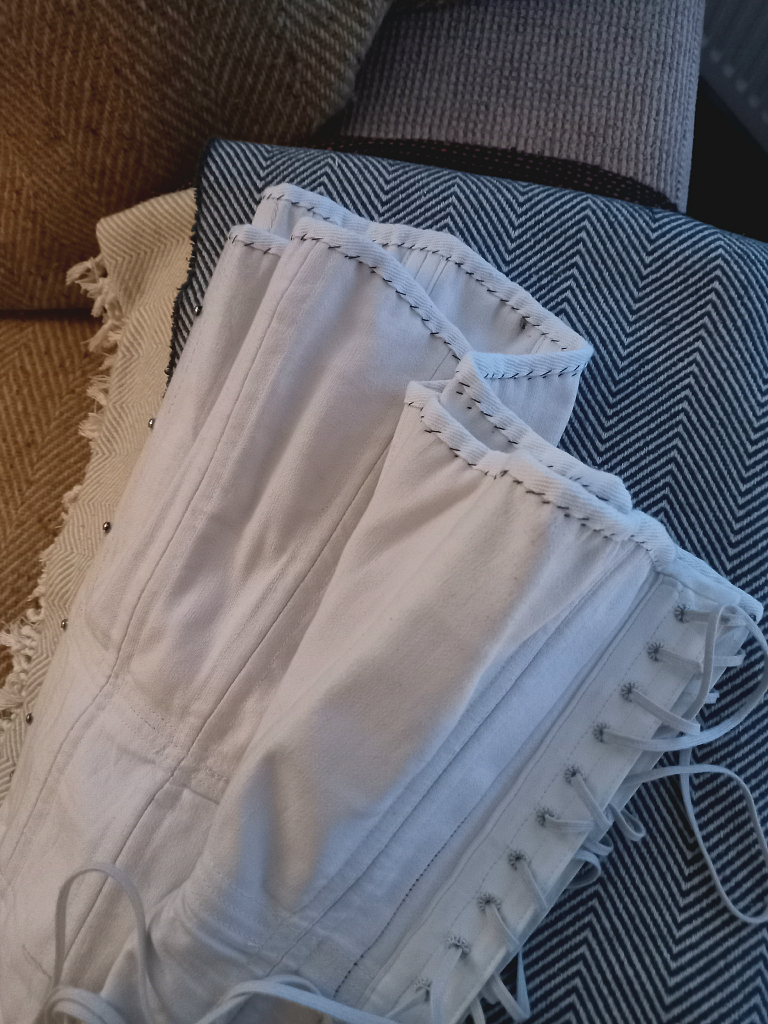
In terms of construction, I wanted practical movement and a well placed waist-line. I wanted better bust accommodation and garter straps for my socks! (On shorter sock days, I use garters just below the knee, fastened to the outside.) The basis from which I built this custom corset pattern was an early 1910s corset style called a ‘long-line’ corset*. This is not to be confused with the early Edwardian ‘s-bend’ corset. I am already exceptionally curvy and I wanted something that was elongated and smoothing to accommodate my more medieval days. (Corset didn’t exist in the middle ages). Think, John William Waterhouse paintings as a visual starting point… or something by Eleanor Fortescue Brickdale.
The added benefit to this type of corset is that it is structurally already quite difficult to lace down too far. It’s a very flexible fit. The waist line cinches where the tummy and spine is the squishiest and most flexible – which serves as an anchor point – and the rest of the corset provides gentle support radiating out from there, up and down.
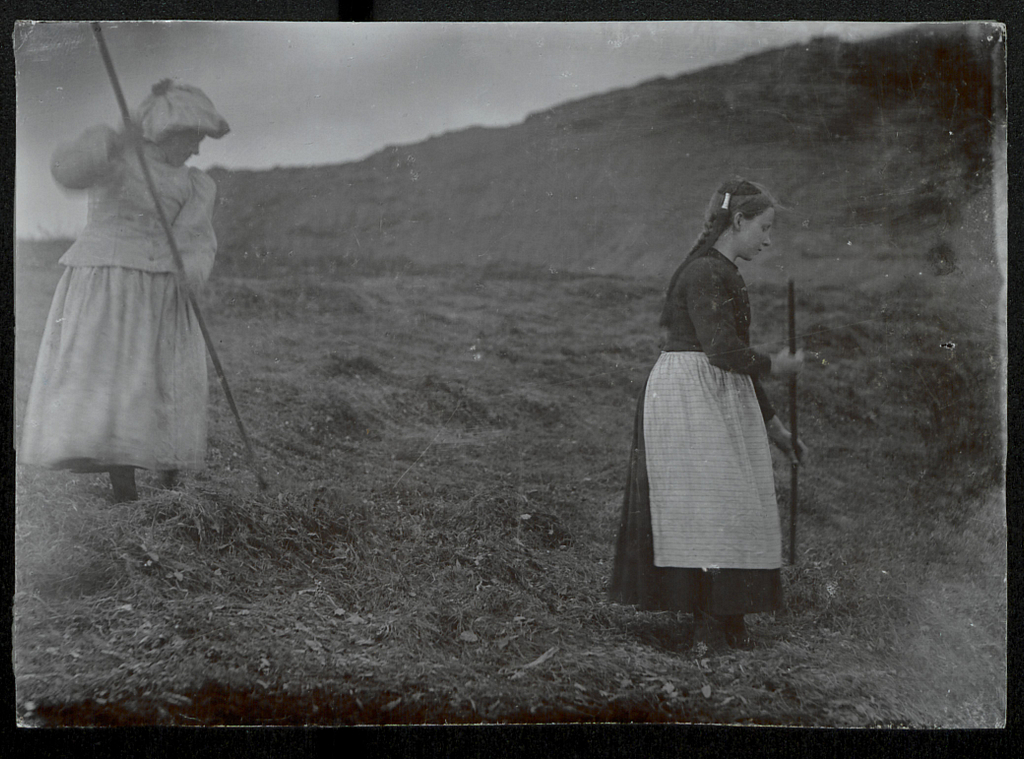
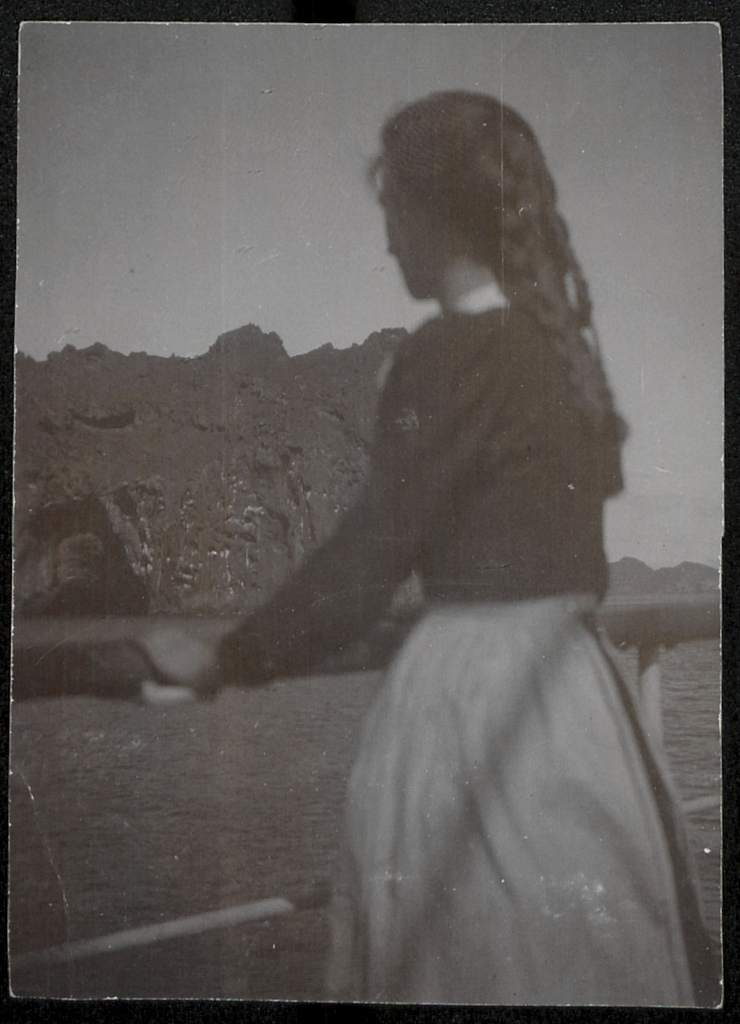
Without romanticising the ‘rustic’ or glorifying deplorable 19th century working class conditions, a lot of what I am going for is based in working class clothing and practicality. Minimal waste, strategic reuse of mostly second hand fabrics, patching and mending as needed… and planning for movement and more active daily patterns. I make my own soap, I like to cook, I cut out fabrics laid on the floor, I paint, walk, run errands, and frequent pubs in what I sew and the corset is part of what *enables* that (especially as someone with bad spine, joint, and inner organ problems! It works much like a flexible, custom fit back brace with almost no singular pressure points such as a bra band or staps!)
Here is a lovely tertiary resource – a youtube video by Cat’s Costumery – on working women’s corsetry:
In terms of the reality of sewing and making mistakes, I discuss various changes and design elements in my corset video but here is some added detail:
You will see in the photos that I made the corset too big and had to fold down the last panel on either side! At some point I’ll unstitch those panels and adjust them more thoroughly…You will also see, in the photo below, that it seems I made the bust too high originally. My body has also changed slightly in recent weeks so I have re-cut the top and sloppily rebound the edge. It looks messy but it’s strong thread and fits like a glove!
I think this is SUCH a fascinating process… homecraft & creative techniques to fashion a look and way of moving embued with dark mystique!!! I’ll be happy to answer any questions in the comments or even just say hi! And there will be more posts about sewing coming soon. I’ve been up to some pretty crafty shenanigans of late!
* Some basic starting points for this kind of corsetry:
This woman’s making process is documented on her blog – I found her info and visuals helpful as *an* example of the over-bust option for these later corsets. (Please note, I no longer support the Truly Victorian pattern company.) https://historicalsewing.com/1913-blue-floral-corset
I have put together a playlist creators’ resources to do with costuming/sewing techniques on my youtube channel. It’s called “Clothing is Magic” and covers techniques, diversity, inclusivity, and various different time periods I find interesting as well as some old footage of clothes in motion!
Further resources & citations on working clothes and photographic anthropological/social/immigration documentation:
Photos of Icelanders come from a brilliant free resource – the Online Collections of the Danish National Museum (including satelite tools to hone in on where photographs were taken etc.!): https://samlinger.natmus.dk/
The photo of two girls from Norangsdalen came from another amazing online resource, the image collections of the Norwegian Folk Museum: https://digitaltmuseum.no/folkemuseet
I also recommend having a look at the work of Francis Meadow Sutcliffe – especially of women knitting by the docks!
NOTE: While there is a prevalence Nordic or Northern European imagery in this blog post, this is mainly due to a different (personal) research project on which I am working (very slowly). What I mean to illustrate is that there are practicalities of silhouette and construction that interest me in folk costume and working clothes. This post has also been limited by what is available in the public domain etc.
“The true secret of happiness lies in taking a genuine interest in all the details of daily life.” ~ William Morris
Anyone who has followed my ‘output’ thus far will likely perceive that I spend a lot of my time immersed in the idea of ‘crafting self’, in the creative act of (re)making identity. Sometimes I call this ‘shape-shifting’ and it takes on quite literal ritual significance. Sometimes it finds expression through changeling motifs and the development of a personal mythology of sorts around my neurodivergence. It is, of course, present in all of my magickal workings, many of which manifest into clothing or art work. These are literal acts of creation that have a reflexive nature (in how they shape me) in addition to an outward one (in how I shape them, the effect their expression has on that which is external.) My most recent video focuses on taking attentive delight on beginner applications of paper marbling:
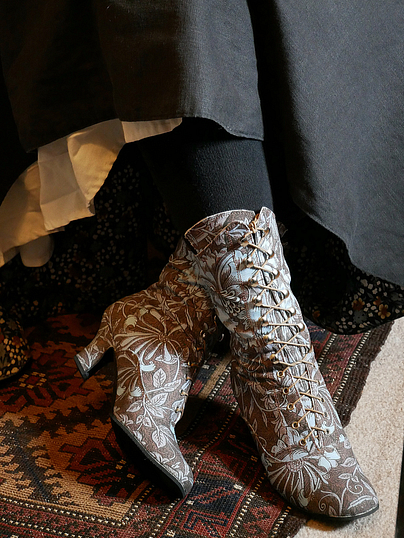
I even made an entire video about manifesting the astral or the realm of the imagination – weaving together ‘Secret Garden’ motifs with Edwardian, Victorian, and Medieval aesthetics… culminating in the commission of a real pair of shoes – in William Morris fabric and loaded with personal significance, magickal potency, and serious gratitude.
Late diagnosis autistics in particular face the challenge of unmasking, self-advocating and self-representing to the world even as they themselves strive to learn the basics of their own needs. There is a lot of discussion in that process of needing to *create a sense of self*… since everything you have been (or were permitted to be) has been focused on fitting in and survival. Personally, in the year or so before I sought my diagnosis, a social worker was talking me through some very serious and destructive circumstances I had left behind and she said “now is your chance to reinvent yourself”.
… One thing I have been working on is rebuilding my reading skills, knowing what I know now about neurodivergence. Non-fiction seems to be working better for me and I want to document some of the ideas I receive through that in occasional installments on this blog. Currently, I have begun reading “How We Might Live: At Home with Jane and William Morris”.
I had been looking online for any resources that might give me more information about Jane Morris specifically. Thus far I am not disappointed. The focus in this worldview, time period, and set of people is not only on making aesthetics a tangible element of daily life but on making that matter. I am excited at the prospect of getting a more holistic picture of the Morris’ family’s works and philosophies – and of those around them – but I am also interested to see flaws, to see where idealism potentially remains unwieldy or takes a less constructive real form. There is a quotation at the end of the first introductory segment that makes me feel so seen I almost cried (one of the reasons I struggle to read, I cry a lot!):
“When I first knew Morris nothing would content him but being a monk, and then he must be an architect, but when I came to London and began to paint, he threw it all up and must paint too, and then he must give it up and make poems, and then he must give it up and make window hangings and pretty things, and when he had achieved that he must be poet again, and then he must learn dyeing and live in a vat and learned weaving and knew all about looms, and then made more books and learned tapestry, and then wanted to smash everything up and begin the world anew, and now it is printing he cares for and to make wonderful rich-looking books: and all things he does splendidly: and if he lives the printing will have an end, and he will do, I don’t know what, but every minute will be alive.” ~ (Edward Burne-Jones after 40 years of friendship with Morris, p.6)
…In the past I have performed on the violin in master classes with the likes of Andrew Manze or in orchestral ensembles at Carnegie Hall and Lincoln Centre. I have spent years throwing clay on the wheel or oil painting. I have immersed myself in learning trad music in the Rockies… or in studying Medieval art and social political history in Ireland. I offered hand painted wearable fairy wings for sale in a shop in Dublin. I have been an archivist in three different countries and a rare books librarian in art historical institutions…
A reading from the Noble Art Tarot by Lennan Smith – a deck that made immediate practical sense to me.
These days my art focuses on textiles or coloured pencil, acrylics, and gouache. I make my own inks. I sew my own clothes utilising historical techniques and all my sewing is done without electricity. I make my own soap to wash my hair and my body. I use homemade hair oils and brush my hair with a boar-bristle brush from 1916 (to reduce purchase of new materials.) The list goes on… But what do I do with this cumulative hodge podge of intensity?! I am aware that such passions may lead to personal dysregulation and can replicate different kinds of personal and professional burn out over time. ‘How might I live’… if what I also want represented in my surroundings is both stable and flexible? (Especially in relation to the numinous world around me?) What does that look like? In my view, answering this question is the business of a witch.
I would love to hear your thoughts in the comments! How do you process your goals and dreams? What do they look like? Maybe you don’t even use visuals to do that! All perspectives are valid and welcome here.
With (potentially stubborn) sincerity,
Sorsha.
*Header image features “How We Might Live: At Home With Jane and William Morris” along with The Noble Art Tarot by Lennan Smith.
*This blog post has not been comissioned or sponsored in any way. Any products shown in my images are in the process of being used and no suggestions (implicit or explicit, direct or indirect) are conclusive or objective. I do not do reviews.
As promised, this is Part II of my initial foray into the topic of medieval magic. As a springboard, I will be using a chapter by Mark Williams from the Routledge History of Medieval Magic, titled “Magic in Celtic Lands”. The chapter features examples from Ireland and Wales but, for my purposes, I will focus on Ireland today.
Firstly, what is the impetus for this line of enquiry? The most immediate reason is that I’m obsessed with the middle ages and I function, personally, within ‘the’ Irish mythological framework. Our textual evidence of Irish myth originates or begins in the middle ages in spite of its narrative setting in the Iron Age. Personally, I tend to take the academic view that Irish myth – such as we have it – is medieval literature. More specifically, I’m interested in topics such as the ways in which the format of rosc poetry carries ‘magical’ potency; in Irish mythological tropes around prophecy; the literal singing or chanting component of ‘enchantment’ such as it appears in certain stories; and a certain recurring visual motif involving ‘bird heads’ or bird headed…ness? I’ll get into my thoughts on what this currently means for my magico-spiritual artistic practice toward the end of this post.
Some BRIEF background information… The word “Celtic”, as Mark Williams states, “is a difficult term, precise only when deployed in a linguistic context: it is used in a parallel manner to “Roman” and “Germanic” to denote a major branch of the Indo-European language family.” (123) Scholarship on the topic applies to regions linguistically Celtic whereas popular culture and imagination thinks of places like Ireland and Scotland and so on as ‘celtic lands’ (as Williams words it) or in terms of ‘celtic heritage’. Williams also notes that relating similar motifs between Ireland and Wales and calling them “Celtic” might no longer be done with confidence:
“it is increasingly acknowledged that similarities between the two countries’ literary traditions – formerly taken as evidence for a shared cultural inheritance – may in fact be medieval borrowings or independent innovations. […] The question of what medieval Irish literature in particular owed to the Bible and to the wider European world was a controversial area of critical debate for much of the second half of the last century, and the examination of magic is likely to constellate the issue once again in significant ways. The field of Irish and Welsh magic is therefore excitingly wide open, and a reconsideration of all the surviving records and representations of magical practices is badly needed.” (123)
THAT is exciting!
Dreams of diving headlong into the world of Celtic Magic Academia and never resurfacing aside (for now), I want to discuss some particulars of this chapter that jumped off the page and screamed ‘remember and explore me!’ Firstly, Williams emphasizes the potential for differences between literary magic and historical magical practice. In so doing, he introduces characteristics on the Irish ‘literary druid’ (127) and provides two examples: Cathbad (who we might perceive as ‘good’ or praiseworthy in the the stories, though he tends to get on my nerves) and Mog Ruith, with whom I am less familiar.
“Mog Ruith, in contrast, is a more morally ambiguous figure. In Forbuis Dromma Damghaire, he is Fiachu’s major secret weapon against the forces of Cormac (though Cormac has his own team of druids too), being a miracle-worker possessed of a spectacular repertoire. He can alter his size at will, set things on fire with his breath, cause rains of blood, send people to sleep for long periods and create magical animals which go after enemy champions […] At one point, he puts on a cloak and “bird-headdress” and ascends into the air.” (130)
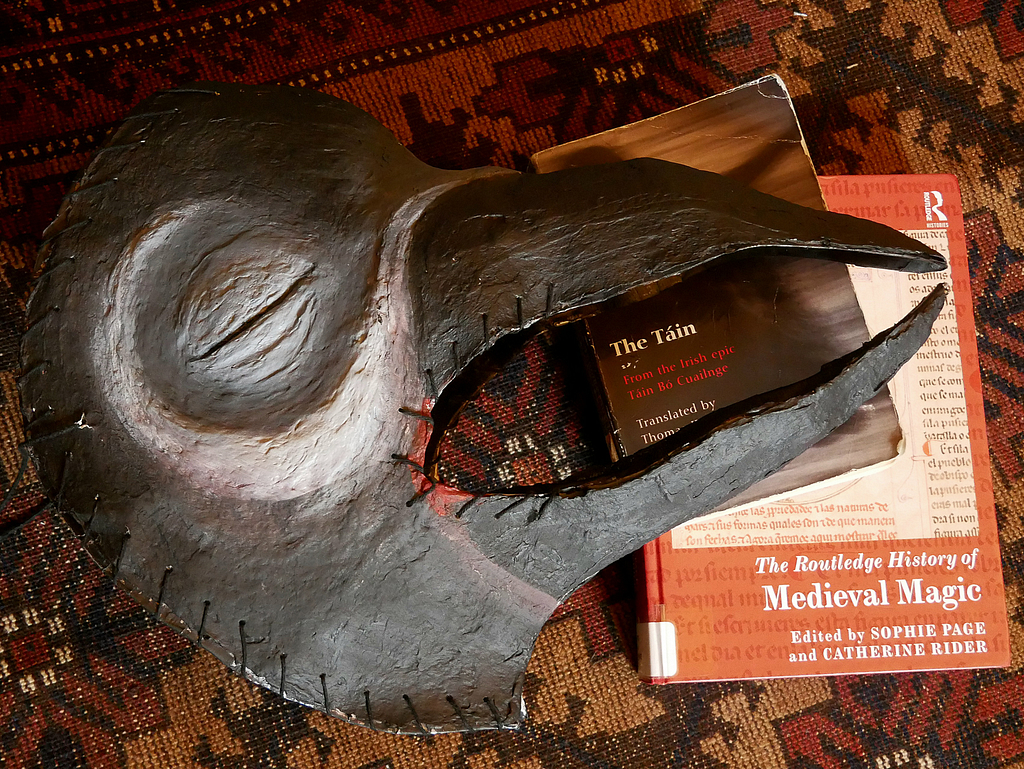
My eyes nearly fell out when I read that last sentence. Those of you familiar with my youtube channel, you may remember the ritual costume I made for Samhain in which I crafted a bird mask and black linen veil (rather in the style of modern folkloric/pagan pageantry) for the purpose of shapeshifting and affecting change in my personal life and spiritual practice.
My video last Samhain, vlogging the #artwitch process…
I got this idea mainly from associations with the crow and the Morrígan*, my personal obsession with shapeshifting motifs, as well as a specific mention in the foretales of the Táin Bó Cuailgne, as translated by Thomas Kinsella. From Cúchulainn’s training in arms:
“[While on raid for Scáthach, his warrioress mentor] he came back the way he had gone, and met a one-eyed hag in his path. She told him to get out of her way. He said that would leave him no room to pass except the sea-cliff below them. But she begged him to get out of her way. So he let her have the path, except where he clung by his toes. She struck at his big toe as she passed him by, to knock him off the path down the cliff. But he saw her in time and gave his hero’s salmon-leap upward. Then he struck off the hag’s head. She was Eis Enchenn, the bird-headed, mother of the three last warriors to die at his hands. It was to avenge their ruin that she lay in wait for him.” (Kinsella, 33)
These stories are hardly a feminist utopia (just read a few paragraphs in either direction from this point) but – in addition to the one-eyed hag which is a descriptor that exists in other stories, including for the Morrígan, Herself – I was particularly interested in this ‘birdheaded’ detail…is it a kenning? An epithet? Was it literal or metaphorical? It seems important, especially as it occurs in a section of Cúchulainn’s stories that involves so many magically potent martial prophetesses. I don’t yet know how it is phrased in the Old Irish or any specifics about Kinsella’s translation choices here.
Thus, as regards Mog Ruith, I had never encountered an explicit mention of donning a birdheaddress for the purpose of shifting shape or flying before. Yet, from an UPG** perspective, you might say this is what I did for Samhain. I like that but I don’t need it to be objectively ‘true’. I DO need to learn Old Irish and research the heck out of this for the rest of my living days. It has also only further cemented my tendency to merge bird-symbolism and artistic practice. The alchemy of art (including costumery and stitchcraft) is that when we have extant primary evidence from our favoured time periods, we can exist in direct artistic dialogue with them. In my opinion, it makes very fertile ground for personal gnosis.
I have more to say on Mark Williams’ chapter – including another juicy tidbit about the Túatha Dé (god-peoples) and their ‘theological knowledge’ allowing them to occupy a similar ontological category to medieval demons… and how that’s born out in other medieval Irish literature… but this blog post is long enough, I think.
Until next time!
Nerdily yours, Sorsha.
* I don’t use the phrase ‘matron deity’ but I guess you could consider me a ‘devotee’ in so far as I live my life & devotional practice ‘under the auspices of Her wing’ (as I often put it.) In this post, I have used her most well known name… but I’m not necessarily only referring to one Morrígan here. ** Unverified Personal Gnosis
Citations:
Kinsella, Thomas. The Táin: From the Irish Epic Táin Bó Cuailgne. Oxford University Press, 2002. A 2002 reissue of the Oxford Universtiy Press 1970 edition, with illustrations by Louis Le Brocquy.
Page, Sophie, et al. “Magic in Celtic Lands.” The Routledge History of Medieval Magic, Routledge, Taylor Et Francis Group, London ; New York, New York, 2021, pp. 123–135.