"I know you'll remember me when I'm gone.
Remember my stories, remember my songs.
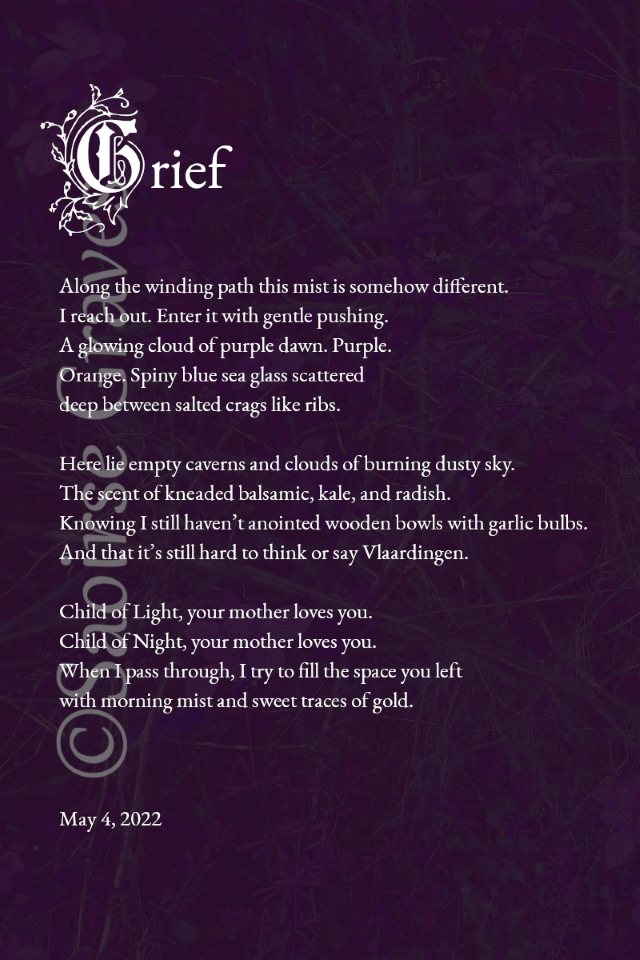
I'll leave them on earth, sweet traces of gold.
Oh they're calling me home, they're calling me home."
~ They're Calling me Home, Rhiannon Giddens
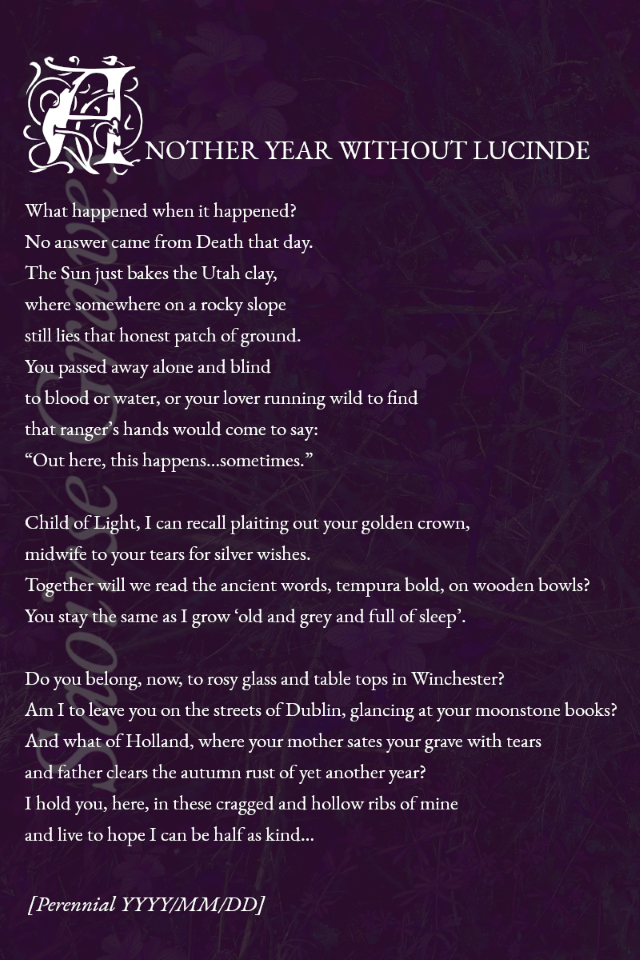
Today would have been the 38th birthday of one of the dearest friends I ever had. Her sudden departure, almost 10 years ago, first set me on what became a #deathpositive path… having learned first hand what it is to have no support in traumatic grief – either societal or personal. All of my intense desire to open into the world of healthy discussion of death, bereavement, mortality, and our fleeting creative beauty (human and otherwise) stems from the broken quiet craggy place in my chest where she used to be… I have never had a fear of death but, oh, my biggest fear is to be left behind. “Don’t go where I can’t follow!”
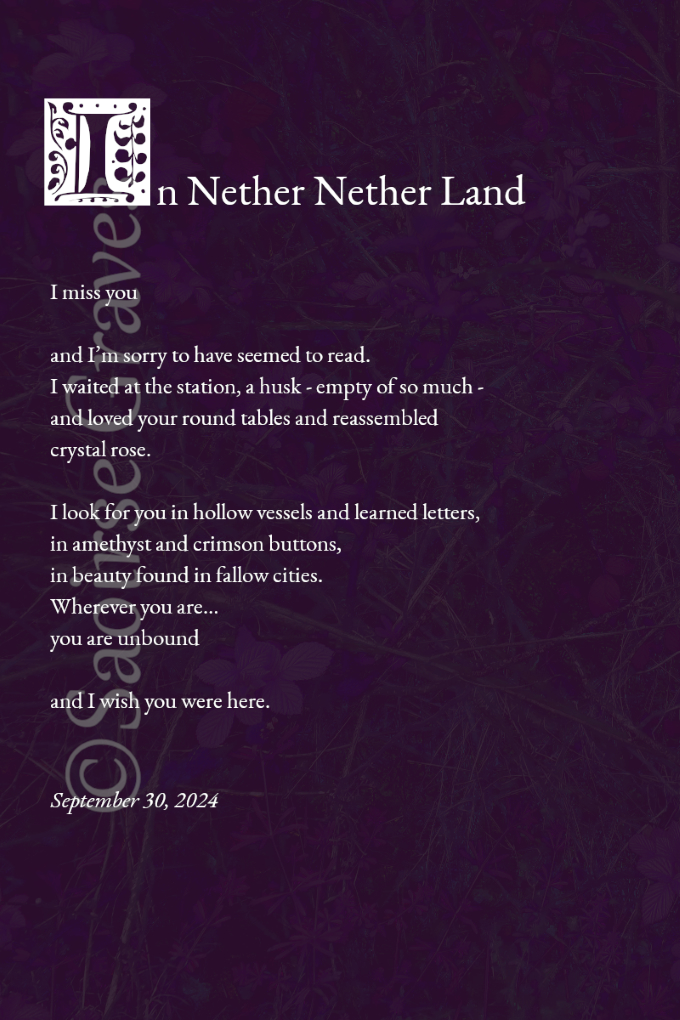
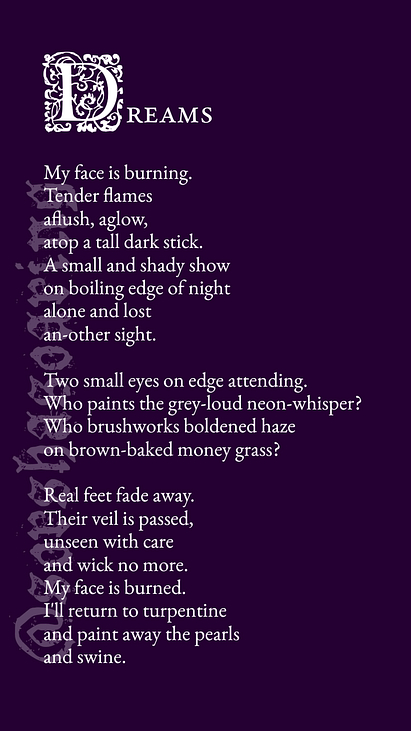
So, to honour her (and another suddenly-passed loved one – my aunt) as deeply and unflinchingly as I can… here are three open & vulnerable poems.
For those who experience discomfort and anxiety around the topic of death or for those who are grappling with their feelings of grief, I found this recent podcast episode gentle, considerate, and very hopeful. It is conducted by Conner Habib – a major force in the #sexpositive movement – with Caitlin Doughty – founder of the #deathpositive movement and the Order of the Good Death:
I had a totally “squee!” moment when they mentioned the “In the midst of life we are in death” quotation… because of course I have that tattooed in Latin on my left arm and I say it every day at the altar when I extinguish the last candle:
Media vita in morte sumus.
For more resources on #deathpositivity – where you can learn, support, and partake in activism as well as look up any resources you may need on your journey of acceptance, appreciation, & celebration of the humanity to be found in mortality – here is the Order of the Good Death website main introductory page ~ https://www.orderofthegooddeath.com/start-here/
To Luus (1987-2015), I promise to continue to learn and to bloom. Happy Birthday.
To Ivana (1960-2020), I promise to wear velvet when the world needs a punch in the face.
I play music for you both.
"Only in silence the word, Only in dark the light, Only in dying life: Bright the hawk's flight on the empty sky."
You can find Part One on “How We Might Live” by Suzanne Fagence Cooper here.
I have waited longer than initially intended to craft my thoughts on “How We Might Live” into something cohesive. As with all things, I hope to evolve these ideas over time but for now I think the impression that prevails is one of disappointment, then surprise, and then surprise at my own surprise.
Firstly, the book itself and the quality of work that went into it is not the object of my disappointment. It made for an easy, empathetic, and affable read and enabled the process to move along quite quickly, despite the thickness of the volume. I particularly enjoyed the dynamic relationship Cooper sustained between personal histories and extant source material – correspondence, financial records, references to ink vs. graphite notes, collections of friendship or travel books, ephemera etc. Discussion of what records have not survived also abounded. As a former archivist I am quite familiar with how this forms a crucial part of the complete-est picture we can hope to present ourselves of any portion of the past…
Perhaps this is a good segue into my issue, however. I know all too well that no artistic persona or lionisation of historical figures will bear the scrutiny of a grounded perusal of their personal notes, correspondence, and journal entries. Sometimes I even think artists must be the most petty and manipulative individuals amidst an already deeply dysfunctional humanity at large. (I mean, I do qualify my worldview as rather misanthropic.) The book ended up being more about the artists themselves (and their wives): their miscommunications, their struggles to prioritise friendship amidst demanding financial realities or social mores, and their many affairs and jealousies.
Taken during the first lockdown… a joking reference to Pre-Raphaelite models & social confinement. #laudanumisnottheanswer #muchromantic #soart
I was perfectly unsurprised to find that my distaste for Dante Gabriel Rossetti, as a person, continued and even ripened into full bloom. I was also unsurprised to find that what social power or currency the Pre-Raphaelites (& co.) gave women as artists was diminished and de-prioritised but I hadn’t expected to learn in detail quite how early this diminuendo began. They never disappear entirely (I imagine one could hear them almost as a constant tremolo beneath the arching ‘romantic’ narrative symphony of the male artists’ lives and careers… harmonically relevant but tense). I wish we could have heard even more from Jane or Georgie or first hand from more of their friends. I was dismayed to conclude (mainly for myself) that in spite of being ‘immortalised’ and made ‘divine’ in so many paintings, Jane Morris was likely never truly loved in a romantic sense by anyone.
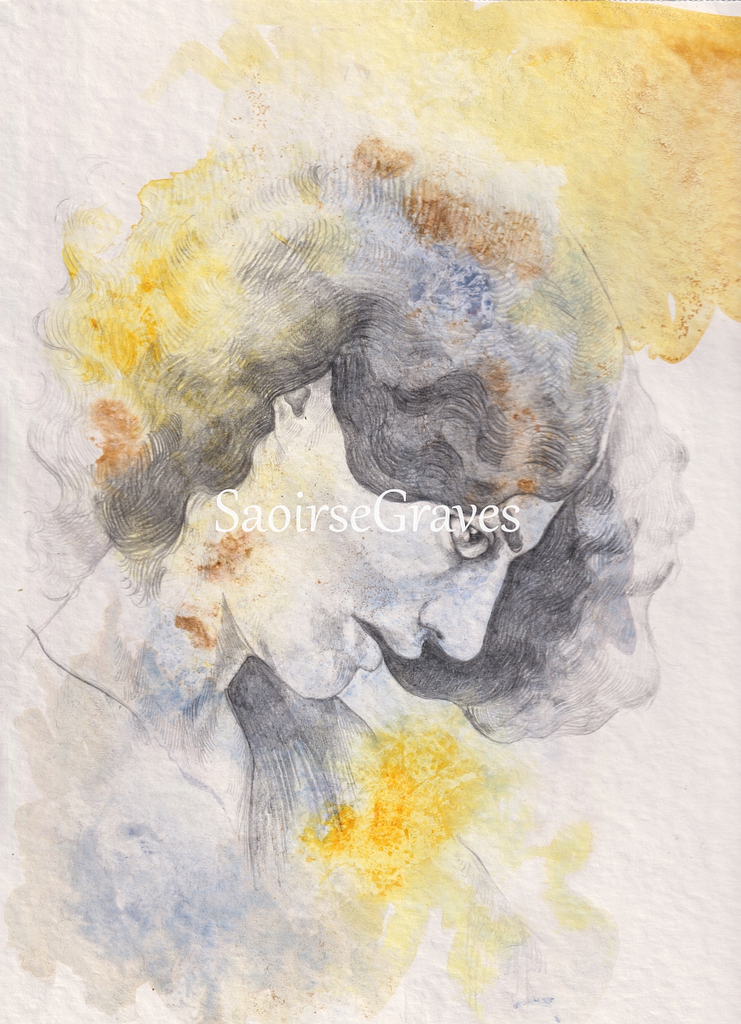
“Gold Dust Woman”, a portrait of Jane Morris. Graphite and acrylic on watercolour paper.
Certainly she has/had been viewed and assessed – valued for her glamour. I recognise the agency in making your own clothes, going against established dress-standards of the day, in navigating socially foreign dynamics etc. I recognise learning things later too… picking up new instruments, acquiring new languages, new poets. But again and again she is seen by others as the woman in all the portraits… her chronic pain mocked or demeaned…mentally examined, ogled, and undressed by would-be artists or would-be lovers: “[a] dark silent medieval woman with her medieval toothache.”*
This book has spoken loud and clear to my long-standing problem with the trope of “artist’s muse”. More on this in a second…
I should say that “How We Might Live” was absolutely not without interesting and valuable ideas and sources of inspiration. I was very interested to read about William Morris’ mannerisms, passion, and methods of work. I have seen elsewhere that there is an overall impression that he may have been neurodivergent…possibly autistic. He certainly makes a compelling case. Hyperfocus, seemingly rather time-blind, intense sensory experience of colour/tonality/repeating patterns, visual metaphor, the insistence on learning deep and well… a tendency to fly in to ‘rages’ and hit his head in distress, intense clumsiness… difficulty in understanding dishonesty or in perceiving when his listeners lost interest (or even WHY they might NOT be interested to begin with), etc. It seems epilepsy also ran in the family.
All of this has been very personally nutritious… It wasn’t 100% what I was aiming for in reading the book but it has left me with some greater clarity on an issue that has dogged me my entire life: muse or artist?
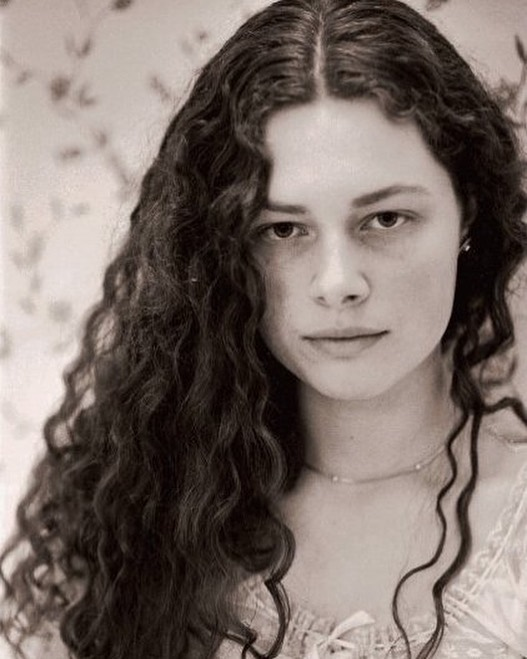
Old grainy photo of 16 year old Sorsha.
I have been nudged since I was quite young in the direction of artist’s muse – my earliest compliments were that I looked like a painting. Those socialised as female/feminine in American suburbia will likely recognise what it is to be pushed into purely aesthetic means of gaining social value. There may have been some small added grace given to those showing early savant-like promise – but it couldn’t grant immunity and I was ‘just’ an artsy weirdo. Teachers wrote me poetry but I had unkind friends and simply decent grades. There are too many reasons and personal experiences to enumerate here regarding why this issue plagues me so badly… that’s a topic for future posts (maybe). But I think what I am realising is that to balance being a muse with being an artist is to be your own muse. In a self-curious way. In an organic way, situated in a human as well as non-human landscape. In life experience, in narrative, in music, in sensory detail, in love, grief, kindness, empathy, social justice…and as some kind of value add. It’s a form of integration where selfhood or ‘persona’ takes its place as a small part of a much larger world. And thank GODDESS none of us are actually immortal!
(Neither, by the by, are paintings.)
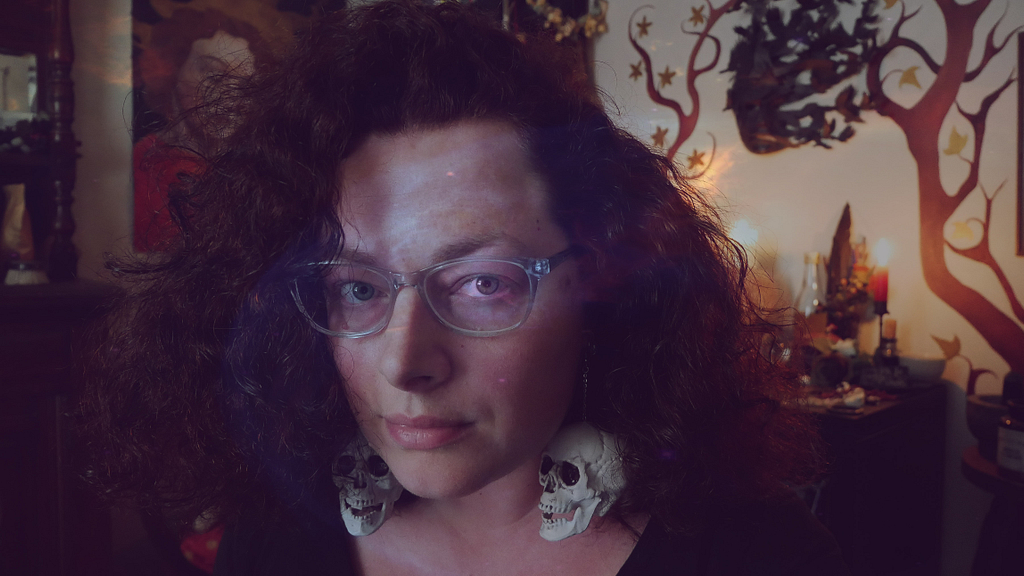
Self-portrait with Skulls.
Sincerely,
Sorsha.
PS. I have more to say about this book… about the book itself but also including a dream I had and so on. For another time.
* Henry James to Alice James, p. 199
** Banner image from unused footage, Lá Bealtaine/May Day 2023
Broadly speaking, the merit we do or don’t assign to the imagination is always on my mind. How do we perceive our purpose – as ‘human persons’ – and do we get to factor in things like… baseline personality traits? Neurological health? Any form of personal needs or even preference?
I suspect it is often perceived as melodramatic when a person states they need imagination and creativity to survive… but in my case at least, this is quite literally true. However, I won’t claim this for neurodivergents exclusively – burn out is a serious issue. We, just like the planet around us, have *finite* resources. Fallow periods allow for growth and growth holds value when tempered and balanced. Diversity – socio-cultural, neurological, biological, and ecological is strength. …At least, I think so.
A small face on the edge of firelight…
I have been dangerously ill many times in my life… and I will never have the more robust and dependable constitution of someone who has not repeatedly nearly destroyed their body in pursuit of constant socially and economically approved extroversion and productivity. I have spent my whole life trying not to be what I am – autistic, yes… which is also a passionate dreamer, irrevocably introverted, desperately sensitive, creative, earnest, and an inquisitive but flawed (‘slow, airheaded’) human.
…Someone I know was recently told, while presenting material on sustainability at a conference, that unless he slept in a hotel room pre-booked for him on location (without his prior consent – he lives within walking distance) he ‘hadn’t really attended the conference’. I have often heard people talk about being pressured to stay on at work after hours or else they’re not a good employee. I myself have been bullied in the workplace and phoned by employers in the evenings and on days off… The world seems to use the word “hobby” to refer to how we spend our *lives* when not working… When people ask us what we are we tell them our professional titles…
Once, on holiday, when I was very low from family trouble, bereavement, and having left my profession due to aforementioned bullying, someone interrupted me over dinner chat to ask (twice) “why, what are YOU doing?” …I’ll never forget how that felt.
“Media vita in morte sumus” *
I say this in sacred space every single day – I am #deathpositive after all. But #deathpositivity is not about expediting the dying process and it is not about the pursuit of suffering and grief. It’s about integrating a healthy organic relationship with the fact that we are finite and it seeks to combat socio-economic oppression… amongst other larger more collective causes.
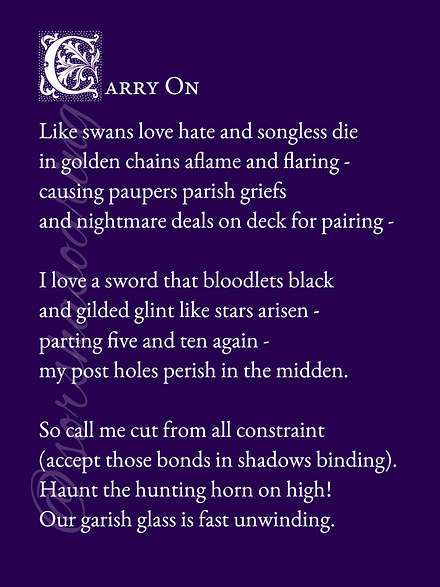
Carry on or carrion?
I dwell between worlds because that’s where I live …and I guess I’m no longer willing to be apologetic or ashamed of that. I am a living organism with no truly objective purpose. I happen to exist…but certainly I was not born to support exponential and exploitative profiteering. I’ll stay a ‘shiftless dreamer’.
Today’s video ~ verdure from void & poetic motifs…
(The featured image on this blog post is of Jane Morris (née Burden) photographed by John Robert Parsons in 1865… and part of a current set of projets or ideas I’m working on.)