At the moment, I’m in the midst of a massive change. Posts and so on are going to be sparse for a little while…
However, I want to offer some thoughts and updates on how I have been interfacing with the world and raise some perspectives that, honestly, I’ll never be ‘finished’ exploring.
The best feeling of sanctuary is well before sunrise.
Ever since I was little I have been obsessed with the minutiae of what it’s like to live creatively. Have you ever read a favourite book (in my case, mostly fantasy) and then seen a photo (sometimes at the back of the book with a short bio) of ‘the author at home’. Or perhaps you have stumbled across a photograph, blog post, or a short video essay that portrays ‘the artist in studio’. Have you ever seen this and thought I need to know how they got to that point in their life?
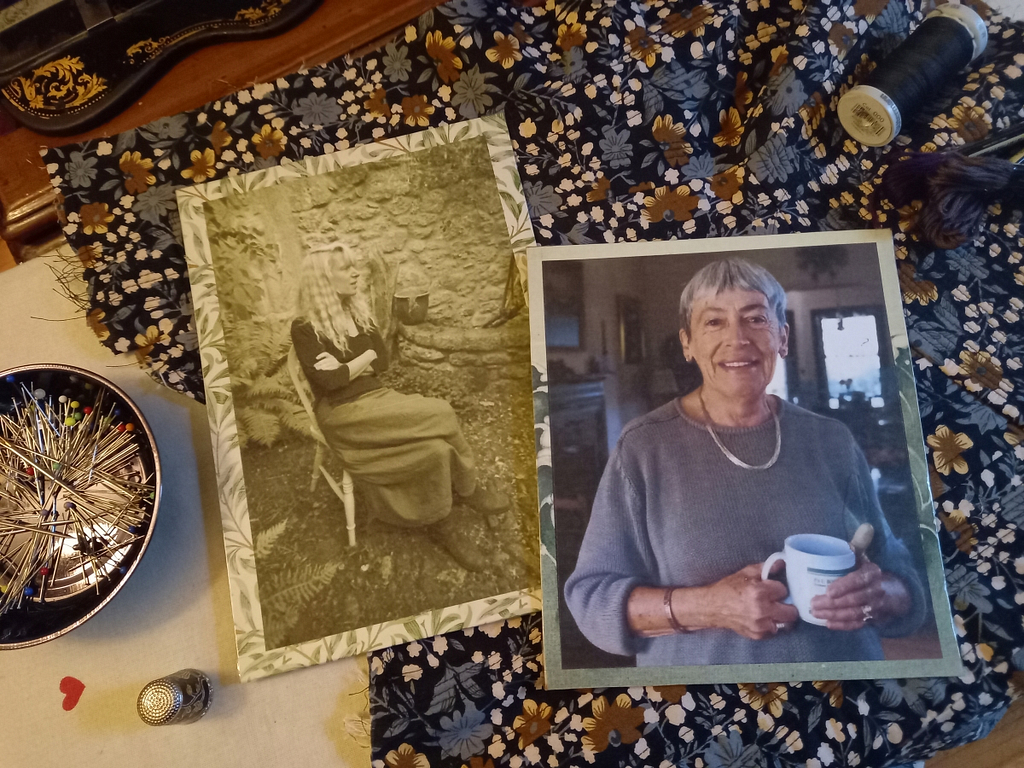
Cardboard cutouts I made years ago of Terri Windling and Ursula K. Le Guin. I used to tuck them in my planner and bring them with me everywhere!
I don’t mean ‘art for art’s sake’ but rather something very much embodied in the world and part of it’s extended network of sensibilities. Something that interfaces with real ecosystems or socio-economic environments and real time periods.
Is there any purer form of magic than the little glimpses you get of those lives? I don’t think they require endless descriptive detail because the idea is not to replicate them. You have to make your own for it to work and that’s what witchcraft *feels* like to me. It’s what I spend most of my youtube channel, this blog, my whole life pursuing.
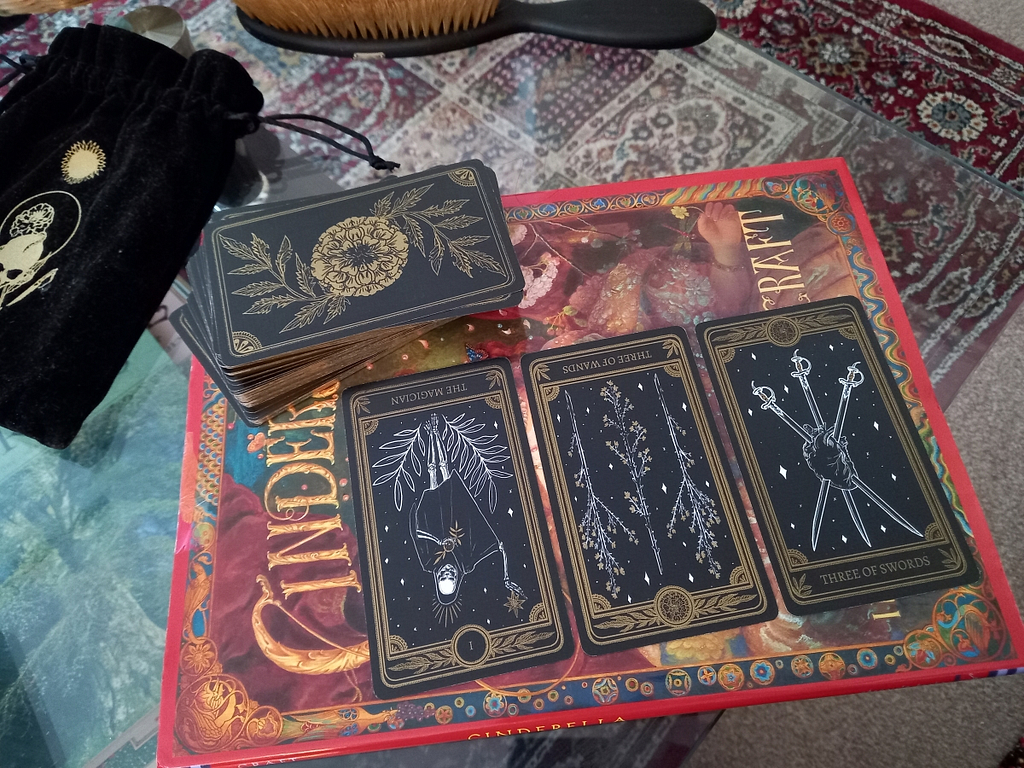
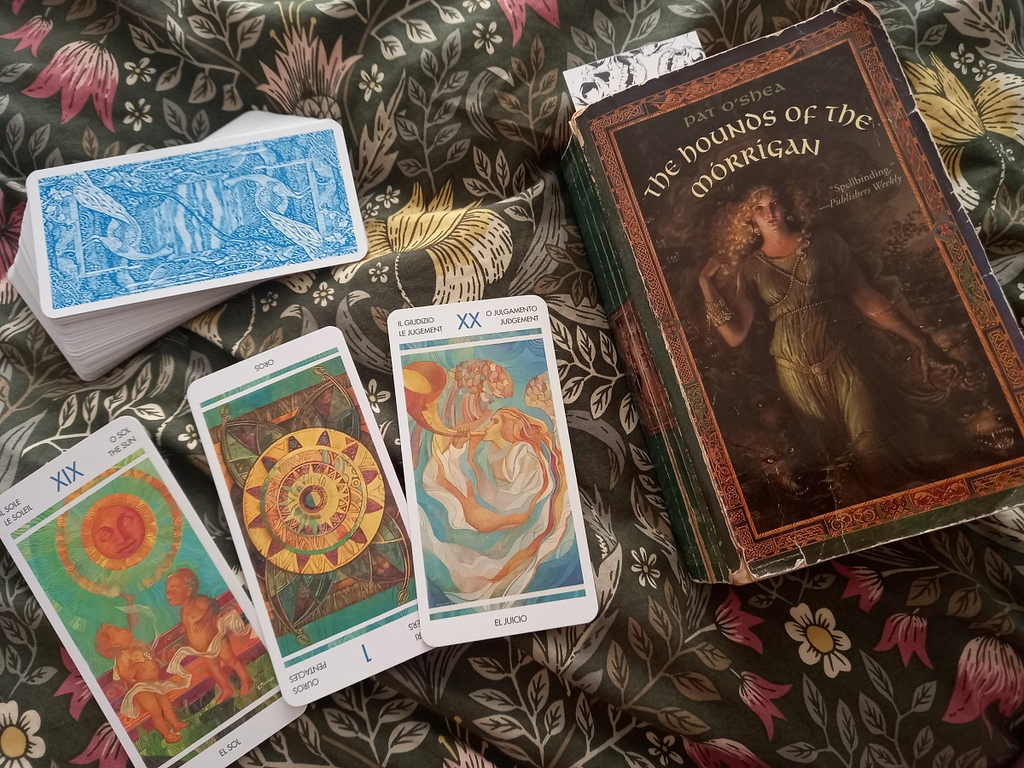
Recent reading right before a VERY intense first time experience.
In my case, it has output that others can experience because I feel the creativity must go somewhere but I’ve never been the best at keeping track of my portfolio (and, indeed, I was always rubbish at tracking my repertoire when I was a performing violinist too. #myexecutivefunctionsucks)
But this is why I’ll so often mention something in detail, something relatively mundane but *just* off the beaten track (debatable) and then go “see? Witchcraft!”
And the reading AFTER that experience to get a sense of where it was going.
I love scenes in fantasy stories** that describe the seemingly mundane elements of a witch’s living space. Let’s say you’re in the Brooklyn apartment belonging to your aunt (umpty times removed). She has a gas hob that she lights with matches. There’s a colourful pot of coffee on. A fruit bowl sits on the coffee table below a daffy painting of old lovers in clashing robes. You wonder why their necks are so long… A cat lounges near an old pile of yarn or perhaps on a tatty armchair tucked in the corner. You look out the kitchen window to see she’s let the black-eyed susan vine overtake the fire escape …something looks different about the city though. “Honey, pick a different window” or “Sweetheart, come look at this old book of poems… people go mad looking out there too long.”
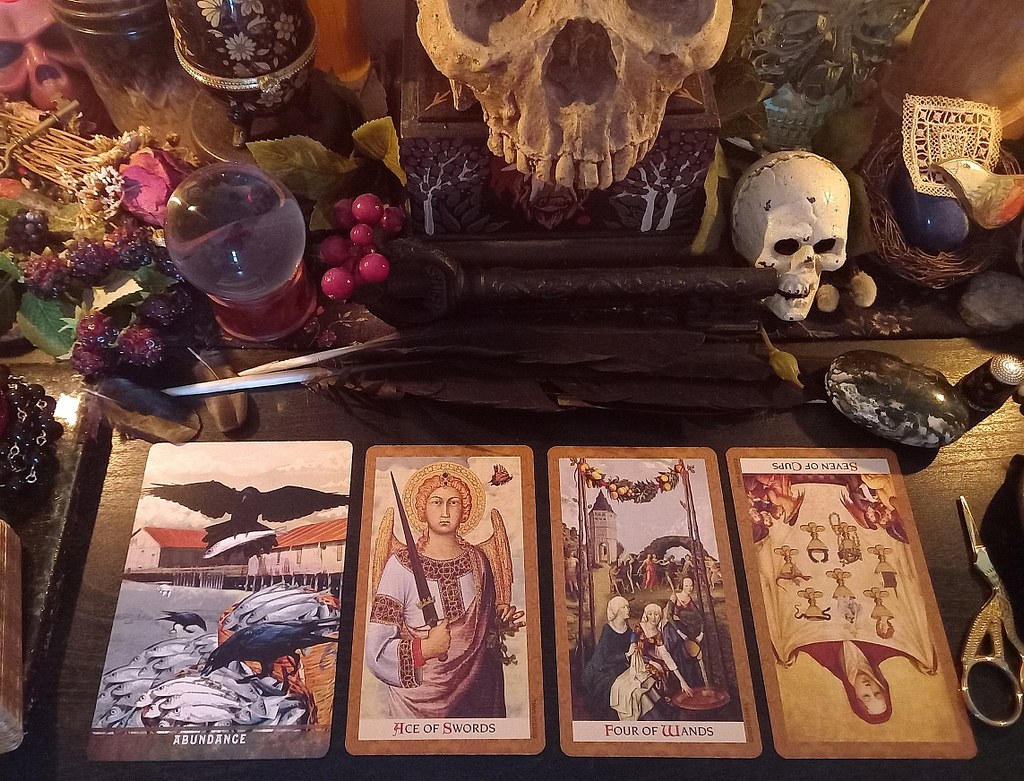
A reading about a specific… quandary and lived/sensory question.
Is it just because of the city chaos? Or is that the road to an Otherworld? What’s the difference between personal eccentricity and a real witch? Who gets to make that call?
… I’ve taken to washing my hair once every three weeks now instead of the usual two. I’m combing it, which I never thought possible with curls, but it seems that the key lies in using a wooden comb. I oil it with olive oil mixed with peppermint, fenugreek seeds, and rosemary (which I cooked in it myself. Magical intentions included.) Recently, I changed up my henna mixture for colouring too… the henna kept oxidizing far too dark and I prefer a lighter pinker red. I did a whole bunch of research on it and ended up with henna, catnip, and madder root! There are medieval recipes for colouring hair but I went with modern recommendations made by those interested in retaining length. Just in case.
So now I’ve got even more of a medieval-inspired head! Though I have no idea if it will register on camera over time, I’m very happy with the difference.
I’m making myself a new (to me) type of corset. And I’m going so very slow with it … partly because most of my time is eaten up with something else non-negotiable at the moment. But progress is happening! Hopefully, I’ll like it? I’m learning so much in the process though.
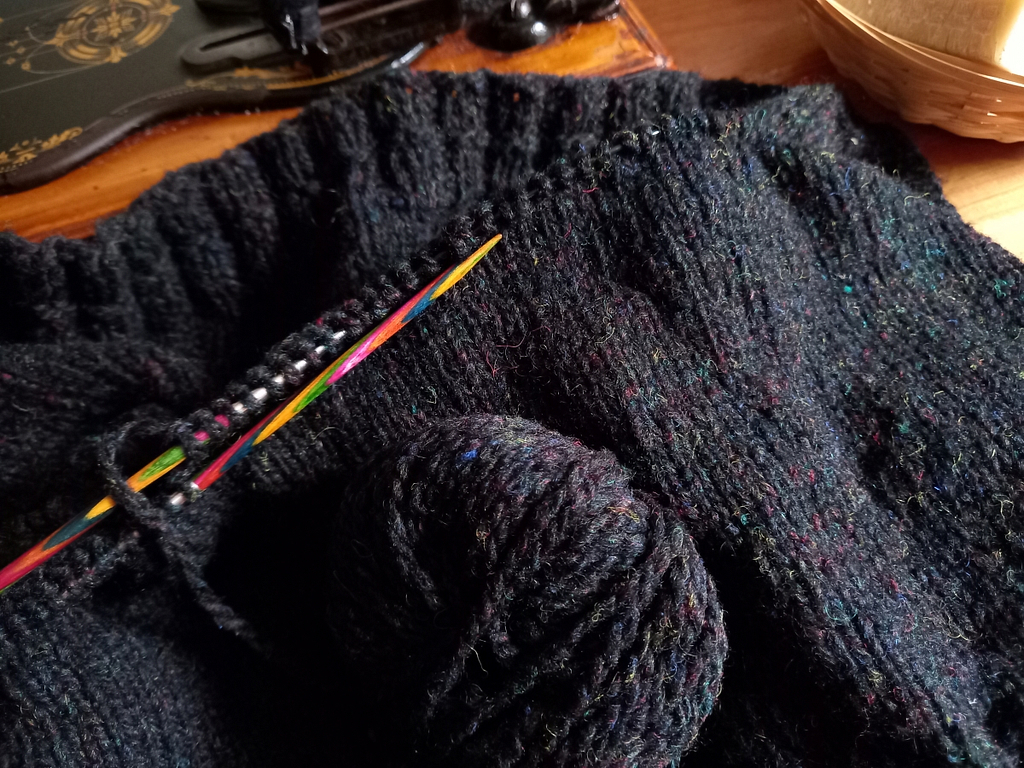
I’m still working on my current jumper project… historically inspired with billowing sleeves. And yarn the colour of crow feathers (black, but with many tiny multicolour fibres within so it has the optic effect of shimmering.) I can’t wait to finish it!!!
In other lights it looks more blue green!
I’ve also migrated over to the dumb phone life. I’d wanted to do this for a long time and had steadily uninstalled as much as I could from my old Samsung (having left a certain soul-sucking fruit-named empire behind years ago!) But the thing was still such a drain on my life.
My internet is based in my hotspot so my dumphone does have that capability. It’s the Matrix phone, for anyone wondering. A Nokia 8110 4G – and oddly it’s WAY faster than the old hotspot. I theorised to my techie BIL it might be that I couldn’t entirely keep my smartphone from doing other things in the background. He agreed.
In the absence of so much stimulation elsewhere, I have been getting better at aimlessly browsing less. And my witchcraft has immediately felt more real. More present. It’s colours are more vibrant. My relationship with deity has been reviving. Not that it was ‘dead’ but I had felt like I was fighting some kind of film that lay over it before I could really access it. That is much less the case now and I anticipate it changing further.
I mean, for example, Macha and Badb make an appearance masquerading as artists and tarot readers… They call themselves ‘Melodie Moonlight’ and ‘Breda Fairfoul’. One has blue hair, the other red. They ride a motorbike. They chew tobacco and smoke cigars. They file enamel handcuffs with their teeth and cry acid tears! What more could you want!
The way I keep describing it is, “I feel like I can see things better.” It’s not the best analogy but it will suffice for now.
Which brings us back to the magic in the mundane. Call it aesthetics, but I want to make real what I feel and perceive to be important. It takes sketches, notes, and even pin boards just as much as it takes altar work, moon phases, or wax drippings. Magic is art, art is sensory, and art and magic are visual-tactile-aural living.
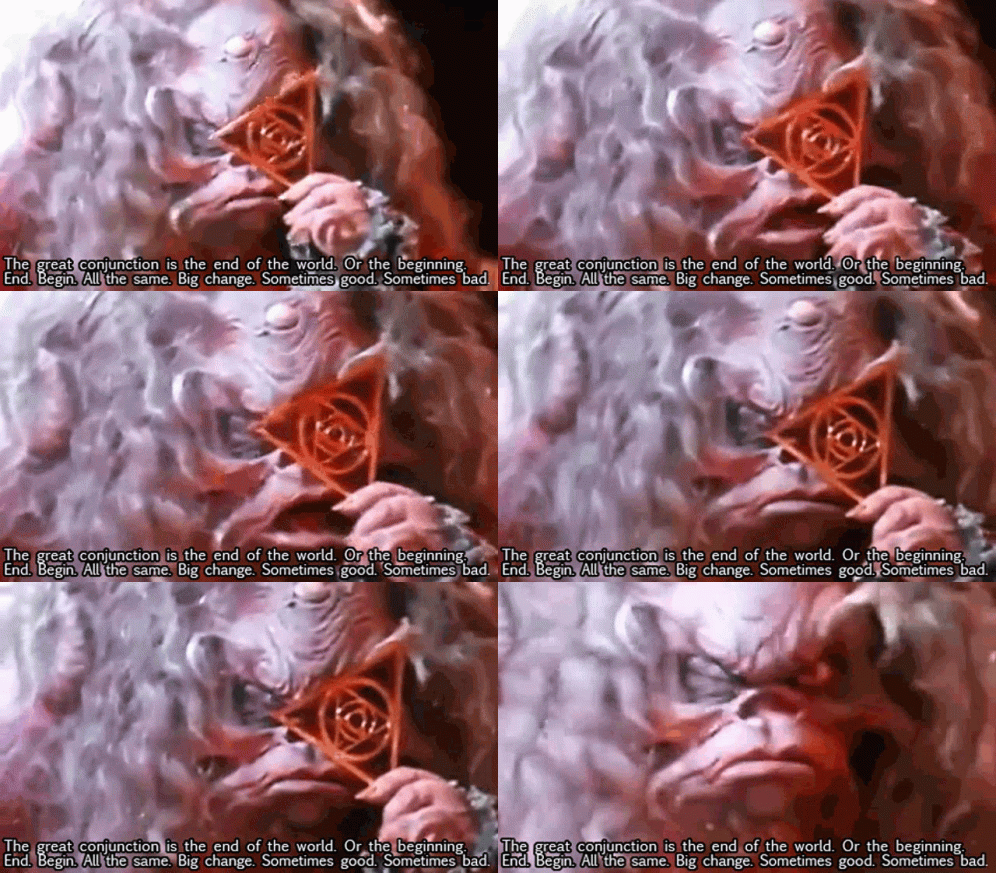
The end.
(Or the beginning?)
~ Saoirse.
PS. I’ve been re-reading a lot of old favourites… Hounds of the Morrigan, The Left Hand of Darkness and so on… but I’ve also been embarking on a shocking amount of new stuff for me! Movies I’d never seen… The Crow (1994), What We Do In the Shadows, Witches of Eastwick, Beetlejuice (1988)****. I have THOUGHTS about all of this that links into what I’ve laid out above. Hopefully, I’ll get to post again soon!
** Urban fantasy is great for this but I can think of a few Patricia A. McKillip moments or Patricia C. Wrede moments and many others that do this really well too.
*** The header image is just a bunch of old photos of me aged approx. 16-21.
Something that has gripped my imagination my entire life is the idea of ‘Building Other Worlds’. Importantly, I don’t mean only as ‘substance behind narrative genres’. World-building for a fantasy novel or for game play, though deeply interesting, is only one popular iteration of a much broader interdisciplinary creative drive to make and experience other worlds. What of Art? Architecture? Costume? Music? Theatre? Ecological experience? Folklore? What of symbolism or spacial awareness? Where do we get ideas for what our worlds look like and what tools do we use to build them?
I have been wanting to write about this for a long time but have been puzzled about where to start. Do I start by explaining some things about art history? About perspective, image composition, numerology? Do I dig into how tiered worlds in late medieval and renaissance literature make their way into contemporary visual language? What about modern art? What about tarot or oracle? Witchcraft, sewing, or poetry? Would tracing themes of port cities and their proximity to marshland or wetland habitats get the message across? What about folkloric recordings of Victorian vs. Medieval streets in Irish town centres!? Ultimately, I realised I’m going to have to start where I am and, if you wish, you can follow me down each corridor as and when I get there.
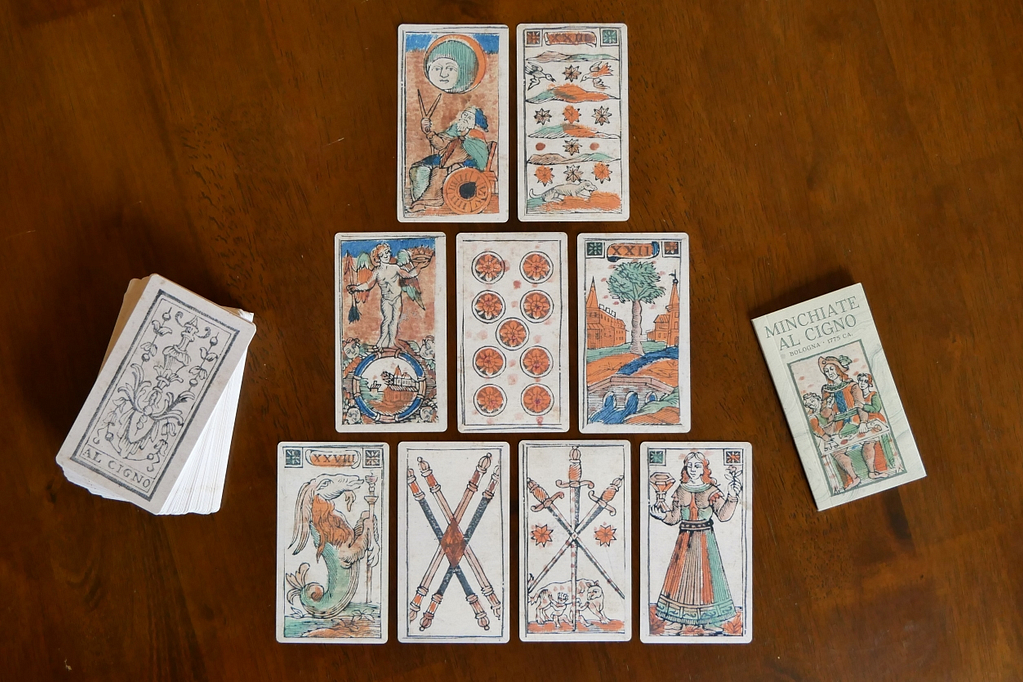
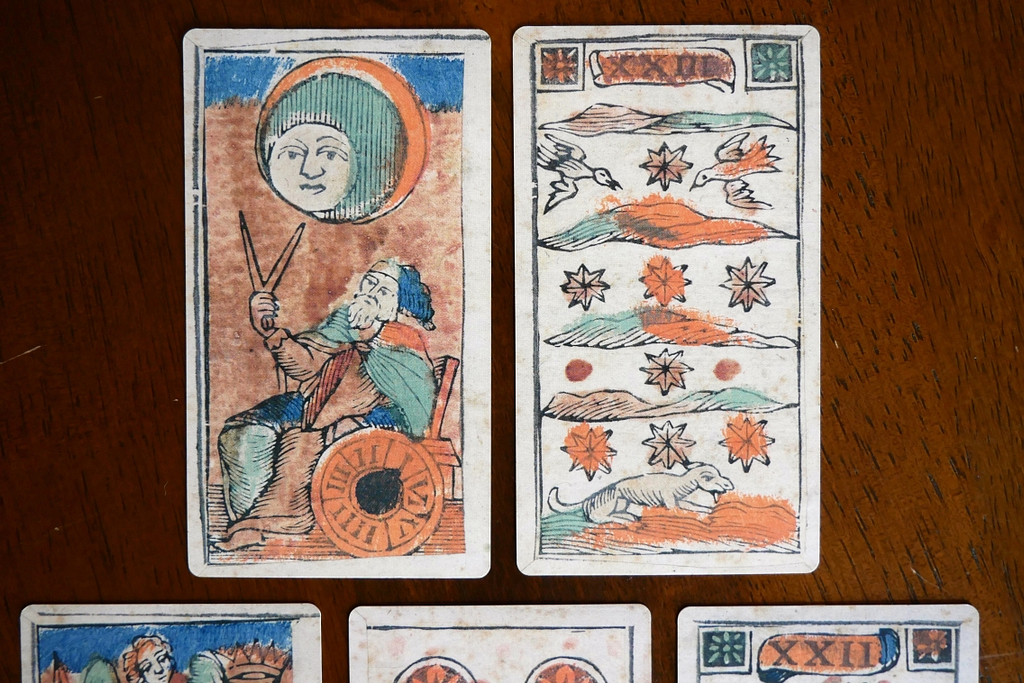
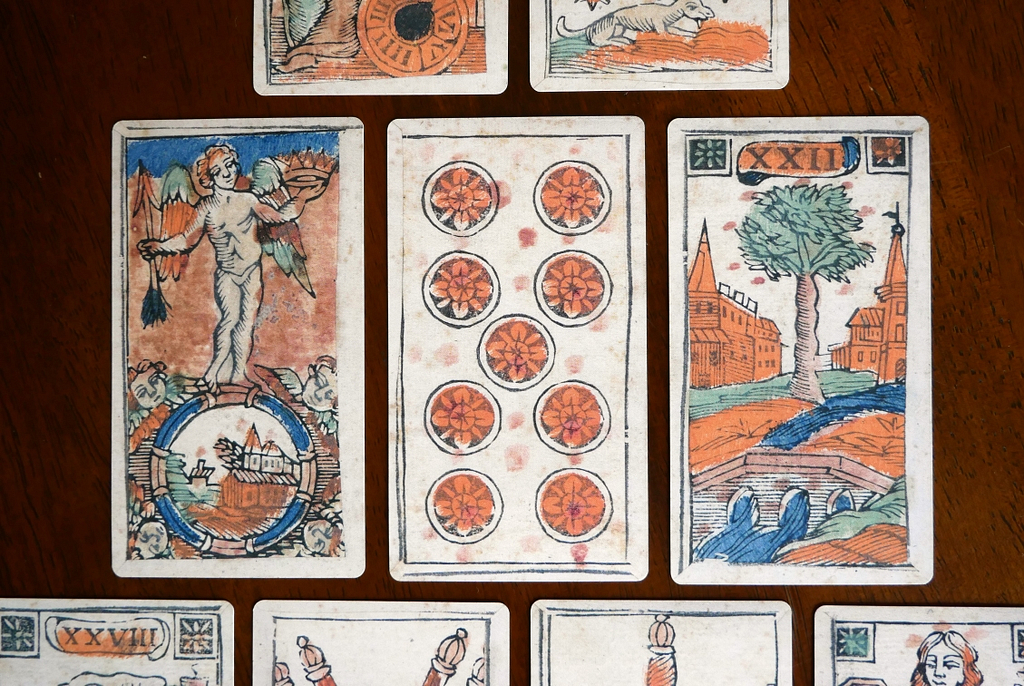
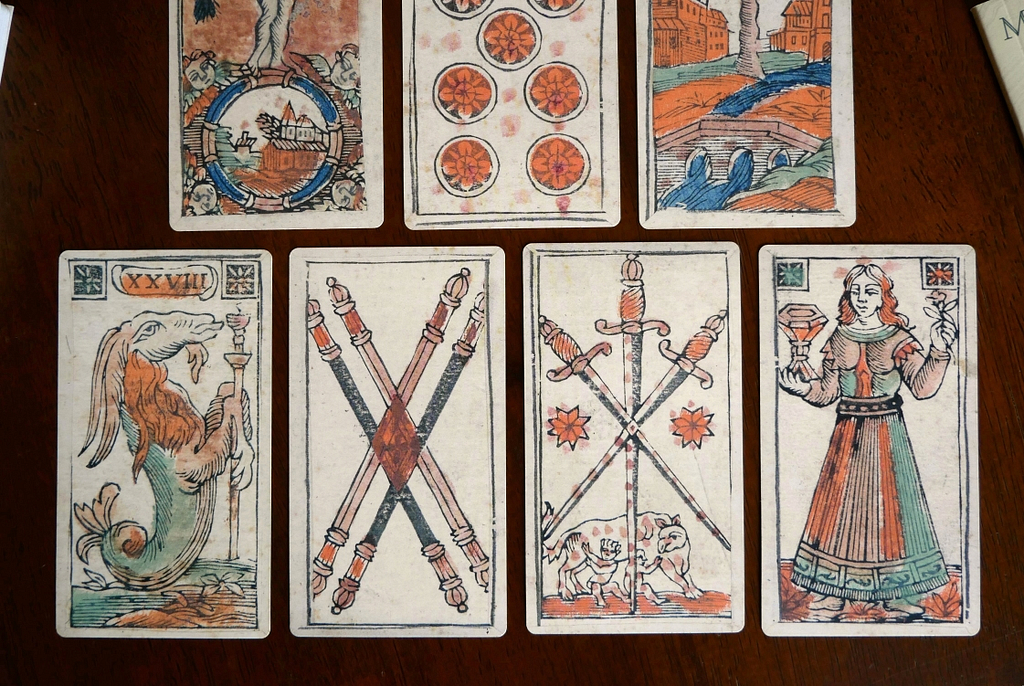
Here are some purposefully drawn 18th c. Minchiate cards illustrating how card visuals can help you construct doors to Otherworlds and populate them in turn with architecture, characters, and landscape …with pips for ‘scaffolding’!
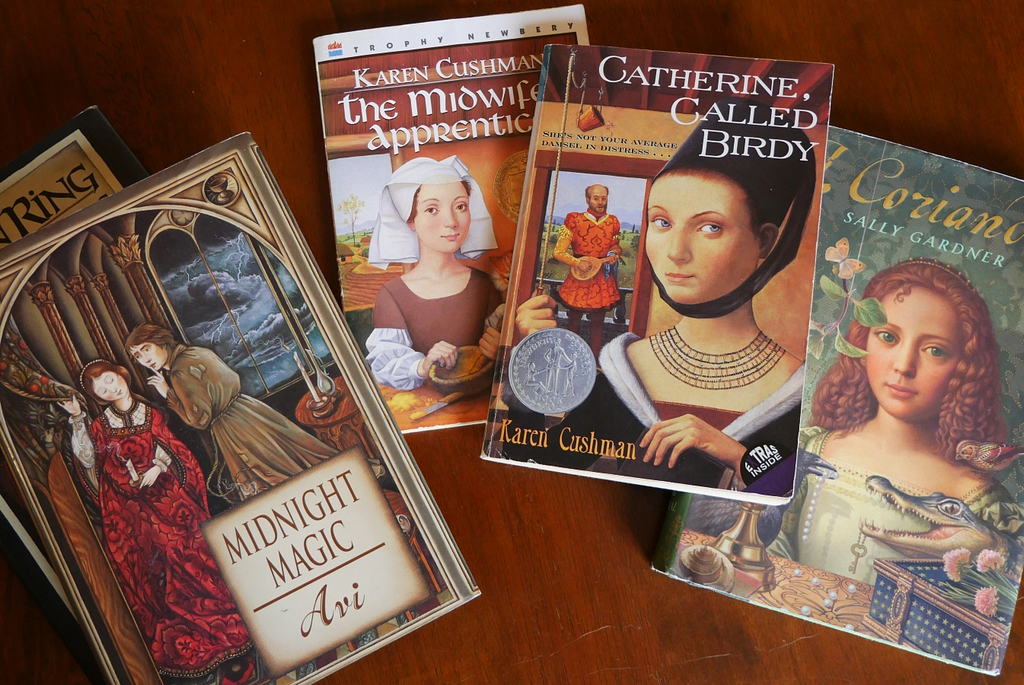
Recently, I revisited some books that were instrumental in helping me to identify myself when I was young. These follow very much in a similar vein to other favourites of mine such as Pish Posh, Said Hieronymus Bosch, The Books of Earthsea, The Chronicles of Prydain, The Hounds of the Mórrígan, or Jonathan Strange & Mr Norrell… and I took special care to obtain secondhand copies of the specific covers I grew up with as well.
I have yet to re-read The Raven Ring although I know I will love it as I can’t remember how many times I would have read it growing up.
There are five books in all (for now) – each of which features scenes relating to tarot, tarocchi, or otherwise emphasise attention to historical detail within their fictional plots.
* Midnight Magic by Avi (part of a series that didn’t exist yet when I was younger. I won’t talk about this one much because – as it turns out – it wasn’t as good as I remembered and it’s representation of tarot is tangential to the plot and seems fairly ignorant of what tarot is. I still LOVE the cover though!)
* Catherine, Called Birdy by Karen Cushman (no, I am not going to watch the new film abomina…I mean, adaptation of this beautiful wonderful highly intelligent book.)
* The Midwife’s Apprentice by Karen Cushman
* I, Coriander by Sally Gardner
* The Raven Ring by Patricia C. Wrede (part of the Lyra series but I have not read any of the others.)
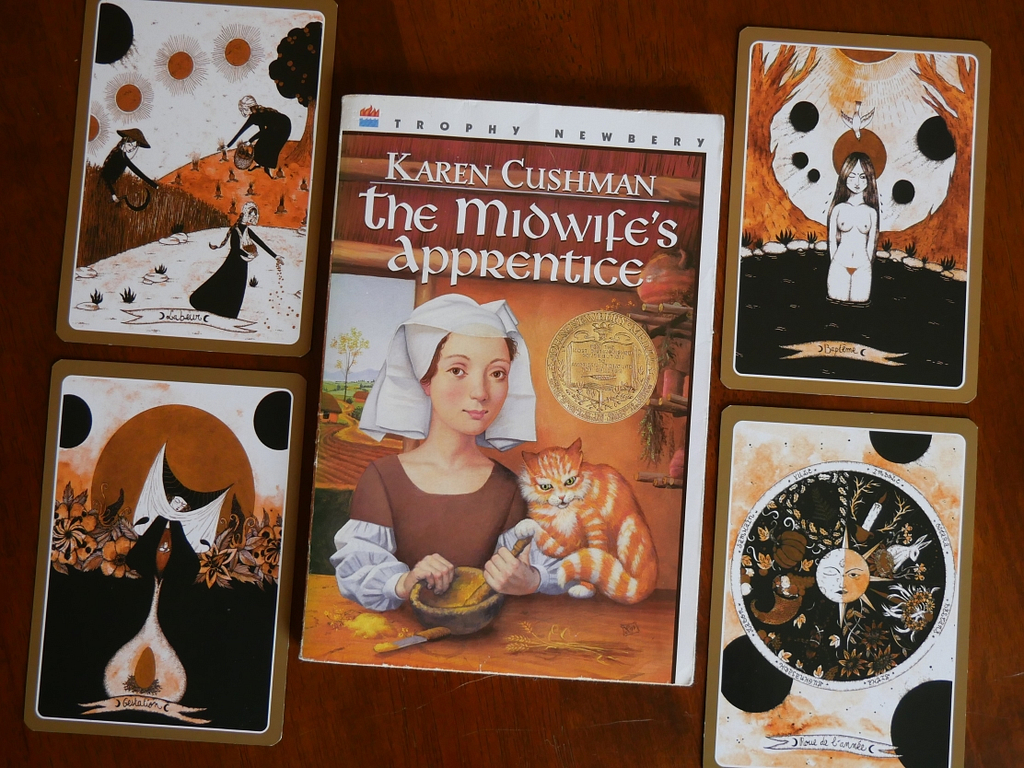
The Midwife’s Apprentice is pictured here with selected plot-relevant cards from Oracle Médiéval et Merveilleux by Gulliver l’Aventurière & Julien Miavril. (No spoilers!)
For one thing, all of these books (except Midnight Magic) were aimed, perhaps, at Young Adult readers generally socialised as feminine but at no point did they talk down to them. They were an excellent foray into how creative and narrative detail coexists wonderfully with good historical enquiry. There is an emphasis on trade and commerce. Some of these feature port cities or otherwise thriving commercial principalities and their conflicts with rural living and tradition. They discuss textiles as if their readers can and will care about how they affect plot. And they treat Otherworlds and/or magic with the same expectation: that readers are curious to know detail and will put in the imaginative effort. To me, this is how the imagination grows.
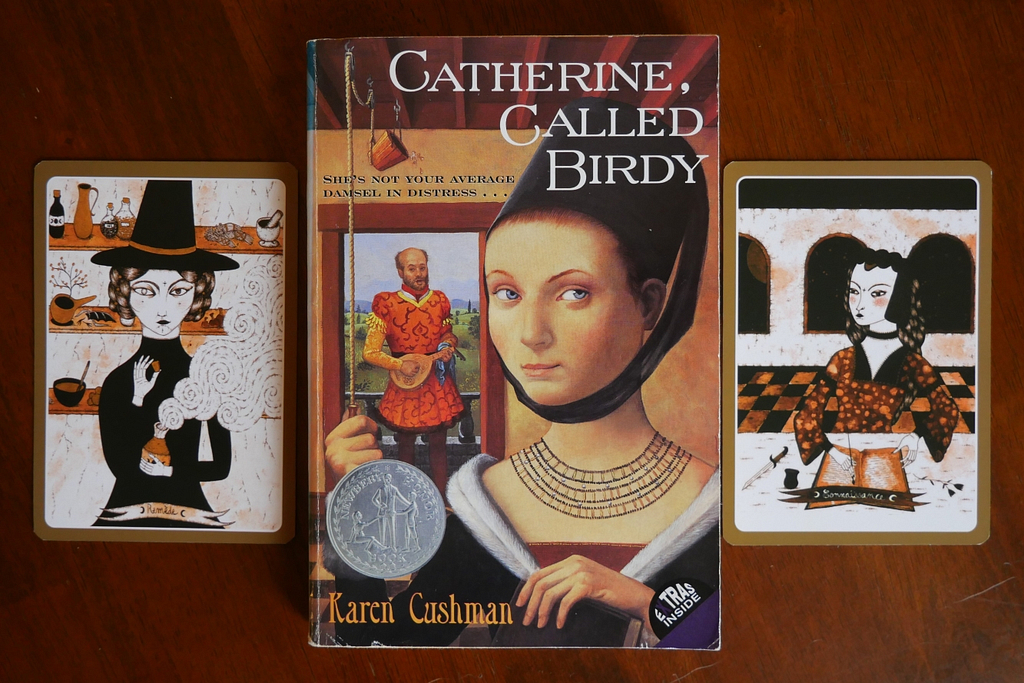
Catherine, Called Birdy is pictured here with two cards from the Oracle Médiéval et Merveilleux that are… relevant to the story. 😉
Artistically, a glance at these covers will possibly explain a thing or two about my own preference for facial portraiture and the art of the late middle ages and early renaissance. The time periods in the books vary a little more widely than the covers. I, Coriander, for example, is set mostly in Cromwellian England and the time period represented art historically on Catherine, Called Birdy is about 200 years later than the setting of the book (i.e. 15th century visuals [1] vs 1290-1291 book setting.) I was lucky enough, however, to have an aunt who overlooked things like that. For example, she focused instead on showing me how the play in perspective with the rope and bucket and the figural proportions on the cover of Catherine, Called Birdy were all little art historical jokes that the artist had borrowed from real historical painters. The implication was that if I was clever and curious, I could find them out …and I did!
Obviously there is so much to say even just about these books… so for now I will draw a few connections between I, Coriander and a few tarot and oracle decks that I have.
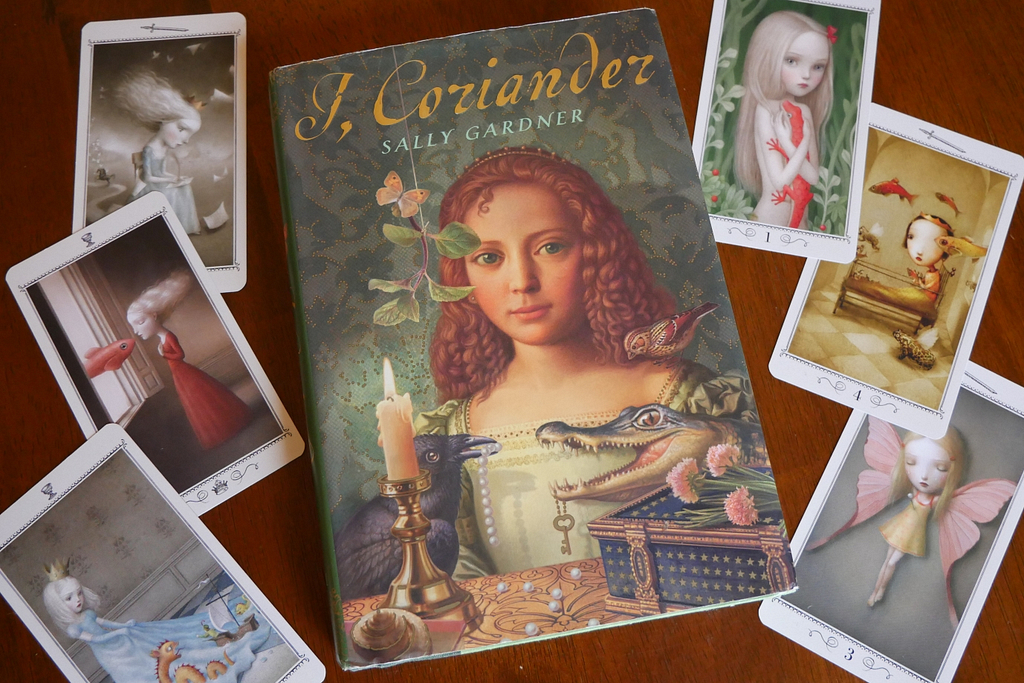
I, Coriander pictured here with selected cards from the Nicoletta Ceccoli Tarot. Once again, the penchant for strange emotionally intelligent portraiture!
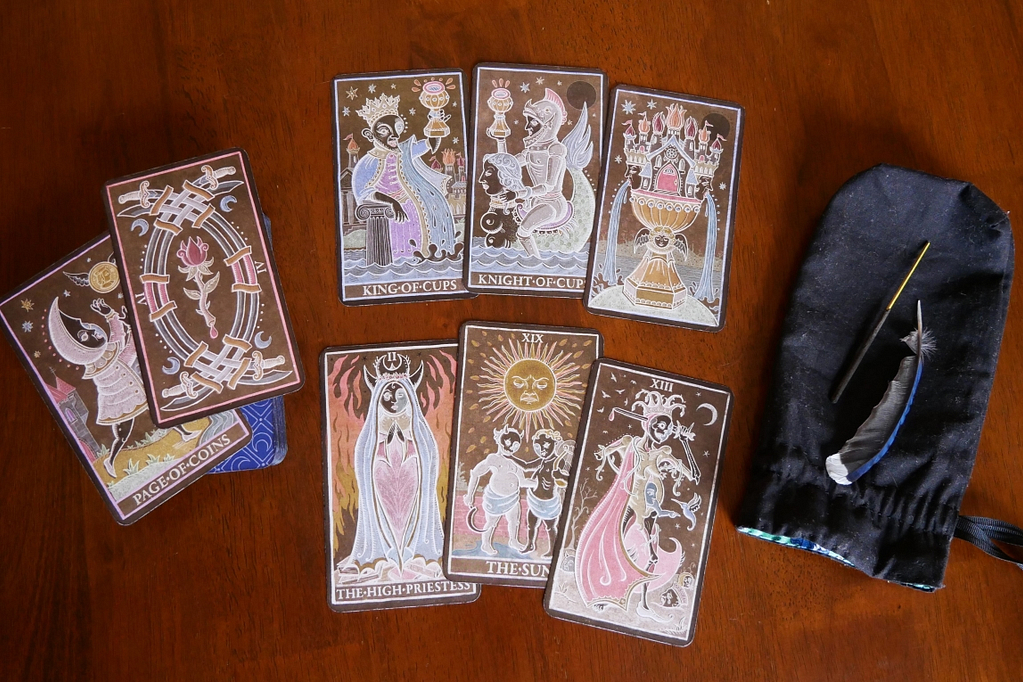
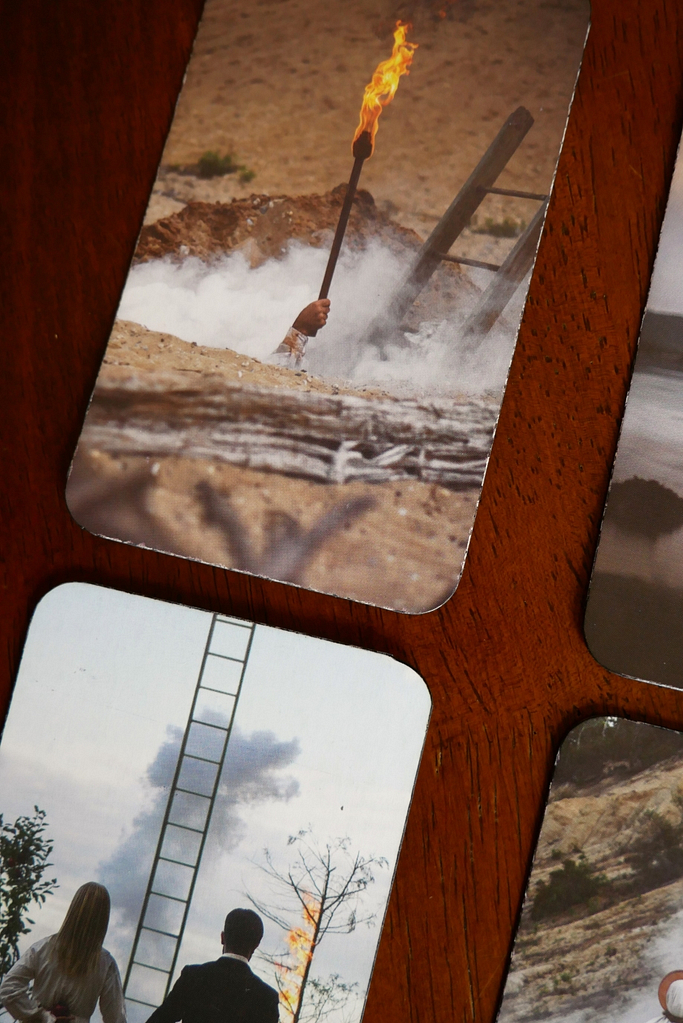
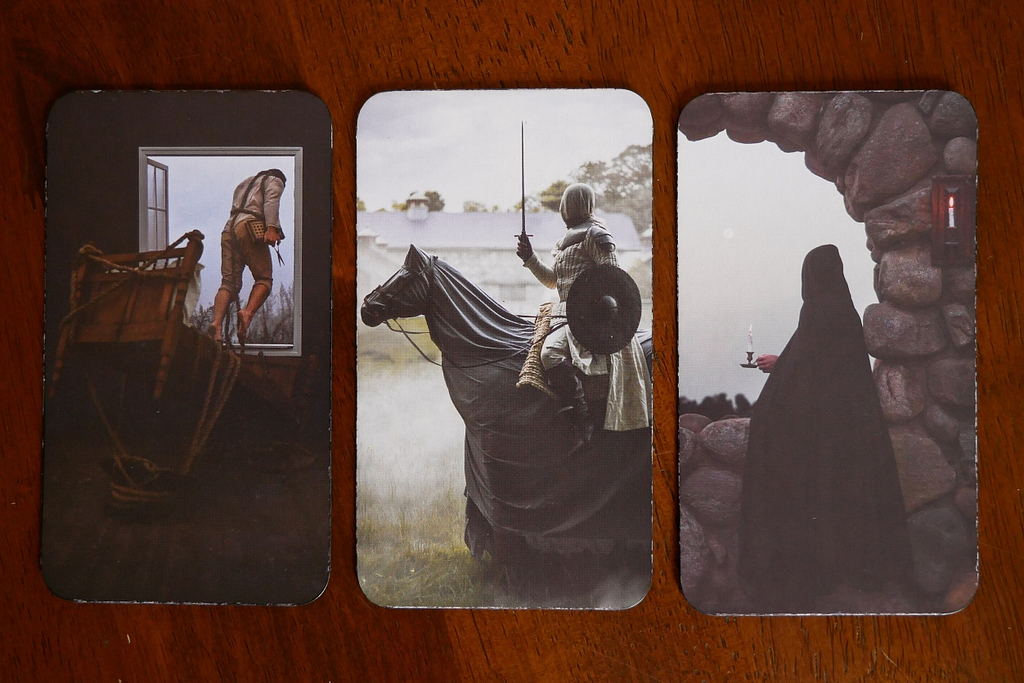
In the first place there is reference to a pair of wedding portraits in I, Coriander …a woman in the foreground holding an oak-leaf, a tiny hunting scene nearly hidden in the wooded middle-ground behind her, and a citadel in the distance. Her spouse is positioned in front of a fantastical city with a river or estuary intended (thematically) to mirror his connection with trade and the Thames. But in this city, there are mermaids and fantastical boats in the water among other things… I couldn’t help but picture certain cards from the Trionfi della Luna (paradoxical pictured below.) Or perhaps wander into a landscape just beyond the borders of such a city… might we find the world of the Somnia tarot there? People in old robes and linen shifts wandering in among the wetlands and sedge grasses gazing at the stars or riding silent sad horses?
Cards chosen from the Trionfi della Luna to mirror aspects of the story in I, Coriander… along with various imaginings of my own about the space we inhabit in the Somnia Tarot.
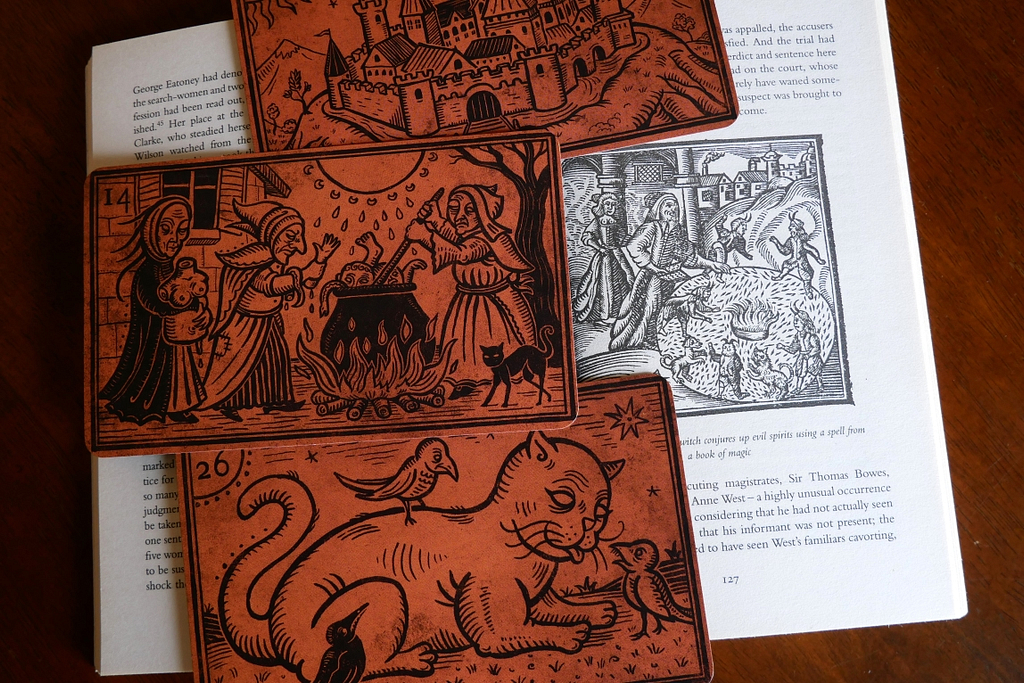
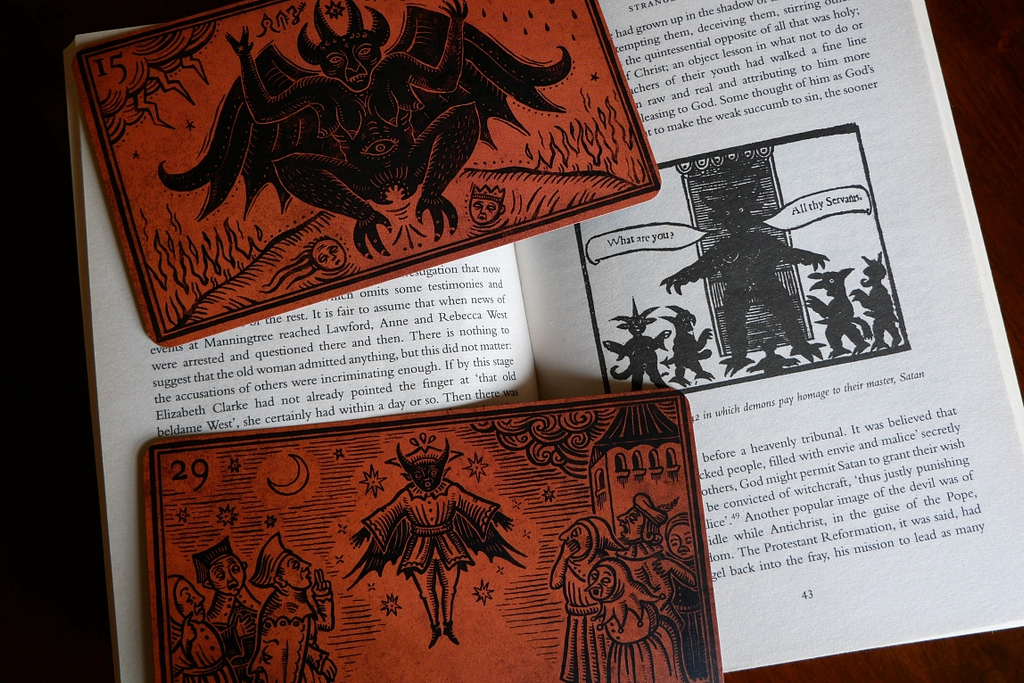
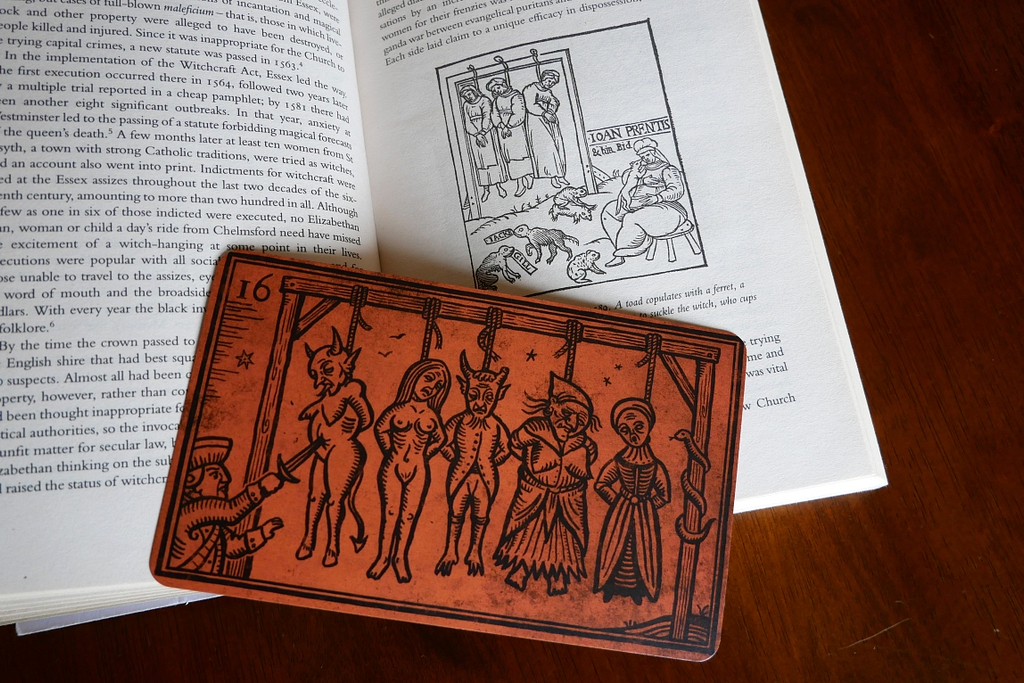
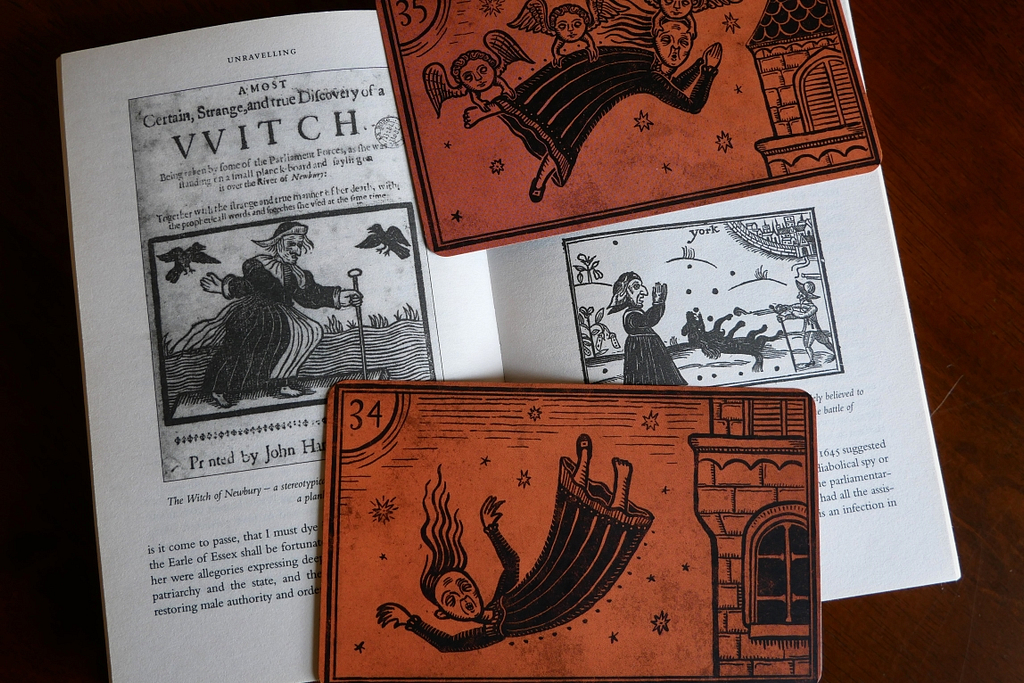
I should note I have also recently read Witchfinders by Malcolm Gaskill and am currently working my way through The Witch: A History of Fear from Ancient Times to the Present by Ronald Hutton… Of course, in so far as witch hunts in England overlapped with civil war tensions between Royalists and Parliamentarians (and occurred along Puritan vs ‘Popish’ lines), I, Coriander made for an excellent fictional backdrop! Also, I really enjoyed drawing cards from the Oracle of Black Enchantment (also by Deviant Moon Inc.) while reading Witchfinders as a visual processing exercise*.
Pages from Malcolm Gaskill’s Witchfinders featured here with various cards from the Oracle of Black Enchantment (Samhain edition.) Patrick Valenza’s art historical source material (at least in part) should be fairly evident…
Lastly, this emphasis on the detail of Otherworlds – their textiles, buildings, landscapes, emotional experiences, social relationships, flora and fauna etc. – is playing a huge role in my current artistic endeavours. I tend to see pip decks as decks full of concepts/characters (in the majors and courts) and their scaffolding and architectural surroundings (in the pips). Sometimes this visual architecture is metaphorical and sometimes it is fairly literal. It depends on the reading. But it’s also helping me to tease out what it feels like to think of tarot decks in this way and what that might mean for creating a tarot deck of my own. Furthermore, I have been rebuilding a former world of mine and have recently begun sewing some clothing that I envisioned there…
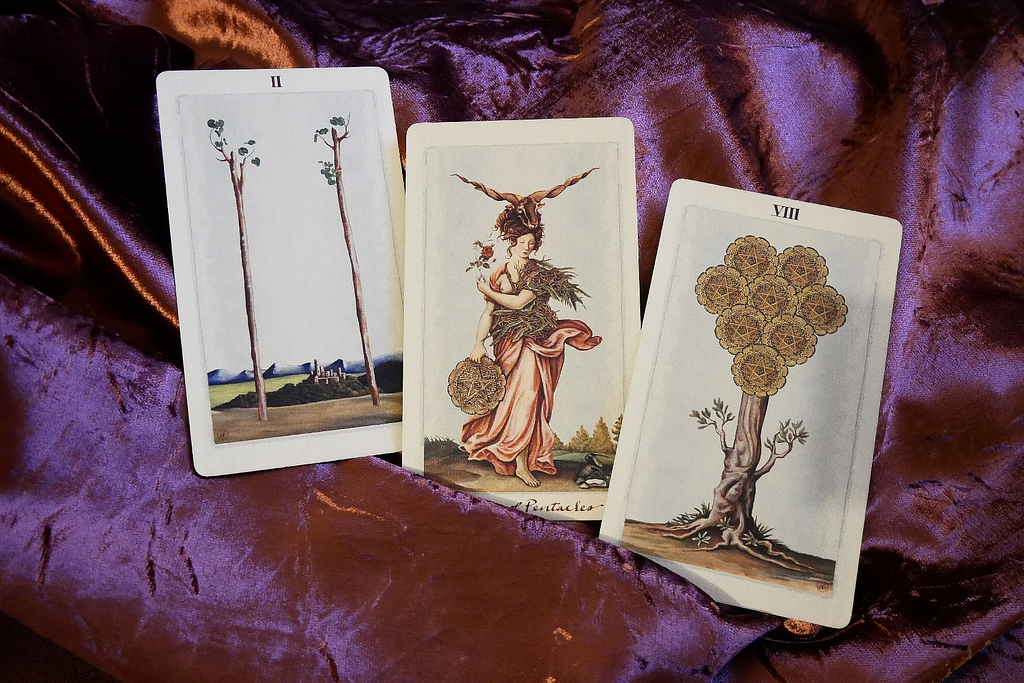
And, of COURSE, the Pagan Otherworlds Tarot… featured here over (deadstock) cognac red crushed velvet ::drool::
Perhaps the act of sewing my own clothes is really the process of bringing fairy clothes over the divide? It would explain the time traveler vibes, don’t you think? 😉
So… this post has mostly been about my own personal explorations and impressions. I plan to return soon, however, with some better grounded and CITED analytical material about art history and technique.
Sincerely,
Saoirse.
* Please note! Literally any deck will aid in visual processing or reinforcing thematic content for literally any book. There is no need to acquire any deck not already within your means or comfort zone. Decks/products/material items are mentioned here for illustrative purposes only! It’s PRAXIS that matters.
** All decks featured here of my own volition and arising from my own use of them. I have neither been invited nor commissioned to do so and I have no affiliation with any of their creators. The TdL (paradoxical) was a private gift from a friend. All others were purchased by me.
[1] See images by artists like Petrus Christus (especially ‘Portrait of a Young Girl’, 1460s) and his contemporaries. The cover here has a very Burgundian look with a single truncated hennin among other distinguishing features…