SPOILER ALERT!!!
Two books that strike me as worth reading in tandem with tarot are “Piranesi” by Susanna Clarke and “Titus Groan” by Mervyn Peake. It would be tempting to consider picking a specific deck to work with in each case but there might be the risk of over associating that deck with those books afterwards. An idea to be approached with caution, perhaps.
I seem to have regained my ability to read fiction for the first time, properly, in over a decade! There are many reasons for this but paramount for the purpose of this blog post is that I have been allowing myself to define my own terms for my taste. I know what I’m looking for in a work of fiction at this current stage in my life and I am allowing myself to articulate that and pursue it.*
Titus Groan
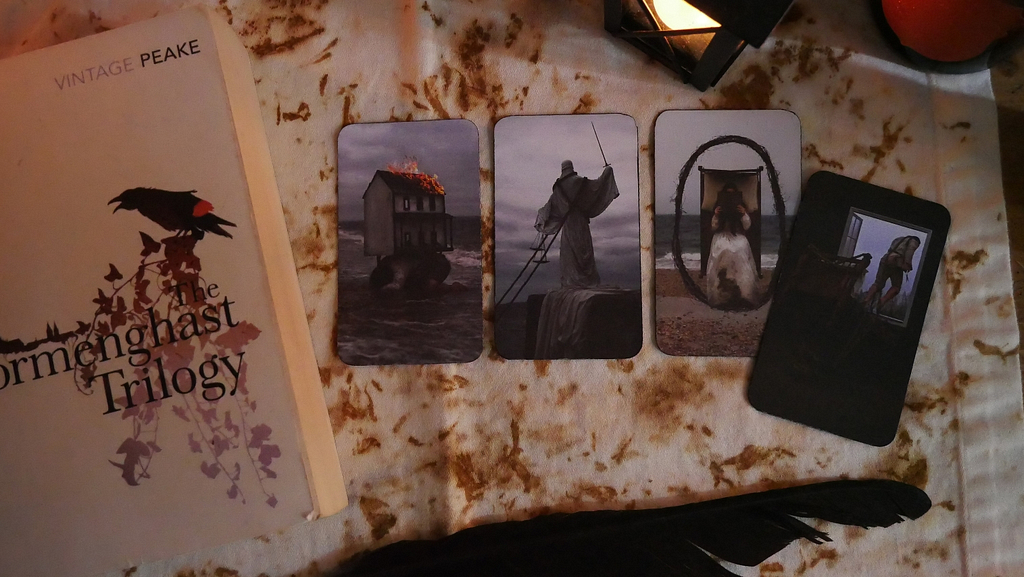
I can’t vouch yet for the further Gormenghast novels (the rest in the trilogy or any of the further works – short stories, the ‘rediscovered’ book written by Peake’s wife and so on) but I suspect they would all make an interesting study with tarot.
As I finished Titus Groan one specific card leaped to mind: Justice. Justice, in any system (meaning whether you see it at the 8th or 11th Major Arcanum, I think it would apply).
From my admittedly limited experience, the Justice card will often get described as cosmically neutral. It’s not automatically synonymous with legal justice, or social justice, or anything anthropocentric in nature. It’s often viewed as possessing the kind of neutrality that registers to the subjective human mind (and the collective) as “cruel”… unfeeling.
What is interesting about that, however, is that in any given reading where we receive the Justice card, we rely on the cards surrounding it to provide context. In Titus Groan there is a bewildering amount of heavily detailed (deliciously rotten) context. There is a total pointed stylistic preoccupation with the minutiae of a given moment from many vantage points. The book doesn’t really have chapters as such but the manner in which it is structured seems aimed at giving the reader a very specific kind of whiplash…and gaslights you about it too. It oscillates between the estate/house of Gormenghast occupying all our ideas and definition of ‘the world’ or ‘the cosmos’… gets us deeply invested even in the movements of its motes of dust (so often likened to starlight) let alone the emotional landscape of it’s morose and Bosch-like characters… only to zoom far out, like a choppy jump cut, to the world outside the walls; full of archetypal passion plays, journeys, trade routes, forests, and mythic relationships. Every switch takes only a page or so to re-frame your sense of perspective and proportion. It warps your sense of time and space in a deeply compelling way. To be back inside the walls of Gormenghast is almost to forget the narrative of only a few pages prior.
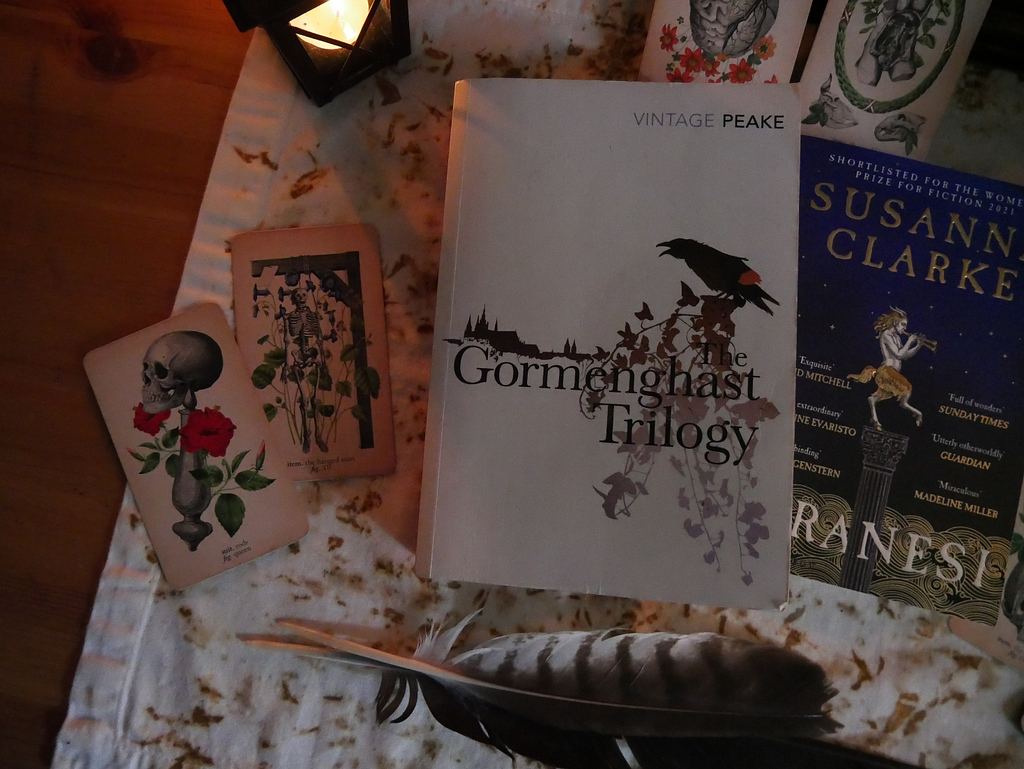
And none of this sense of “loyalty” that you develop in the reading is particularly well rewarded if what you’re hoping for is Justice in its more desirable or “fair” aspects. “Loyalty” is actually an explicit theme in the book but it’s presented as a lived reality, an arch concept, and a dysfunctional source of festering rot. Justice lurks behind it all. Past a certain point, every page feels like a waiting game and you, the reader, bear witness to sociopathic plots and action with no clear idea of the deeper motivations or drive behind specific characters …other than as projection of the rotten dysfunction of Gormenghast itself. Gormenghast (with its own societal ideas of “Justice”) is the living breathing house that is THE world but is also only one small estate inhabited by the rigid seemingly endless loyalty to pattern, ritual, and heritage. What is structurally integral and societally established IS ‘just’ and ‘good’… right?
If this rendering of Justice makes you feel rather enclosed and sweaty, I think its supposed to. It’s also weirdly sympathetic though. I felt continually rather caught and called out!
In Gormenghast, Justice is communicated through sensory experience… a pendulous blotch of wine on white linen flashing in and out of the shadows… its details never relent but that’s the point: perspective becomes acrobatic!
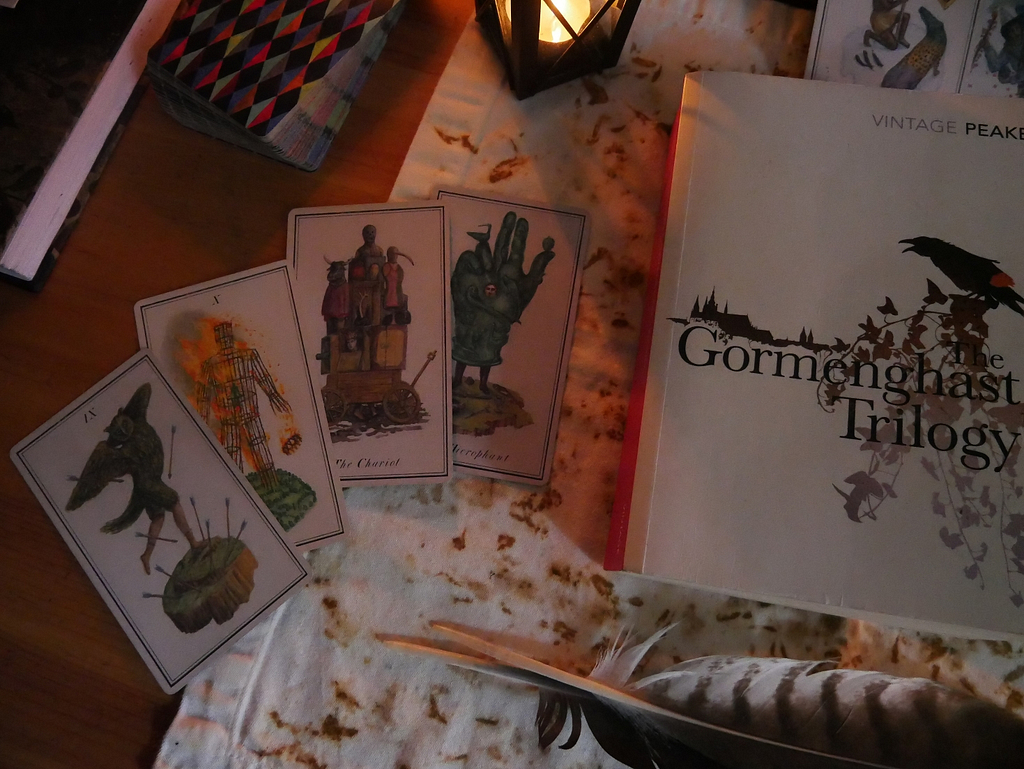
All of this is enhanced, of course, by the fact that Titus Groan is only the first book – as far as I am aware – for the convenience of publication. Weren’t the Gormenghast materials intended as one long work of fiction? As the book opens and closes it feels very much like you have only read a near 400 page ‘first act’.
The Justice card stood out to me throughout not, per se, in its conspicuous absence (though… kind of) but more because the book just screams out that you don’t even know what Justice IS. You are just as limited and ridiculous and totally absurd and strange as any other character in this narrative.
Piranesi
With its overt thematic play on labyrinths, Piranesi feels similar in genre to Gormenghast. The writing is much more direct, the method for telling the story is totally different than Gormenghast. But the tarot also would make a great tool for exploring the book. And the book would do the same for exploring tarot.
What is our concept of Justice in Piranesi? I’m reminded in a way of the development of mind, voice, and perspective in the works of Albert Camus: the Stranger, the Plague, and the Fall. Each has their sort of hints at the next, archetypal touchstones… anchor points.
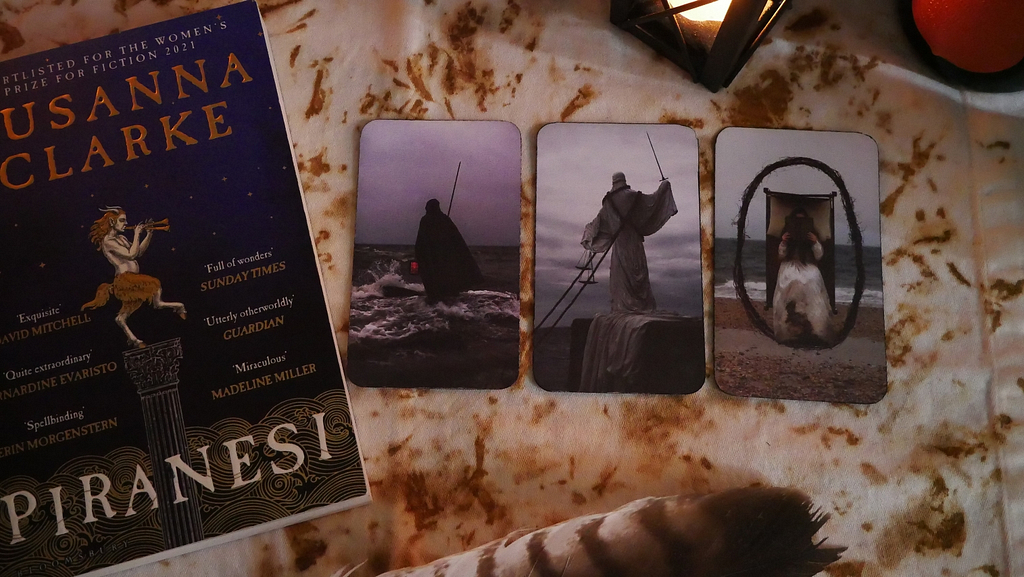
In Piranesi there are many deliberately archetypal presences. The albatross is a purposeful one, both real and full of reference. The point, perhaps, is that the literary reference is what makes it real to begin with. The statues take on roles almost of silent guides, warnings, or companions. Popes, charioteers, cloaked figures shining lamps in the dark or perpetually pouring vessels of water, nature goddesses, fauns, personifications of becoming, personifications of time or of youth and innocence and so on. There is explicit divination in the book too of course which I found totally riveting… “ornithomancy”.
I loved the book SO intensely and, as is often the case with me when I really get into something, I read it in a single evening. It’s not long and it’s characterised by a clear and open writing style (unlike Gormenghast) so it wasn’t difficult to just sort of… flow through it. It’s also very deliberately structured and that the reader might ‘flow’ through it’s clear and segmented ‘structure’ is VERY apropos and clearly purposeful.
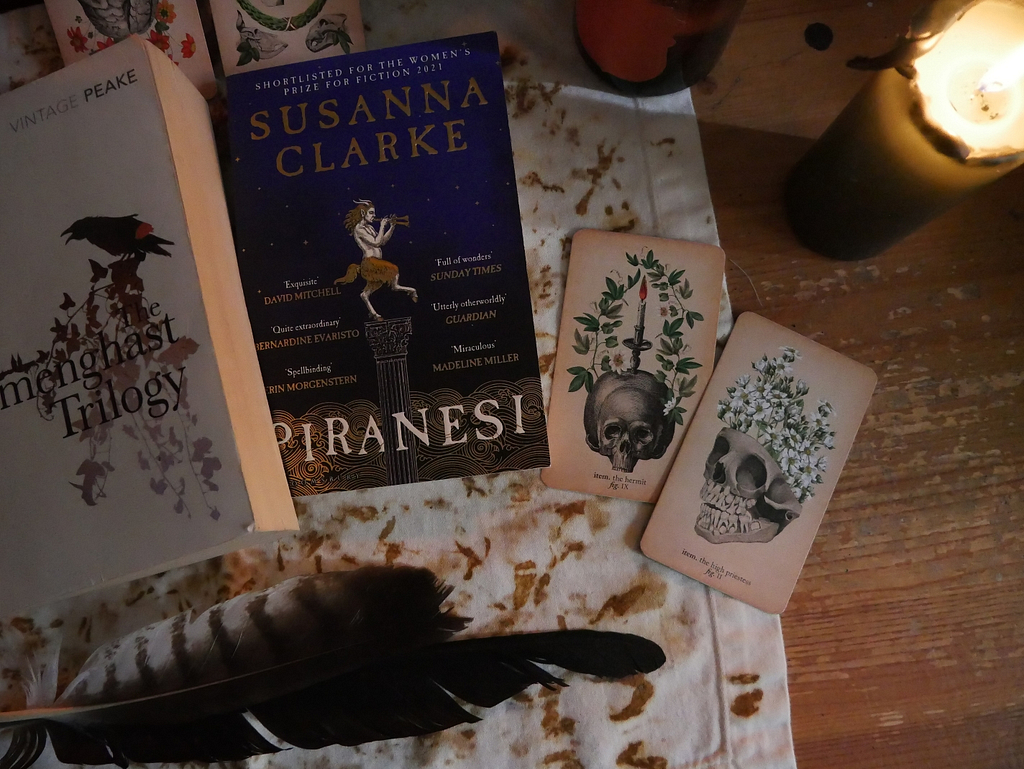
The way it depicted divination, spiritiual knowing, and total quietude felt uncanny in that it reflected so well how I think and feel about these things. Even down to the use of certain phrases – which, of course, to my mind is the act of affirming the efficacy of witchcraft… To me, it’s not a “what are the chances!?” perspective. It’s a “but of course” perspective. If you’re engaging with it and pursuing what you care about than many aspects of it will feel shared even as they differ in various details.
That’s how we get to talk about things like thought forms, egregores, shared culture, collective gnosis, and build systems like tarot!
But the book also shows us the dark abusive side of this. In my opinion, it makes for GREAT reading if you are already a little familiar with the history of Western Occultism… some of the specifics of societies like the Golden Dawn, figures like Aleister Crowley and so on. I’m sure the more you know the more you’d notice is snuck into the pages of Clarke’s fiction, but a baseline acquaintance will do! The book absolutely ‘goes there’ in looking at the dark underbelly of magic and the occult, particularly in its collective iterations. It asks what each of us become, what ‘being’ is vs what ‘doing’ is… What the evil, the ambiguous, the perpetrator, the victim, the isolated neutral, and the open work of having curiosity all are.
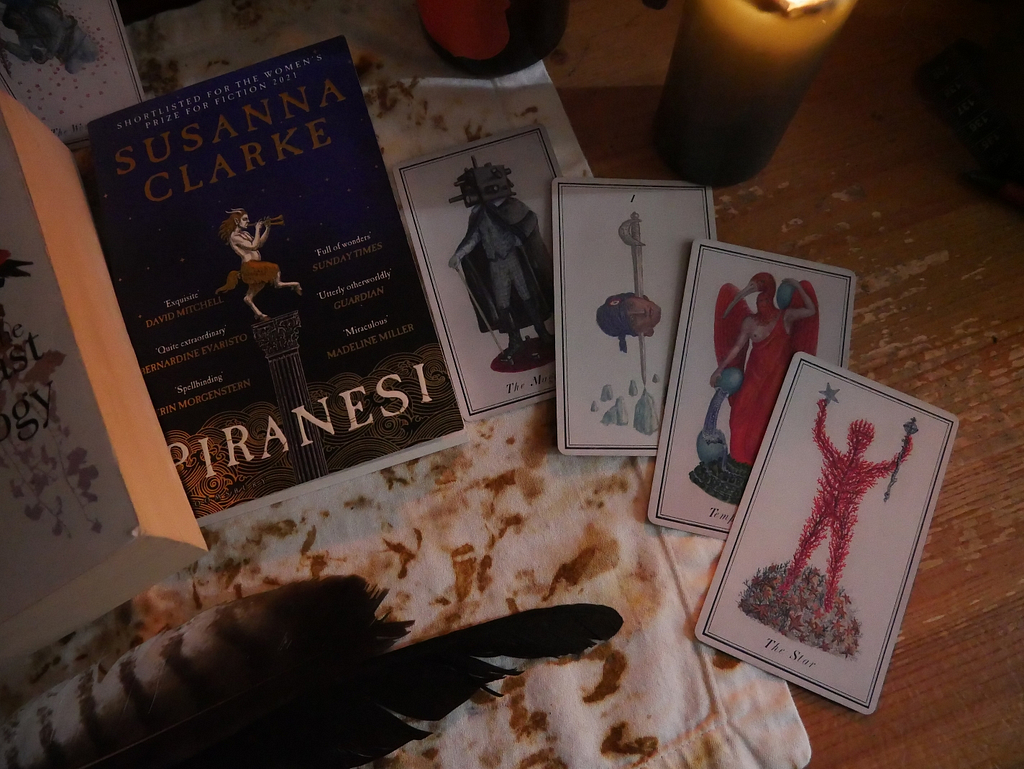
Justice sits behind all of this too. And both books don’t ‘answer’ our feelings on it, in my opinion, mainly because the Justice card/archetype isn’t a question. A tarot reading is often predicated on the formation of a question but, paradoxically, Justice isn’t an answer without that subjective context… the role of the reader and/or querent.
Neither of these books answer anything or even exist unless it be in the moment of interaction with their reader(s) and in so far as their readers share how they experienced them.
Okay, so maybe …two Major Arcana: Justice… and the World. But again, no answers. Only contemplation after the provision of context.
Have you read either of these books?
If you have (or if you haven’t and you don’t mind spoilers) let me know what you think! Would you pick the same cards or something else entirely?
~ Saoirse.
* I think the proliferation of blogs, aesthetic terms, and the existence of booktube have helped with this. As a ‘fantasy lover’, back in the day, there was a lot of pressure to ‘read everything you can get your hands on’ … which has never possible for me. Now I feel more able to just say what I’m aiming to read and why!