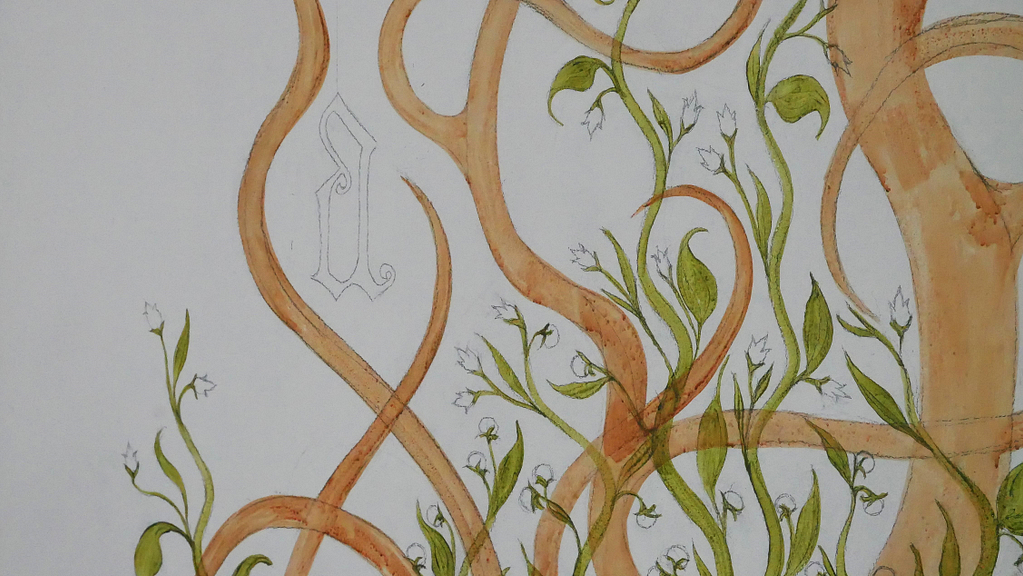
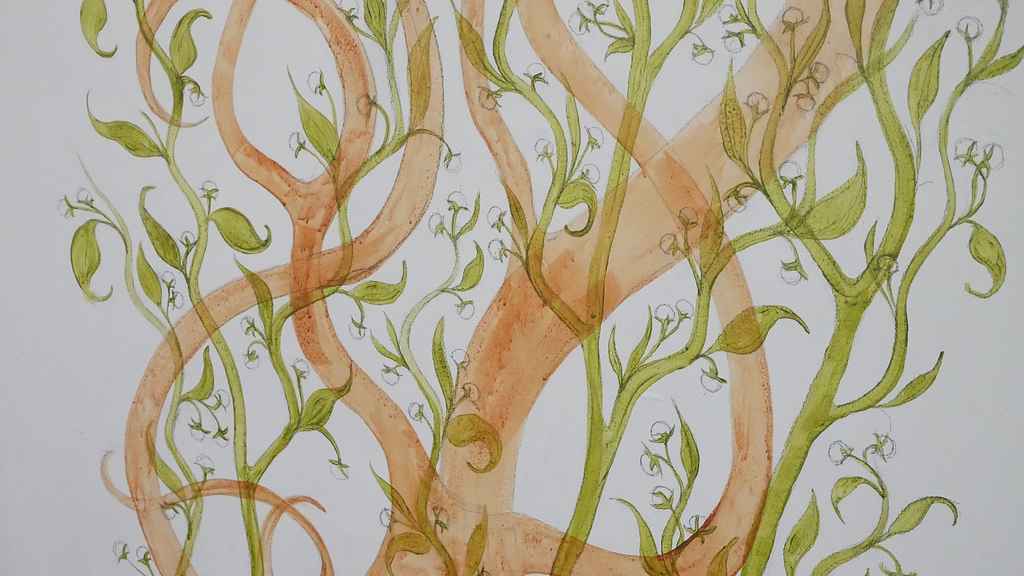
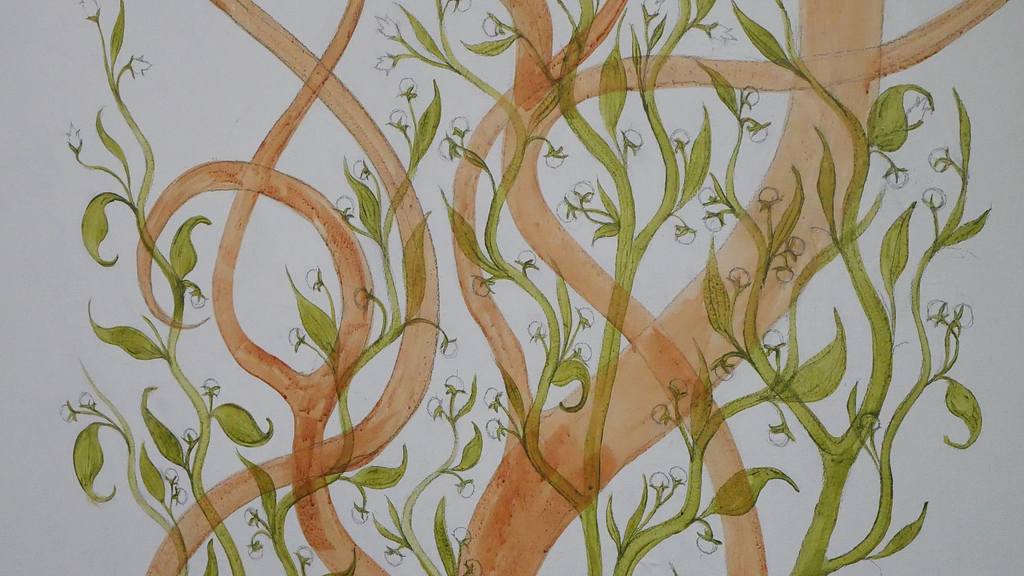
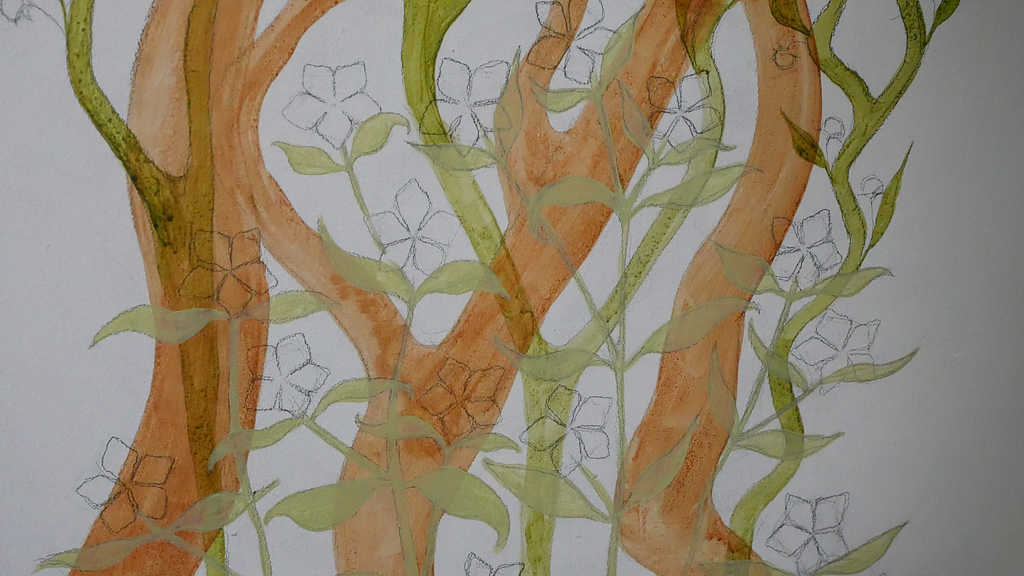
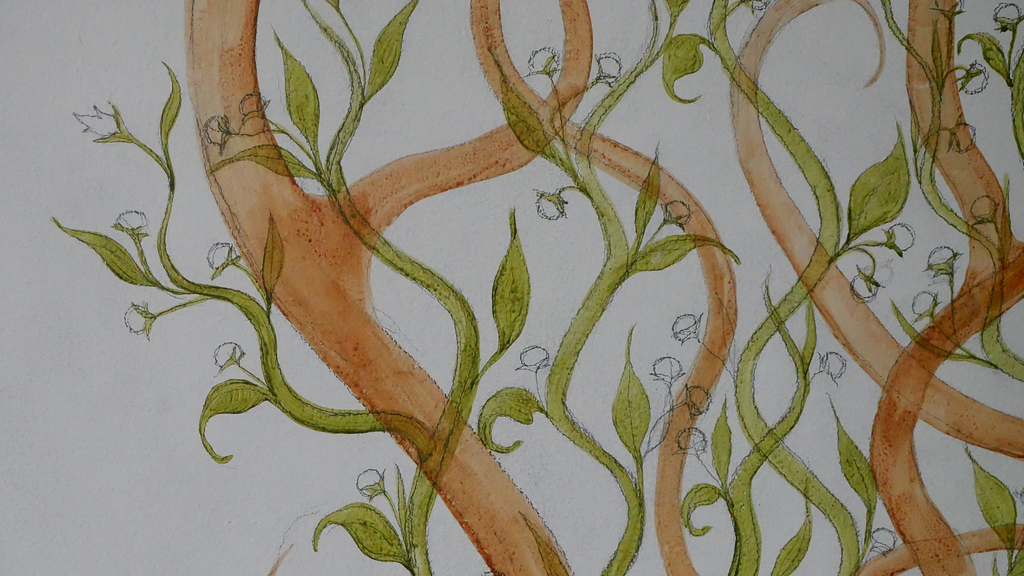
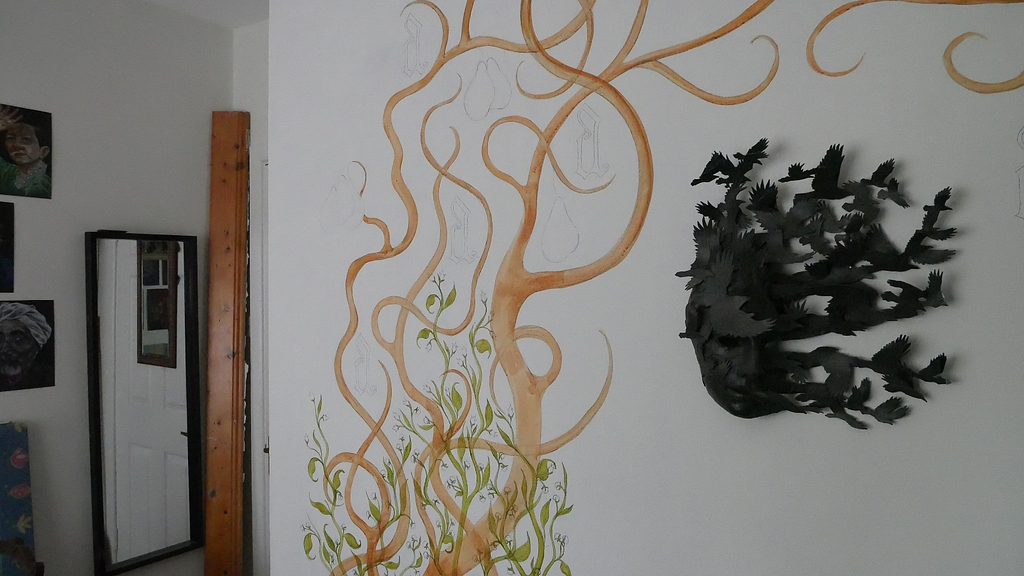
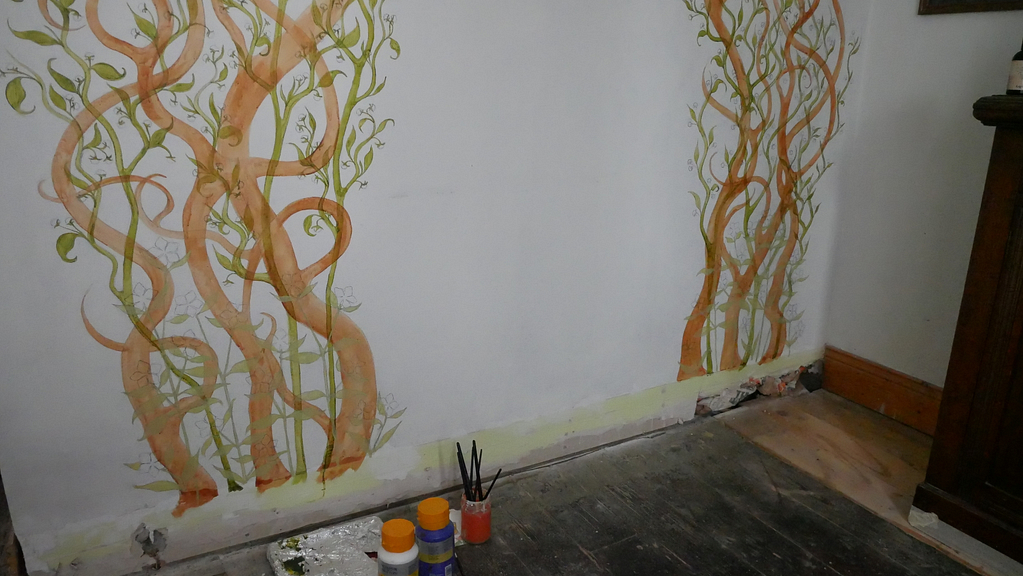
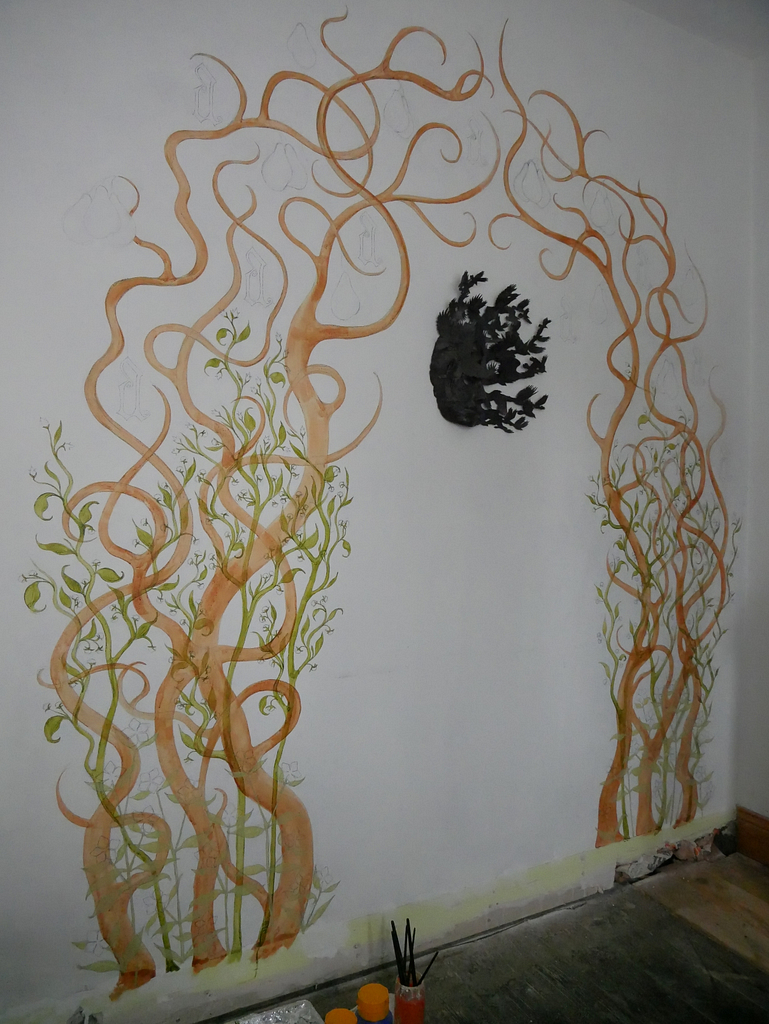
For anyone interested in a few detail photographs of the altar mural featured in my recent “Underpainting” video, here is a little gallery of semi-decent shots! The room is quite small which means the mural is difficult to capture within a single frame despite being very easily taken in, in person. This is probably for the best from the perspective of magickal integrity… it is, after all, intended to flank my altar! At any rate, I have included the Makertube link for the video below (via the ad-free, collective, non-profit from France – PeerTube)!
Here is the video…
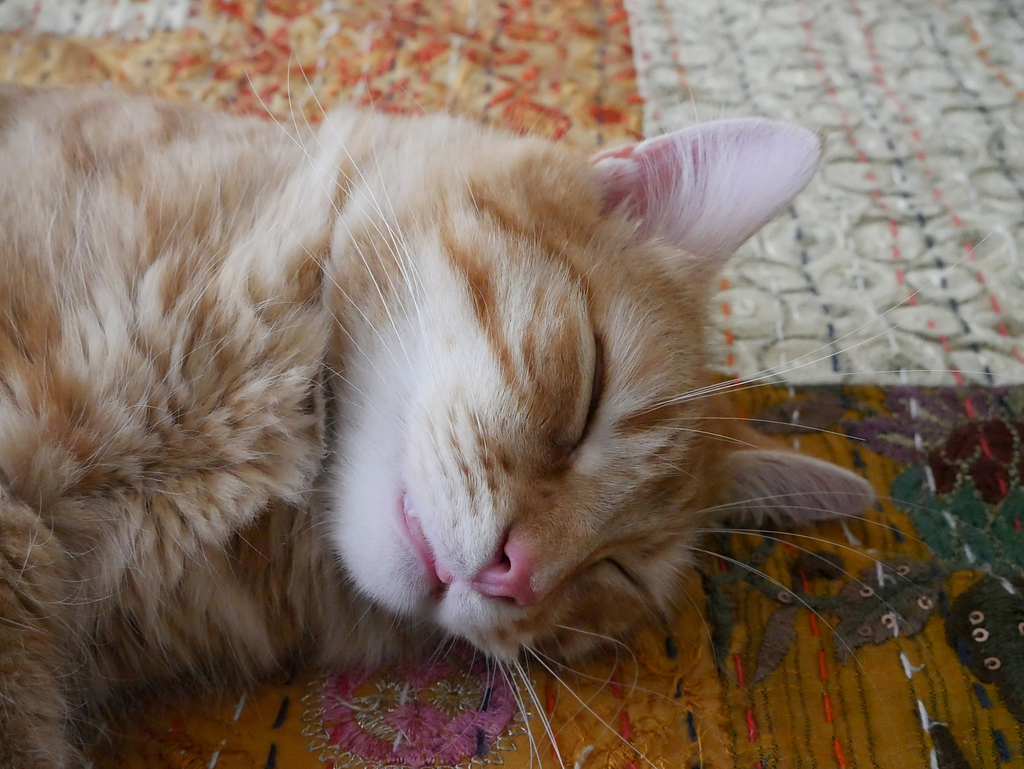
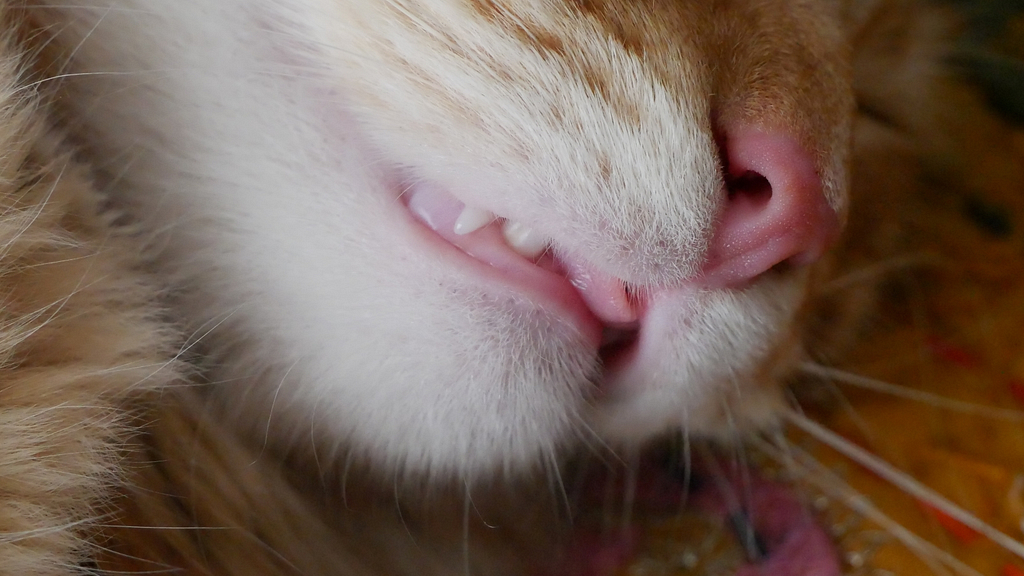
AND here is some bonus cute kitty ‘content’ courtesy of Gurgi:
"I know you'll remember me when I'm gone.
Remember my stories, remember my songs.
I'll leave them on earth, sweet traces of gold.
Oh they're calling me home, they're calling me home."
~ They're Calling me Home, Rhiannon Giddens
Today would have been the 38th birthday of one of the dearest friends I ever had. Her sudden departure, almost 10 years ago, first set me on what became a #deathpositive path… having learned first hand what it is to have no support in traumatic grief – either societal or personal. All of my intense desire to open into the world of healthy discussion of death, bereavement, mortality, and our fleeting creative beauty (human and otherwise) stems from the broken quiet craggy place in my chest where she used to be… I have never had a fear of death but, oh, my biggest fear is to be left behind. “Don’t go where I can’t follow!”
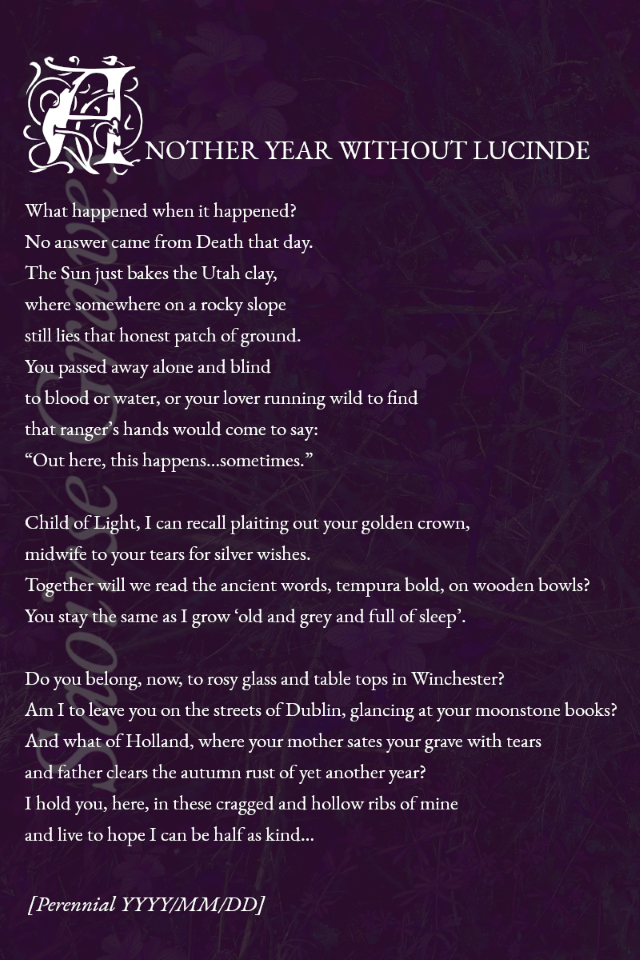
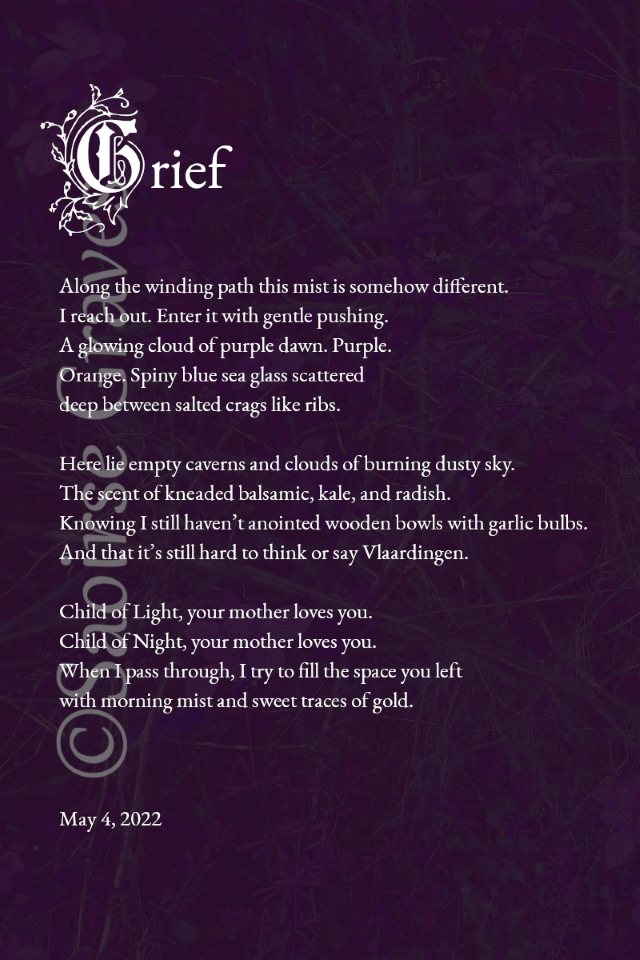
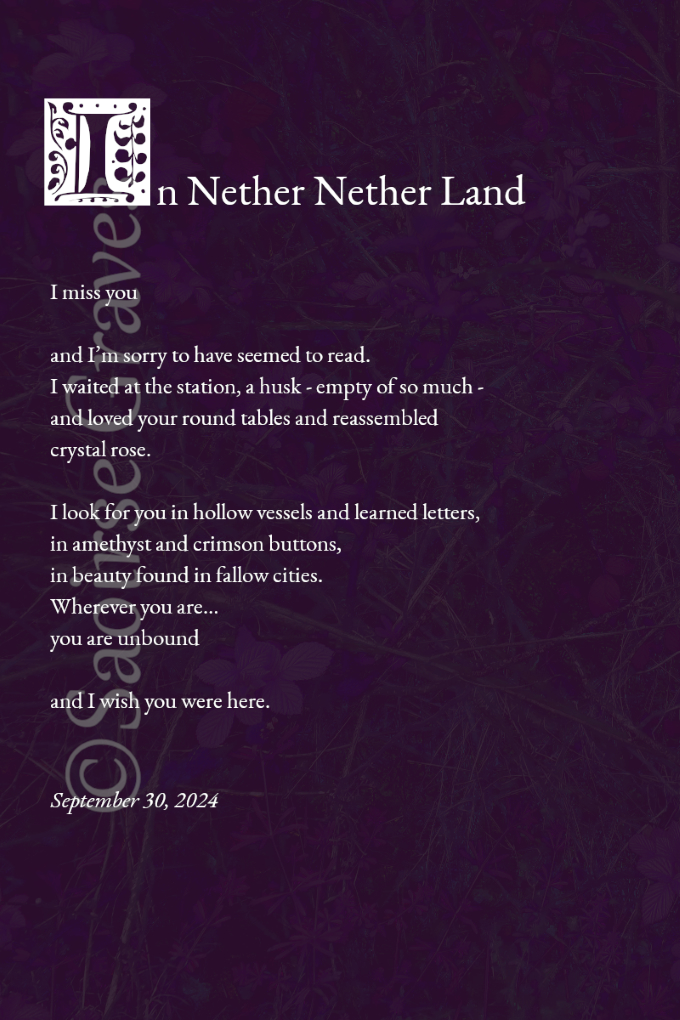
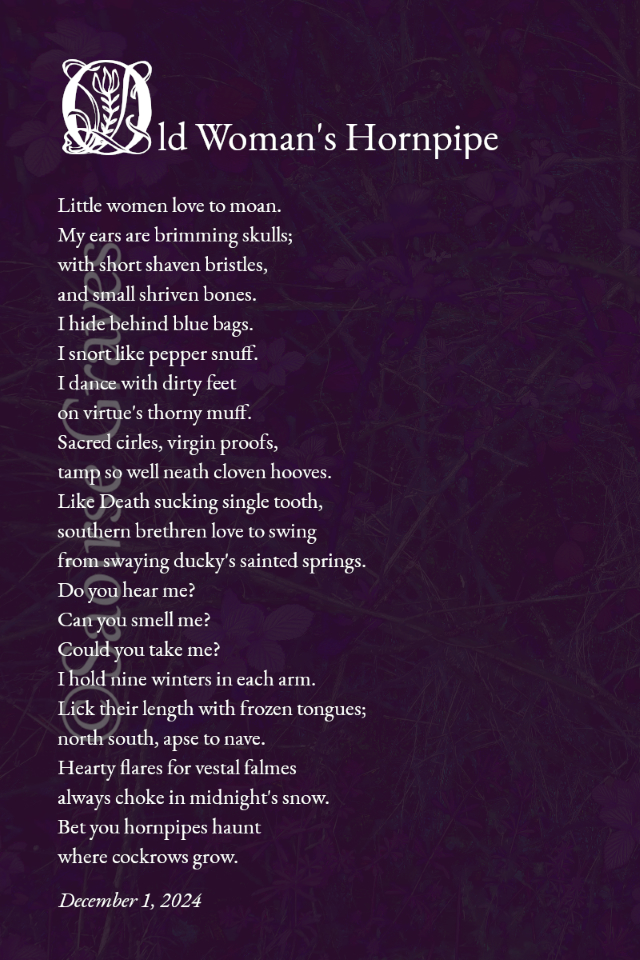
So, to honour her (and another suddenly-passed loved one – my aunt) as deeply and unflinchingly as I can… here are three open & vulnerable poems.
For those who experience discomfort and anxiety around the topic of death or for those who are grappling with their feelings of grief, I found this recent podcast episode gentle, considerate, and very hopeful. It is conducted by Conner Habib – a major force in the #sexpositive movement – with Caitlin Doughty – founder of the #deathpositive movement and the Order of the Good Death:
I had a totally “squee!” moment when they mentioned the “In the midst of life we are in death” quotation… because of course I have that tattooed in Latin on my left arm and I say it every day at the altar when I extinguish the last candle:
Media vita in morte sumus.
For more resources on #deathpositivity – where you can learn, support, and partake in activism as well as look up any resources you may need on your journey of acceptance, appreciation, & celebration of the humanity to be found in mortality – here is the Order of the Good Death website main introductory page ~ https://www.orderofthegooddeath.com/start-here/
To Luus (1987-2015), I promise to continue to learn and to bloom. Happy Birthday.
To Ivana (1960-2020), I promise to wear velvet when the world needs a punch in the face.
I play music for you both.
"Only in silence the word, Only in dark the light, Only in dying life: Bright the hawk's flight on the empty sky."
Get ready for a spat of unstructured posts. As I have said over on my youtube channel, I’m going to prioritise posting less formalised content for a little while. Honestly, everything about my online presence should be approached like that anwyay so this shouldn’t present much difficulty!
Recently, I have been talking to various people in my life about what we expect and value out of friendship (short and long term). We’ve been talking about aging, about appearances, about performance and body horror, and about external pressures and standards… narratives around expectations and control… and just how many people want to see themselves mirrored in others to the point of trying to force others to reflect what they want to see about themselves. It’s a pain to be fascinating to anyone, it seems. But it’s also a pain to be fascinating to no one. In a lot of cases, both result in people telling you what to be and how to be it the way THEY want…
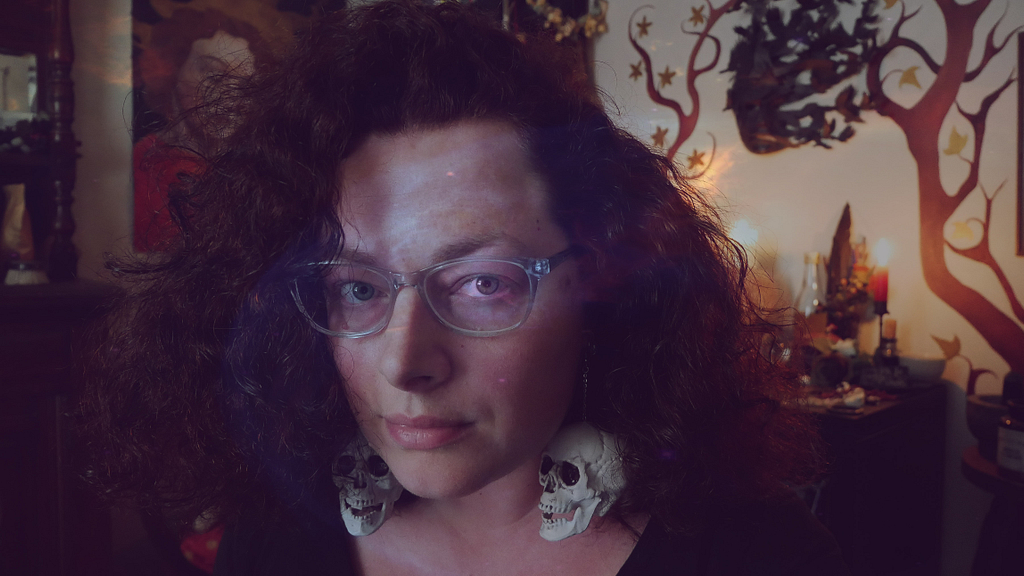
I assume I’m not alone in feeling these pressures or in seeing how they clash with my expectations for healthy relationships. I don’t really think any age group is immune from them but as I get older I allow myself the liberty I always wanted to toy with these expectations. I love glamour magick and, sure, some of that can be maligned as shallow aesthetics and ‘playing dress up’ (if one is inclined to see such things as negative) but I love to subvert those narratives with accents of rebellion. Flowing gown? Sure. But add confronting skull earrings or drape silver bones around your neck. Velvets, sultry necklines, cute little glistening moonstone jewels, and makeup? Fine. But my lips and eyebrows might be painted “frostbite” blue.
Heck, the number of people who are thrown off by a black frock and tattoos is hilarious so it’s not like it takes much.
People can look and project, but *I* like to make the acknowledgement of death and decay a non-negotiable component of what they’re taking in. I don’t really care what their conclusions are, per se, but *I’m* not going to subvert these elements for their comfort.
To that effect, I have begun to explore this sort of thing in poetry and so on… and, as is often the case, making the link with other media, like music:
You will note the music reference in the title*. Also, for those who are not aware, a hornpipe is a type of Irish dance tune in 4/4 time. It is also intended in this poem to have a double meaning.
Usually, I’m thinking of many different tunes even if explicitly making reference only to one. Here are some other bits and bobs that have been floating around my head of late:
So far as I can tell, the lyrics are approximately as follows:
LAL LAL ARS’ A’ CHAILLEACH** (chorus) Lal lal, lal lal, lal lal, ars’ a’ chailleach, Lal lal, lal lal, lal lal, ars’ a’ chailleach, Lal lal, lal lal, lal lal, ars’ a’ chailleach, Ith am bò, thogaidh ò, ith am bò, ars’ am bodach.
Am pòs thu fhéin, am pòs thu fhéin, am pòs thu fhéin, ars’ a’ chailleach, Am pòs thu fhéin, am pòs thu fhéin, am pòs thu fhéin, ars’ a’ chailleach, Am pòs thu fhéin, am pòs thu fhéin, am pòs thu fhéin, ars’ a’ chailleach, Pòsaidh mi, pòsaidh mi, pòsaidh mi, ars’ am bodach.
Có an tè, có an tè, có an tè, ars’ a’ chailleach, Có an tè, có an tè, có an tè, ars’ a’ chailleach, Có an tè, có an tè, có an tè, ars’ a’ chailleach, Tha thu fhéin, tha thu fhéin, tha thu fhéin, ars’ am bodach.
Cuin a thig thu, cuin a thig thu, cuin a thig thu, ars’ a’ chailleach, Cuin a thig thu, cuin a thig thu, cuin a thig thu, ars’ a’ chailleach, Cuin a thig thu, cuin a thig thu, cuin a thig thu, ars’ a’ chailleach, As a’ mhionaid, as a’ mhionaid, as a’ mhionaid, ars’ am bodach.
LAL LAL SAID THE OLD WOMAN Lal lal, lal lal, lal lal, said the old woman Eat the cow, you will raise, eat the cow, said the old man.
Will you marry yourself, will you marry yourself, will you marry yourself, said the old woman… I will marry, I will marry, I will marry, said the old man
Who’s she, who’s she, who’s she, said the old woman… You are yourself, you are yourself, you are yourself, said the old man
When will you come, when will you come, when will you come, said the old woman… In a minute, in a minute, in a minute, said the old man.
And here is a lovely live version of the same tune, sung with Julie Fowlis and Muireann Nic Amhlaoibh! Look at them giggling at the lyrics!
It should be noted that my Irish is terrible but my Scottish Gaelic is non-existent.*** I’m wondering if the ‘rise/lift’ in “thogaidh ò” might have a double meaning in this context? Also, as far as I can tell, it’s possible the reflexive pronoun (“fhéin”) serves a similar function to the corresponding word in Irish – as an intensifier or for emphasis, as in “selfsame”. So “tha thu fhéin” is likely to translate more like “You yourself!” etc. Lastly, “co an tè” translates more literally as “who’s the one?” except that “tè” means ‘one’ in a female or feminine context. It reminds me of “who’s your one” (or “yer wan”) here in Ireland to ask “who’s that” with reference to women… but I’m only assuming there’s a link.
Finally, musically speaking, I want to end on a note that packs a more magical and otherworldly punch to these themes I’m exploring. It should be no surprise that, as a devotee of the Morrígan (UPG), I appreciate a good ‘otherworldly woman pursues mortal man’ narrative. Whether she’s rejected or not, it’s an appealing vehicle for commentary!
The lyrics for Sir Mannelig**** are as follows:
Swedish
Bittida en morgon innan solen upprann Innan foglarna började sjunga Bergatrollet friade till fager ungersven Hon hade en falskeliger tunga
Herr Mannelig Herr Mannelig trolofven I mig För det jag bjuder så gerna I kunnen väl svara endast ja eller nej Om I viljen eller ej.
Eder vill jag gifva de gångare tolf Som gå uti rosendelunde Aldrig har det varit någon sadel uppå dem Ej heller betsel uti munnen
Eder vill jag gifva de qvarnarna tolf Som stå mellan Tillö och Ternö Stenarna de äro af rödaste gull Och hjulen silfverbeslagna
Eder vill jag gifva ett förgyllande svärd Som klingar utaf femton guldringar Och strida huru I strida vill Stridsplatsen skolen I väl vinna
Eder vill jag gifva en skjorta så ny Den bästa I lysten att slita Inte är hon sömnad av nål eller trå Men virkat av silket det hvita
Sådana gåfvor jag toge väl emot Om du vore en kristelig qvinna Men nu så är du det värsta bergatroll Af Neckens och djävulens stämma
Bergatrollet ut på dörren sprang Hon rister och jämrar sig svåra Hade jag fått den fager ungersven Så hade jag mistat min plåga
English
Early one morning before the sun rose up Before the birds began to sing The mountain troll proposed to the handsome young man She had a false tongue
Herr Mannelig, herr Mannelig, will you be betrothed to me? For that, I offer you gifts very gladly Surely you can answer only yes or no If you wish to or not.
To you I wish to give the twelve horses [palfreys] That go in the grove of roses Never has there been a saddle upon them Nor a bridle in their mouths
To you I wish to give the twelve mills That are between Tillö and Ternö The stones are made of the reddest gold And the wheels are covered in silver
To you I wish to give a gilded sword That chimes of fifteen gold rings And fight however you fight [well or badly] The battle site you would surely win
To you I wish to give a shirt so new The best you will want to wear It was not sewn with needle or thread But worked of white silk
Such gifts I would surely accept If thou wert a Christian woman However, thou art the worst mountain troll The spawn of the Neck and the Devil
The mountain troll ran out the door She shakes and wails hard If I had got the handsome young man I would have got rid of my plight
The narrative structure here bears a lot of similarity to an old favourite of mine, “The Loathly Lady” … a version of which is called “King Henry” by Steeleye Span. Steeleye Span also sings a version of “Allison Gross” and so on. There are many traditional variations on the theme of promising/demanding gifts and goods. Sometimes it’s in the hopes of lifting a curse, other times in bestowing one, all of which can occur with or without ‘conjugal felicities’ at the end.
I feel especially drawn towards wondering about “between states” though… so much of the media available to us either focuses almost entirely on young women (with what is subjectively for me an uncomfortable current trend towards childlike china-doll makeup styles) or much older fully grey women (if any older women at all). What about the process of *becoming*? Neither young nor old but anything and everything in between? Are we not shapeshifters?
Aren’t these divisions all rather broadly brushed in the end? Who does ‘maiden, mother, crone’ apply to anyway… I’m not aware of there being a straightforward “maiden” component to the Morrígan, for example, and I think her “motherhood”-relevant narratives are deeply complicated. Ultimately – at least from my lived perspective and my own religious Unverified Personal Gnosis – that’s not really a paradigm that illuminates much. Aging is interesting but dividing it according to sexual reproductive function as a marker of social development and value? …Perhaps only with biting sarcasm. At best it’s one variable with rather limited pre-conditions.
Hence the reference to my current age in the poem.
Sincerely,
Saoirse.
* This Baltimore Consort recording seems to be the only one I can find of this tune. Incidentally, I did have this album growing up and I have mixed feelings about it. For example, the vocalist is American and she mispronounces “cailín” in “Pretty Maid Milking Her Cow” at one point…
*** I’m really thrown by Scottish accent marks. I’m used to Irish having only the fada!
**** Erik Ask-Upmark is as well known Swedish folk musician and performer of various traditional and historical nordic music. His main musical groups are Dråm, Svanevit, and Falsobordone. I have had the great privilege of meeting him as well as hearing him lecture and perform (including Sir Mannelig!) Also, here is the wiki article for Herr Mannelig ~ https://en.wikipedia.org/wiki/Herr_Mannelig
The header image is a Portrait of Christina of Denmark (incidentally ca. 36-37 years old :P), Duchess of Milan and of Lorraine, dated 1558, by François Clouet … There is another more famous Holbein portait of Cristina done when she was as teen widow.
PLEASE NOTE ~ I didn’t do a great job of diversifying my language in this post. It may come across as specific to cis-gendered female experiences but I want it to be clear that I think these pressures apply to all genders… and to the extent that the cis-gendered experience differs from others, I see that mainly as part of the over-arching problem of external – often valueless – pressures.
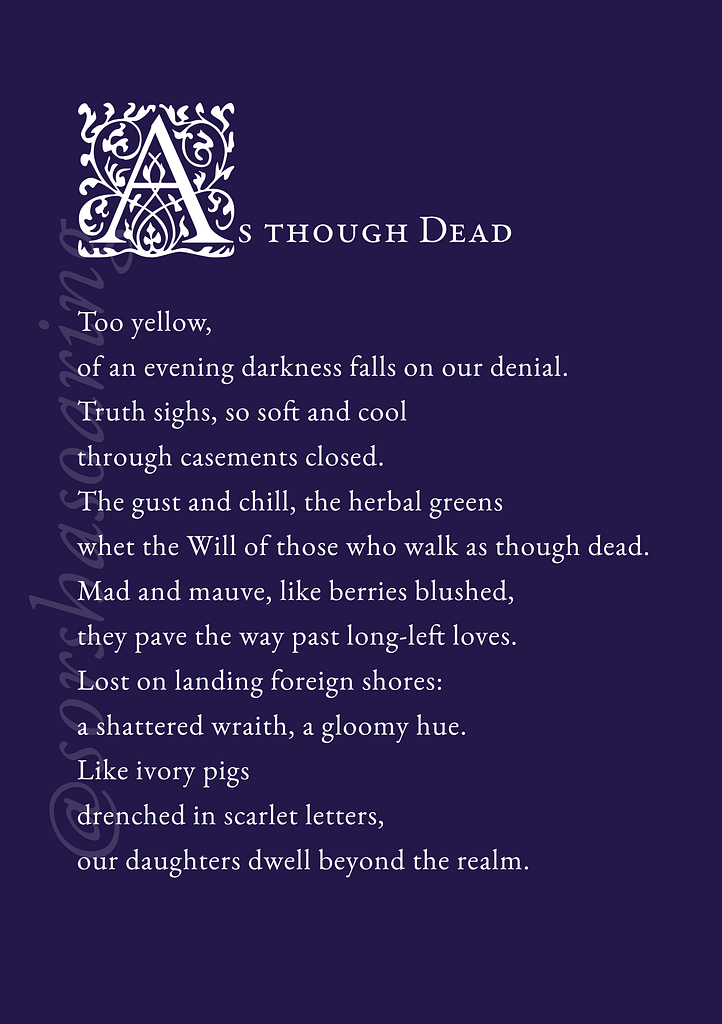
Hello there… a poem conceived ‘of an evening’ in the aftermath of a maddening supermoon in early autumn. Shall we play a game of ‘wake the dead’?
I’d say most of my poetry arises from attempting to describe the place where sensory detail and cognition meet… but please think of this however you choose!
From the Deviant Moon Tarot (Paradoxical)… this card always reminds me of Tom Waits.
~ Sorsha.
*The title is from Tom Waits lyrics to “No one knows I’m gone”.
*Deck featured in header image ~ Trionfi della Luna (Paradoxical)
You can find Part One on “How We Might Live” by Suzanne Fagence Cooper here.
I have waited longer than initially intended to craft my thoughts on “How We Might Live” into something cohesive. As with all things, I hope to evolve these ideas over time but for now I think the impression that prevails is one of disappointment, then surprise, and then surprise at my own surprise.
Firstly, the book itself and the quality of work that went into it is not the object of my disappointment. It made for an easy, empathetic, and affable read and enabled the process to move along quite quickly, despite the thickness of the volume. I particularly enjoyed the dynamic relationship Cooper sustained between personal histories and extant source material – correspondence, financial records, references to ink vs. graphite notes, collections of friendship or travel books, ephemera etc. Discussion of what records have not survived also abounded. As a former archivist I am quite familiar with how this forms a crucial part of the complete-est picture we can hope to present ourselves of any portion of the past…
Perhaps this is a good segue into my issue, however. I know all too well that no artistic persona or lionisation of historical figures will bear the scrutiny of a grounded perusal of their personal notes, correspondence, and journal entries. Sometimes I even think artists must be the most petty and manipulative individuals amidst an already deeply dysfunctional humanity at large. (I mean, I do qualify my worldview as rather misanthropic.) The book ended up being more about the artists themselves (and their wives): their miscommunications, their struggles to prioritise friendship amidst demanding financial realities or social mores, and their many affairs and jealousies.
Taken during the first lockdown… a joking reference to Pre-Raphaelite models & social confinement. #laudanumisnottheanswer #muchromantic #soart
I was perfectly unsurprised to find that my distaste for Dante Gabriel Rossetti, as a person, continued and even ripened into full bloom. I was also unsurprised to find that what social power or currency the Pre-Raphaelites (& co.) gave women as artists was diminished and de-prioritised but I hadn’t expected to learn in detail quite how early this diminuendo began. They never disappear entirely (I imagine one could hear them almost as a constant tremolo beneath the arching ‘romantic’ narrative symphony of the male artists’ lives and careers… harmonically relevant but tense). I wish we could have heard even more from Jane or Georgie or first hand from more of their friends. I was dismayed to conclude (mainly for myself) that in spite of being ‘immortalised’ and made ‘divine’ in so many paintings, Jane Morris was likely never truly loved in a romantic sense by anyone.
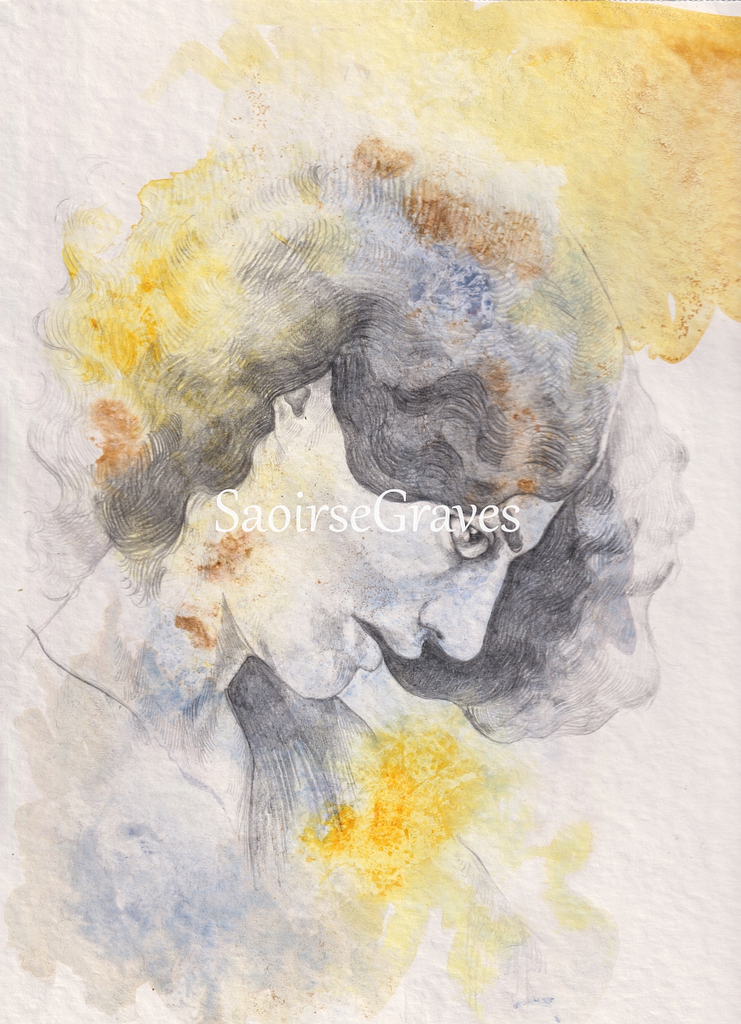
“Gold Dust Woman”, a portrait of Jane Morris. Graphite and acrylic on watercolour paper.
Certainly she has/had been viewed and assessed – valued for her glamour. I recognise the agency in making your own clothes, going against established dress-standards of the day, in navigating socially foreign dynamics etc. I recognise learning things later too… picking up new instruments, acquiring new languages, new poets. But again and again she is seen by others as the woman in all the portraits… her chronic pain mocked or demeaned…mentally examined, ogled, and undressed by would-be artists or would-be lovers: “[a] dark silent medieval woman with her medieval toothache.”*
This book has spoken loud and clear to my long-standing problem with the trope of “artist’s muse”. More on this in a second…
I should say that “How We Might Live” was absolutely not without interesting and valuable ideas and sources of inspiration. I was very interested to read about William Morris’ mannerisms, passion, and methods of work. I have seen elsewhere that there is an overall impression that he may have been neurodivergent…possibly autistic. He certainly makes a compelling case. Hyperfocus, seemingly rather time-blind, intense sensory experience of colour/tonality/repeating patterns, visual metaphor, the insistence on learning deep and well… a tendency to fly in to ‘rages’ and hit his head in distress, intense clumsiness… difficulty in understanding dishonesty or in perceiving when his listeners lost interest (or even WHY they might NOT be interested to begin with), etc. It seems epilepsy also ran in the family.
All of this has been very personally nutritious… It wasn’t 100% what I was aiming for in reading the book but it has left me with some greater clarity on an issue that has dogged me my entire life: muse or artist?
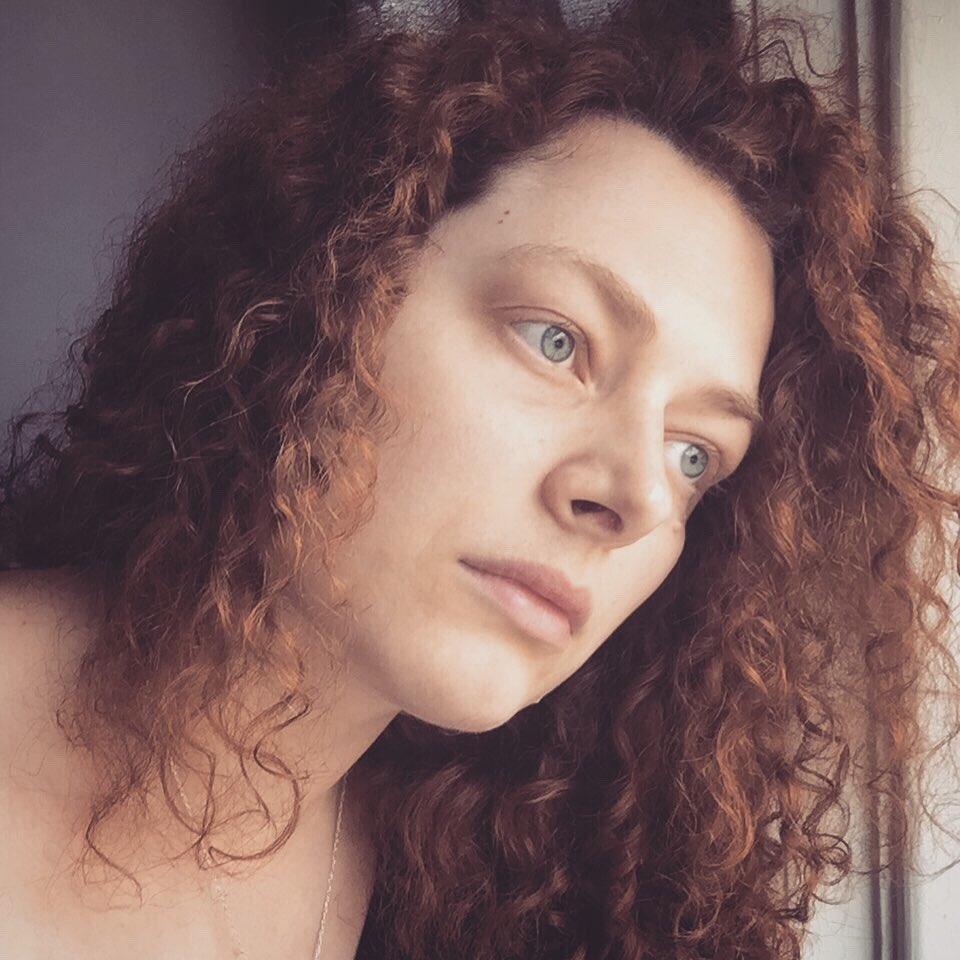
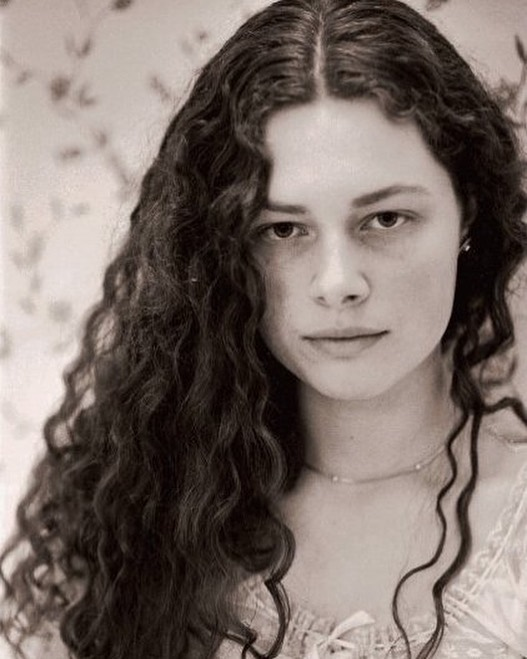
Old grainy photo of 16 year old Sorsha.
I have been nudged since I was quite young in the direction of artist’s muse – my earliest compliments were that I looked like a painting. Those socialised as female/feminine in American suburbia will likely recognise what it is to be pushed into purely aesthetic means of gaining social value. There may have been some small added grace given to those showing early savant-like promise – but it couldn’t grant immunity and I was ‘just’ an artsy weirdo. Teachers wrote me poetry but I had unkind friends and simply decent grades. There are too many reasons and personal experiences to enumerate here regarding why this issue plagues me so badly… that’s a topic for future posts (maybe). But I think what I am realising is that to balance being a muse with being an artist is to be your own muse. In a self-curious way. In an organic way, situated in a human as well as non-human landscape. In life experience, in narrative, in music, in sensory detail, in love, grief, kindness, empathy, social justice…and as some kind of value add. It’s a form of integration where selfhood or ‘persona’ takes its place as a small part of a much larger world. And thank GODDESS none of us are actually immortal!
(Neither, by the by, are paintings.)
Self-portrait with Skulls.
Sincerely,
Sorsha.
PS. I have more to say about this book… about the book itself but also including a dream I had and so on. For another time.
* Henry James to Alice James, p. 199
** Banner image from unused footage, Lá Bealtaine/May Day 2023