I have been working on categorising my poetry. I knew there were a few themes that, in general, a lot of my poetry might fall under… but I have spent the last week or so slowly charting, dating, accounting for and making sure I had back ups of my poetry and the first realisation that came out of this is that I have written over 70 poems since the beginning of 2021.
There are almost no poems before that until you travel back about 10 years.
Turns out field-working autistic burnout and shuffling personal care away from heavily medicated *misdiagnoses* brings the poet back out in a person… but I digress.
What is challenging about assigning organised and uniform categories to my poetry is that, of course, there is organic overlap. This is precisely what it is to be an archivist (i.e. why we don’t rearrange physically what we categorise intellectually) …Or if I were to try and write up a descriptive summary of each poem and derive collection schema from there… THAT would be more like the work of a rare books librarian wrangling unique/historic items into DCRM(B) and MARC-XML friendly formats.
…I digressed again.
The point is, it’s tough but I LOVE doing this sort of thing… ad infinitum, it seems.
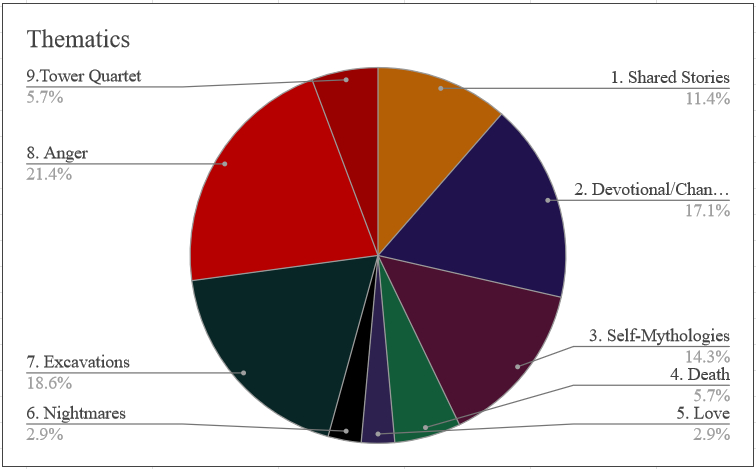
Here is a pie chart I have constructed and colour-coded to represent the themes and distribution of my poetry as of right now. Representing 71 poems written between January 9th, 2021 and October 15th, 2024. (I’ve written a few more but for various reasons they are not included on this list.)
(Interestingly, there are a few I cannot find copies of though I know I at least have physical copies somewhere. Bad LIS-professional! No cookie!!!)
The colours are loosely significant but the important thing to absorb here is that a) poetry is one of the main ways I channel my anger… especially as an autistic who goes largely non-verbal under social/interpersonal duress and b) I actually think of the Tower Quartet and (Channeled) Anger as subsets of a larger intellectual fonds …which is called “Excavations”. You will see that title in the pie chart as pertaining to a single slice, but really you can also view “Excavations” more broadly as occupying just over 45% of the chart! …The unifying emphasis is on digging deep, getting into the chthonic, and shadow-working my shit… oh, and a little revenge poetry here and there.
The thematics in the rest equally relate to each other pretty intensely. My poetry is always devotional in nature but some poems are more direct forms of near-audible gnosis. This makes sense to me from a mythic perspective as it is (personally) derived from the function of verse, alliteration, sorcery, ‘supplication’, evocation, and so on in medieval Irish literature.
I have made “Death” green mainly to evoke a #deathpositive association – ‘verdure from void’. I could equally (and perhaps should) have made it some kind of gold colour:
“I know you’ll remember me when I’m gone
remember my stories, remember my songs
I’ll leave them on earth, sweet traces of gold
oh, they’re calling me home, they’re calling me home.”
~ “They’re Calling Me Home”, Rhiannon Giddens
I will likely include little blurbs illuminating each category on a basic level whenever I manage to post them.
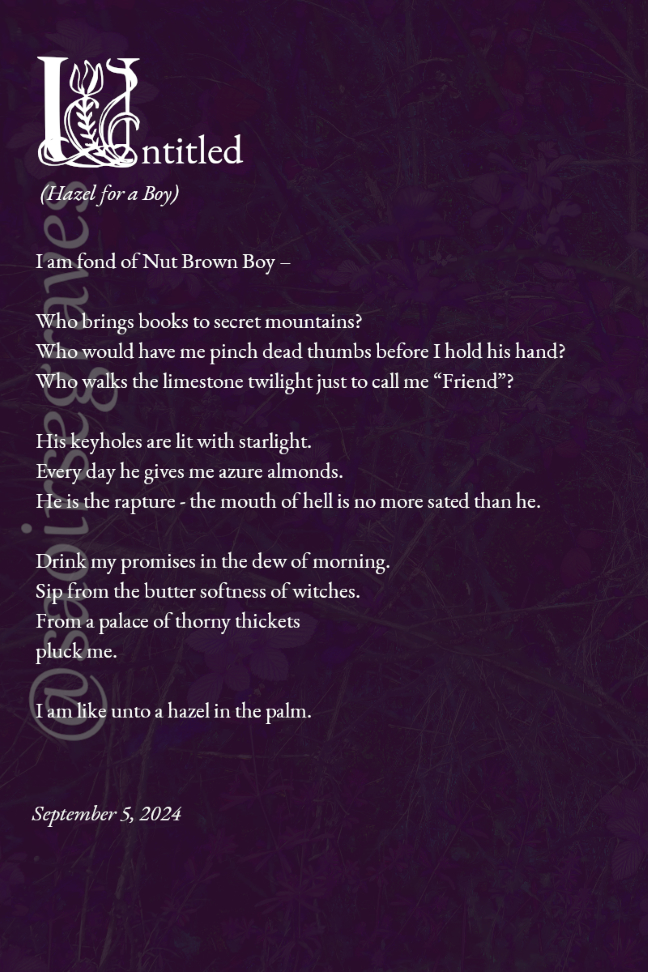
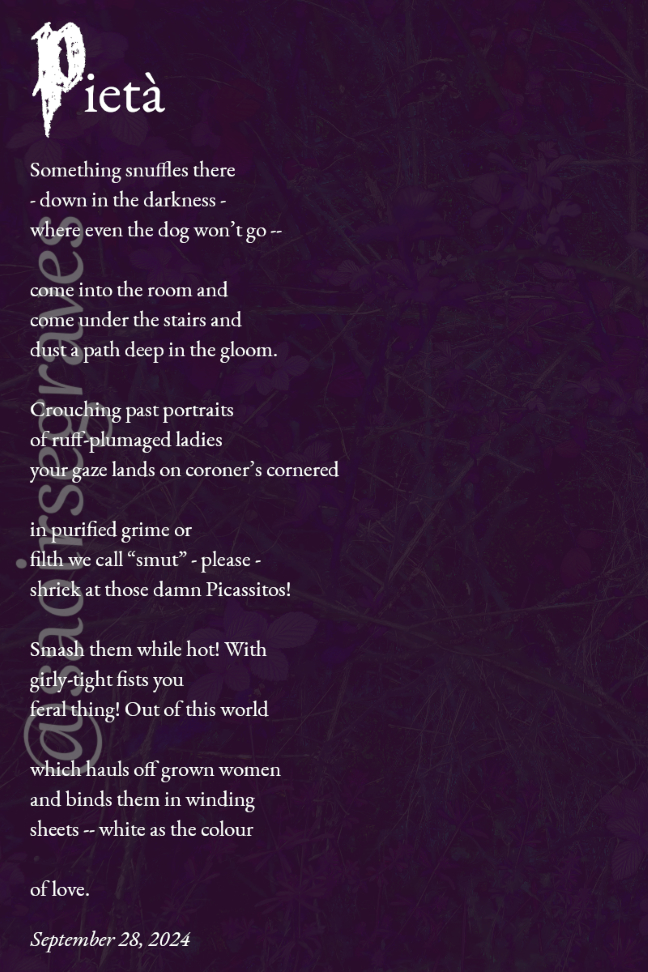
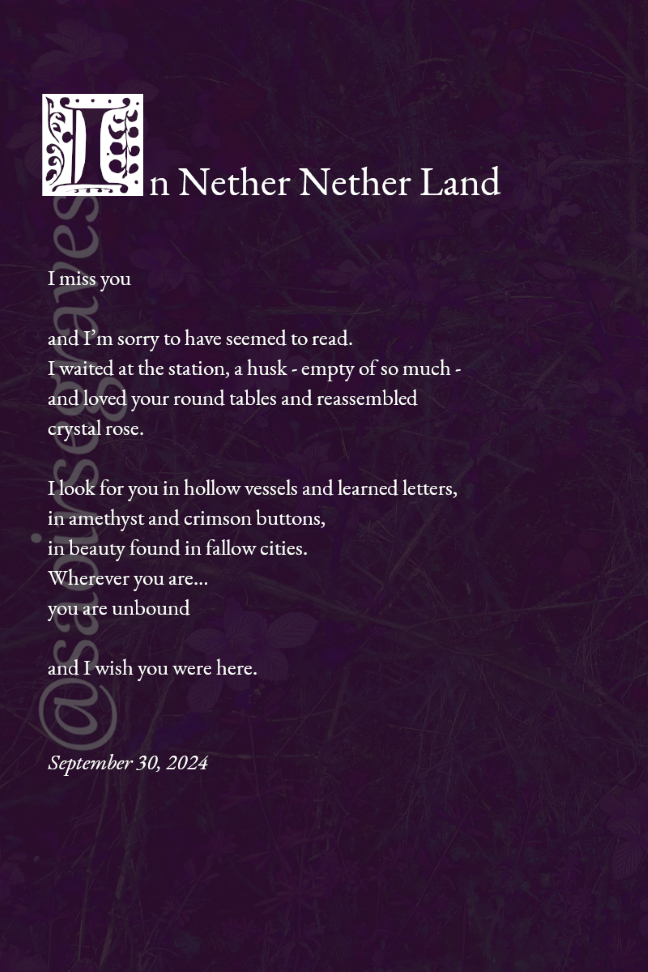
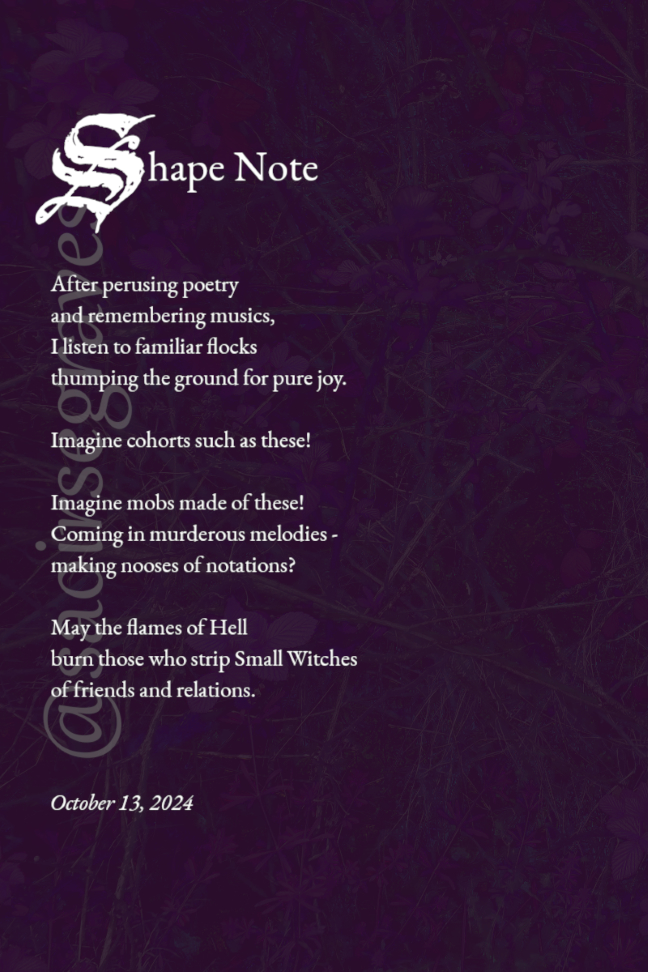
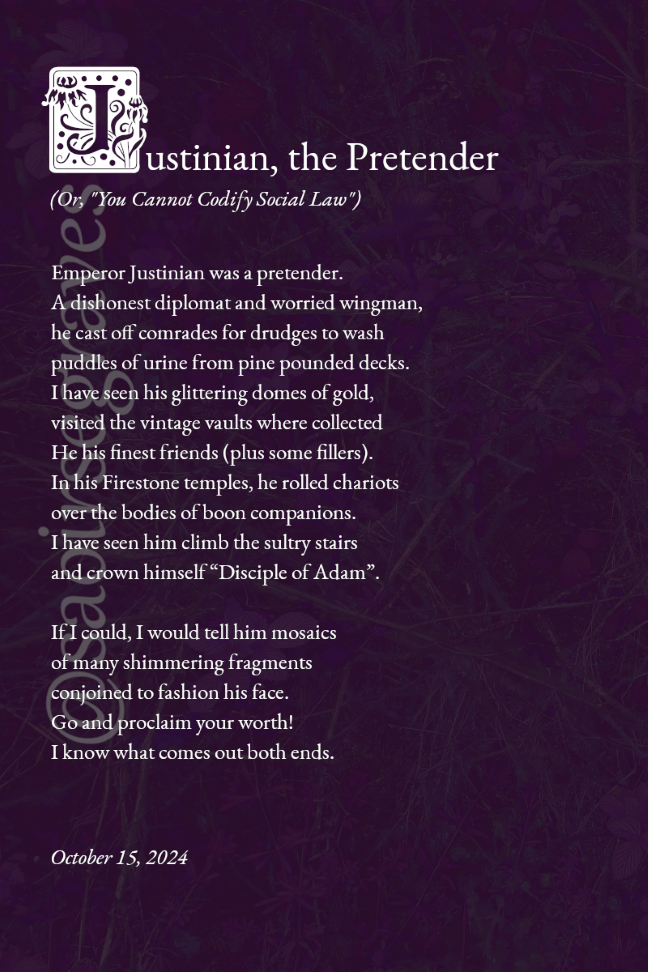
At any rate, I still need to figure out how to create a poetry gallery where poems that can’t occupy a single slide might appear… Until then, here are some of the poems I’ve written in September and October (minus “Athame”… which I have posted already.)
I suppose this set is all rather on the nose, but the themes of each are as follows: Love, Excavation, Death, Anger, and Anger.
For what it’s worth, I guess.
~ Saoirse.
* Get it? Theme-attics and Scheme-attics? Because it’s a post about poetry thematics and schematics? And I have a thing for sad attics? Ba-dum-tssshhh!!! Genius at it’s finest. I kill me.
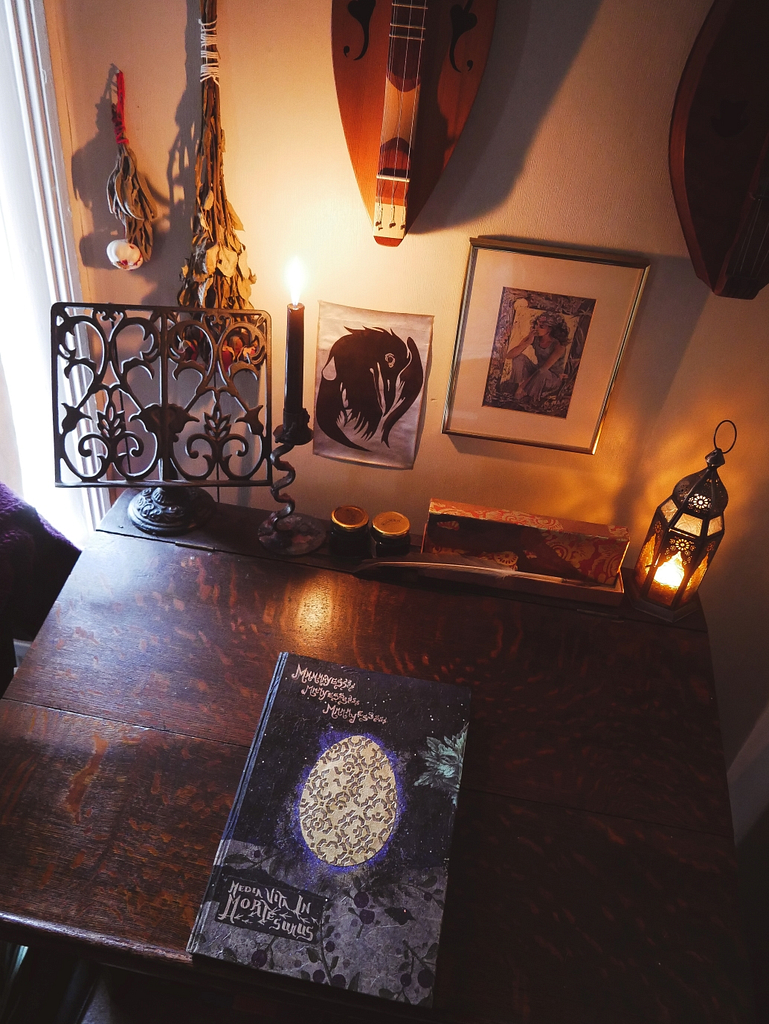
Recently, I have been trying to give form to certain ideas. At a snail’s pace, my kind of speed. One of these ideas has to do with a burgeoning awareness that something I have always been able to feel and certainly always yearned for is taking shape… Simply put, it can be called ‘lifestyle’ or ‘vocation’. It’s about the sensory experience of every day. It’s about how that intermingles with the hopes and dreams of the past. It’s even about certain life goals that have recently become a little more tangible.
It can be glimpsed in my thoughts about ‘between’ spaces. I’ve been calling this place ‘the Labyrinth’.
In the Labyrinth, rooms are often arranged according to discipline or genre. Style of activity. Or by medium. It has places that are dominated by memory. Or by myth. Rooms and halls devoted to presence. It has a rotting fairy Versaille, sidhe mounds lie just beyond the walls of it’s outer gardens. I know what grows in it’s crevices. I know what areas get built vs. which simply materialise and I know why – I know what I’m trying to do there. It can only be entered or exited from this side of reality… on the far side it might be infinite. I have not checked.
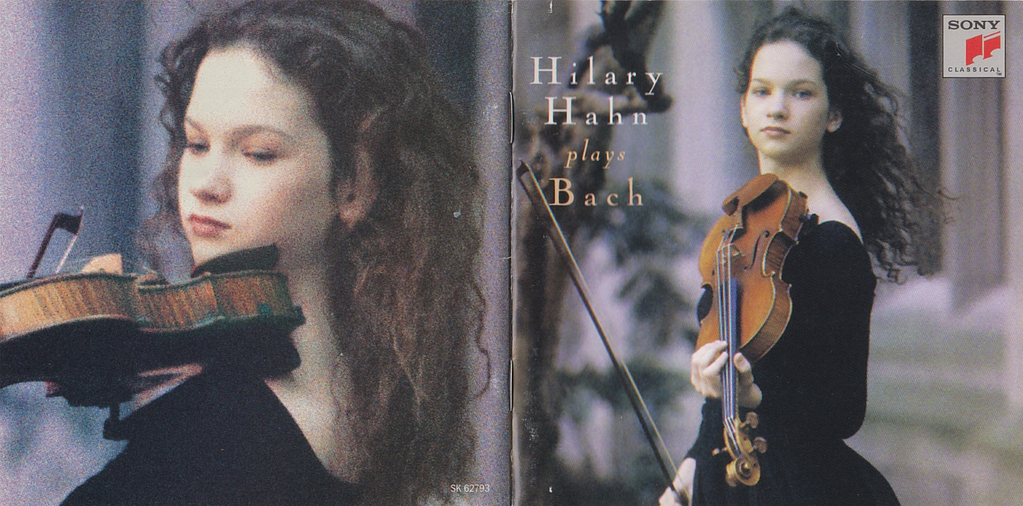
Though Hilary’s performance style isn’t my favourite now, her work & THIS ALBUM were deeply formative… This cannot be overstated.
In the Labyrinth are all the scariest saddest most soul crushing things I have ever personally encountered. In the Labyrinth are also the scariest saddest things my loved ones have encountered…
In certain rooms in the Labyrinth, it has windows to Nazi Germany. To two little girls in the rubble of Cologne. In other rooms hang portraits of Sarah Chang, Ani Kavafian, Hilary Hahn, Nathan Milstein, Andrew Manze – the violin room. In another, Carter Brey, Andre Emilianoff, Rostropovich, and Jacqueline Du Pré… though I hasten to say the cello room is much scarier than the violin room. More horror and shadow. In the violin room, baroque music echoes from an old scratched record player that I can’t find. It floats between sage green curtains with gold fringe, it gathers in gusts of dusty leaves strewn along the floor. It’s faded tiles are arranged a little like a chess board (but not quite). The violin room has a fallen wall that leads outside. It’s almost always Autumn from that vantage point.
Imagine… Sibelius echoing through the ghostly gallery of memory.
There is joy in the Labyrinth. Some of the most beautiful sunlit gardens I have ever seen. Bright and fresh of a cool morning. In some parts of it I have lots of little demon fairy friends… absolutely inspired by the work of Brian and Wendy Froud, Jim Henson, and others.
“Step out of the page into the sensual world.” ~ Kate Bush
Many parts of the Labyrinth give me the eerie feeling I have seen them before. If you have seen The Storyteller series with John Hurt (and Brian Henson as his dog!) you’ll recognise much of the look of my Labyrinth – including the way a room filmed from a different angle looks like a different story.
If I have something big and overwhelming to face, I walk the number of steps and turns and corridors and gardens it takes to get there. And then I come back.
And therein lies an important nuance – Big and Overwhelming Things. These are not just bad things. Not just lost things.
Yesterday, I sat down to work on sketching out wardrobe ideas. The goal has been taking shape in my mind for quite some time of what colour palette I want. What silhouettes I like that also work on my body and my sensory preferences. What works where I live and what I can have ethically shipped or acquired? What layering? What technique? What cheeky little references? How shall I paint myself? Where will I hide symbols & sigils? Which tattoos will I allow people to see? How semi-permeable do I want my persona to be? What kind of variations do I want to build into that without always causing getting dressed to be such a cognitive burden (as fun as it ALWAYS is – I even enjoy pjs!)
JEEZUZ! 7 of Cups, this is getting personal!
It’s hard to go from basic learning to a cohesive finished result. I’m convinced a practiced artist is able to make something and 51% of the time say to themselves, “that was deliberate”. >_< In performance, they always said that the true masters spend their whole lives practicing to make the hardest things seem easy. No one wants their audience to wince in anticipation of a famously difficult passage!
But if I have a flare for aesthetics and a knack for getting my hands to make what I envision, that’s all I have. “Flare” and “Knack”. Good fairy names, to be sure… good to have on side, but not synonymous with a finished project. Not yet the bit where I’ve crafted and lived in my visions. Not yet corporeal. And the tension or dissonance of this arises in a few key places:
Clarity of vision requires honing and specification. Decisions in favour of one thing at the expense of another. Do I have ‘talent’ for this kind of executive functioning?
NO. (It’s one of my specific autistic ‘traits’ that I suck at this.) It will not just take practice. It will require a lot of frustration, erasing (::gasp!::), paper with pencil dents in it that won’t erase any more, bad stitching… and quite literal ‘blood, sweat, and tears’ because I really shouldn’t be trusted with so many sharp implements.
Do I know how to manage my fabrics to minimise waste without being over precious?
Ehhhhhhh… always a question, never an answer to that one.
What happens if I change my mind?
What happens if my tastes change?
What if my body changes?
Should I plan contingency into these patterns?
Could I remake them into something else?
Where should I store repair-remnants so they don’t get eaten by moths?
Shit, I ripped something… again.
But if I draw something after a lot of work and swear words (while also being happy and absorbed in the process) and I show that sketch online and “it looks well enough to the untrained eye” (as it has been drawn by an untrained person!) and some people like it… is that ‘talent’? Or is it burgeoning skill. Is it diligence? Or is it bare minimum that I managed to draw it at all…
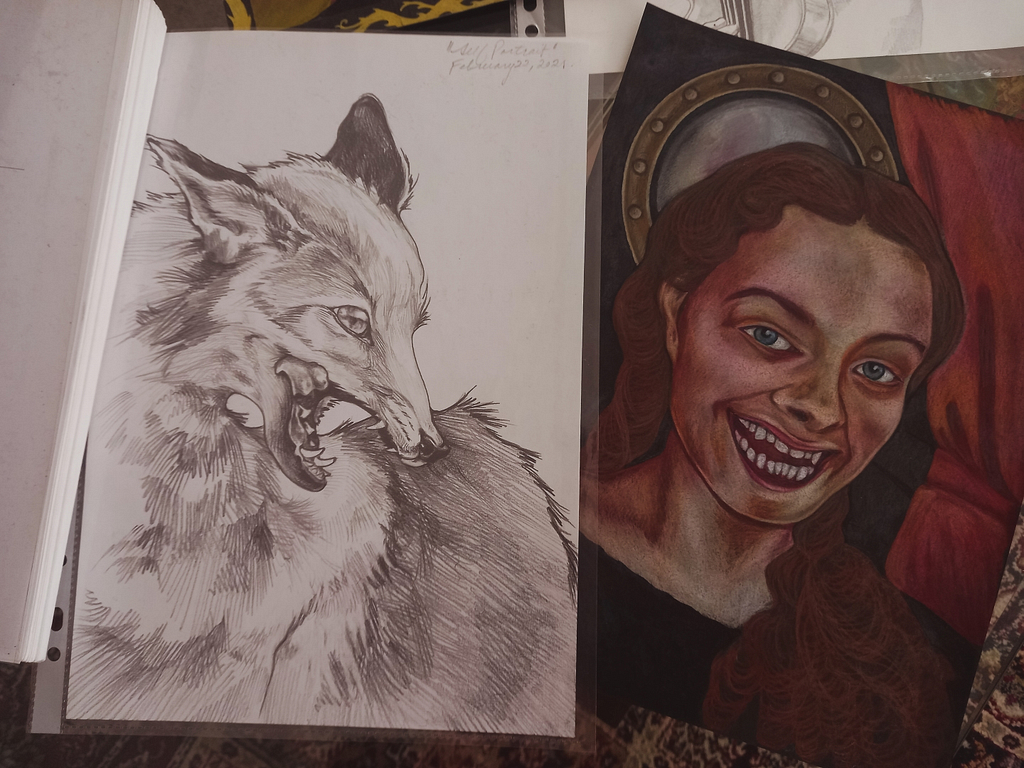
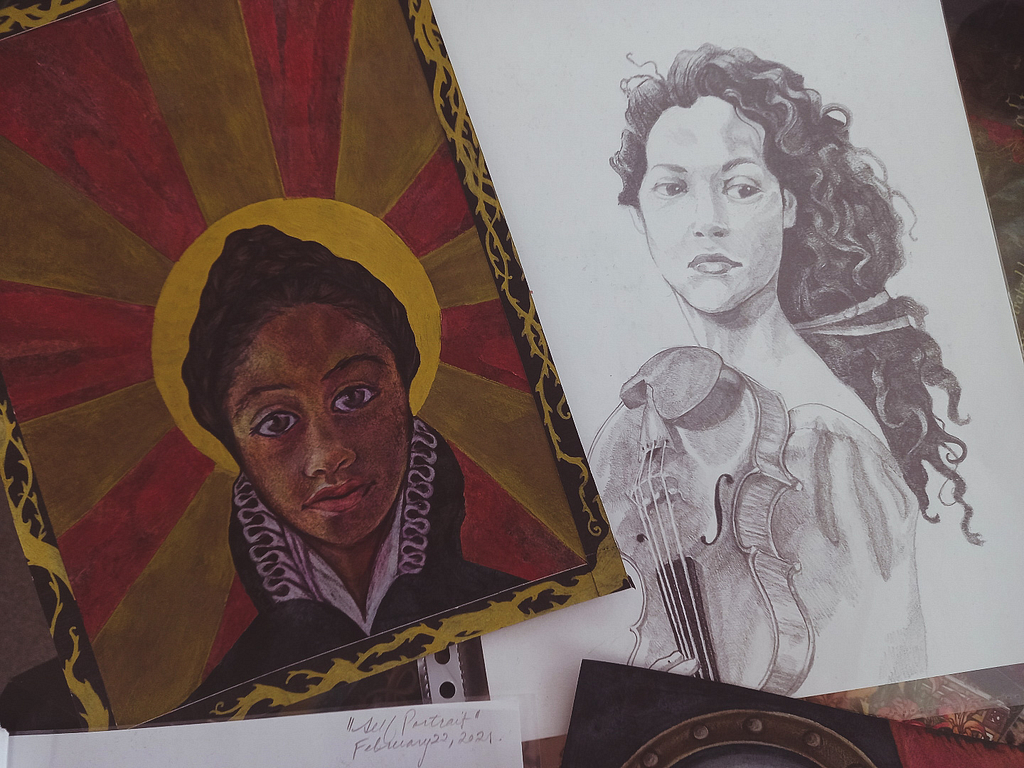
Found some old stuff!Self-portraits. 2021 & 2023?Experiments – derivative but useful!
What then if the drawings truly do become clothes. (Doesn’t that sound like magic!?) Is THAT talent? Or is it… propensity? Am I pretentious? Am I ‘talented’ or am I just a fucking handful? Who’s gonna hoover up the trail of threads and linen dust…
Maybe I have a talent for being a handful!
If I share process online, who is my audience?
I literally have no idea… but I HAVE always felt that documentaries about creative process, textbooks and lectures about the preparatory sketches and intentional symbolism of art, and old photographs of ‘artist in studio’ were the most magical Otherworldly thing on the planet.
I want to make the clothes I find in The Labyrinth. I want to come back along those corridors still wearing what I saw there. I want to help that stuff cross the divide – not just the clothes but the air quality, the poetry, the paintings, the furnishings, the music, the ideas.
It’s a stormy yellow-green coloured day today. Deeply blustry and misting with rain. I have a massive headache. But I want to build Otherworlds and I want to learn what it takes to do that.
The word ‘talent’ is a value judgement that has no objective significance at all. In my experience, ‘talent’ is a word used to diminish not only the hard work of others but also the reality of what it is to try something and kind of suck at it until you kind of suck a little less! Perhaps people accidentally sabotage themselves in using this word. If it’s always someone else that is so talented… What do we think their talent is? Is it the same as what they want it to be or thought it was? Have we ever seen what their work looked like not just when they started but at every point along the way? Good days? Bad days? Days where they had a dentist appointment and forgot to cover their paints so everything dried up? Days where they’ve LOVED baking until they realised they mis-measured their yeast …or the oven stopped working but the light stayed on? Days where the internet told them they were great but a favourite family member grimaced at their ideas?
What if you’re a 60 year old man who wants to learn to swim after years of being body shamed. What if you used to dream of talking to fish and you want to explore that again in the physical realm? I bet you could become an expert at loving water – not just a ‘talented’ swimmer.
Some people have opportunity, privilege, & support. Too many people don’t. Maybe most people have an incorrigible mix of these things. A pervasive paradox.
Culturally agreed upon standards for what looks like talent totally exist… but they are relative at best. Not very nice and of limited use. Picasso, Dante Gabriel Rossetti and other such humans dwell in the realm of talent and genius only because they deny entry to others. Sabotaging others with jealousy and aggression. Their work is good, just not THAT good. The idea of ‘inherent talent’ (to me) just screams ‘big fish, little pond’.
The concept of ‘perseverance’ exists but I think it gets misapplied to the point of losing a lot of what’s useful about it. Can you persevere at being scatter brained? Do we value that word internally or are we waiting for it to be applied externally?
Play TOTALLY exists. But if ‘play’ is ‘talent’, then can talent be ‘lost’? And if talent can be lost, then I think it must not be inherent. Which, to me, means you could be 96 years old and still decide to redevelop it if you chose… just because you can. That sounds more like curiosity and skill-building! Achievable things! Real magic.
If ‘talent’ exists, then everyone must have it. I think it’s down to the inherent tension and dissonance of asking yourself what yours are… and inventing them when necessary!
~ Saoirse.
P.S. It’s a total joke that I put my own work next to all these amazing true geniuses. I laugh at myself, not them!
Something that has gripped my imagination my entire life is the idea of ‘Building Other Worlds’. Importantly, I don’t mean only as ‘substance behind narrative genres’. World-building for a fantasy novel or for game play, though deeply interesting, is only one popular iteration of a much broader interdisciplinary creative drive to make and experience other worlds. What of Art? Architecture? Costume? Music? Theatre? Ecological experience? Folklore? What of symbolism or spacial awareness? Where do we get ideas for what our worlds look like and what tools do we use to build them?
I have been wanting to write about this for a long time but have been puzzled about where to start. Do I start by explaining some things about art history? About perspective, image composition, numerology? Do I dig into how tiered worlds in late medieval and renaissance literature make their way into contemporary visual language? What about modern art? What about tarot or oracle? Witchcraft, sewing, or poetry? Would tracing themes of port cities and their proximity to marshland or wetland habitats get the message across? What about folkloric recordings of Victorian vs. Medieval streets in Irish town centres!? Ultimately, I realised I’m going to have to start where I am and, if you wish, you can follow me down each corridor as and when I get there.
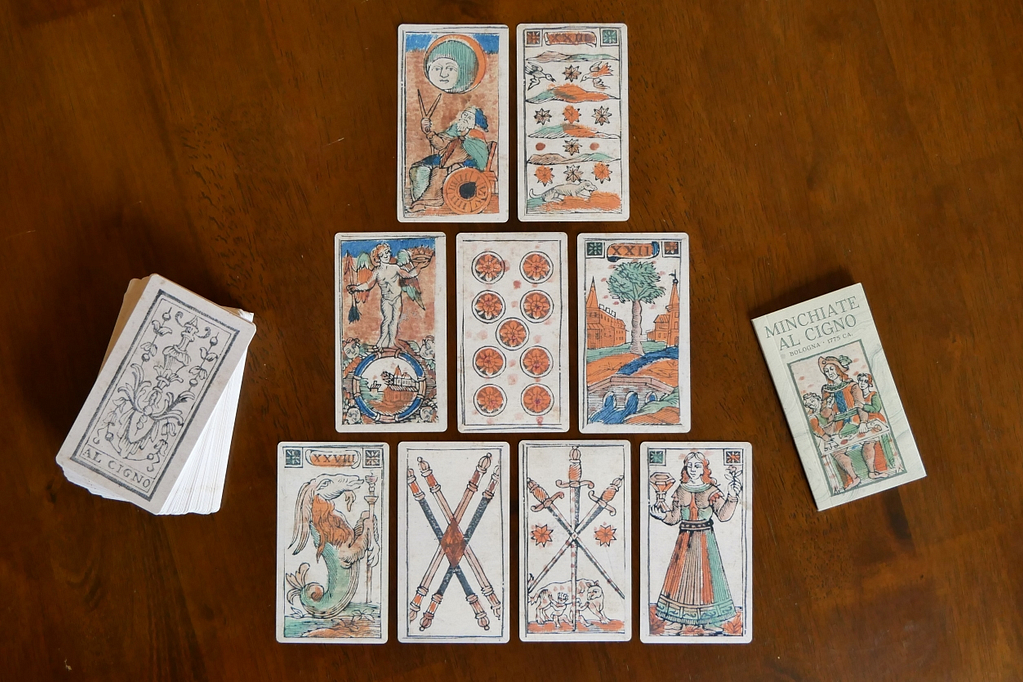
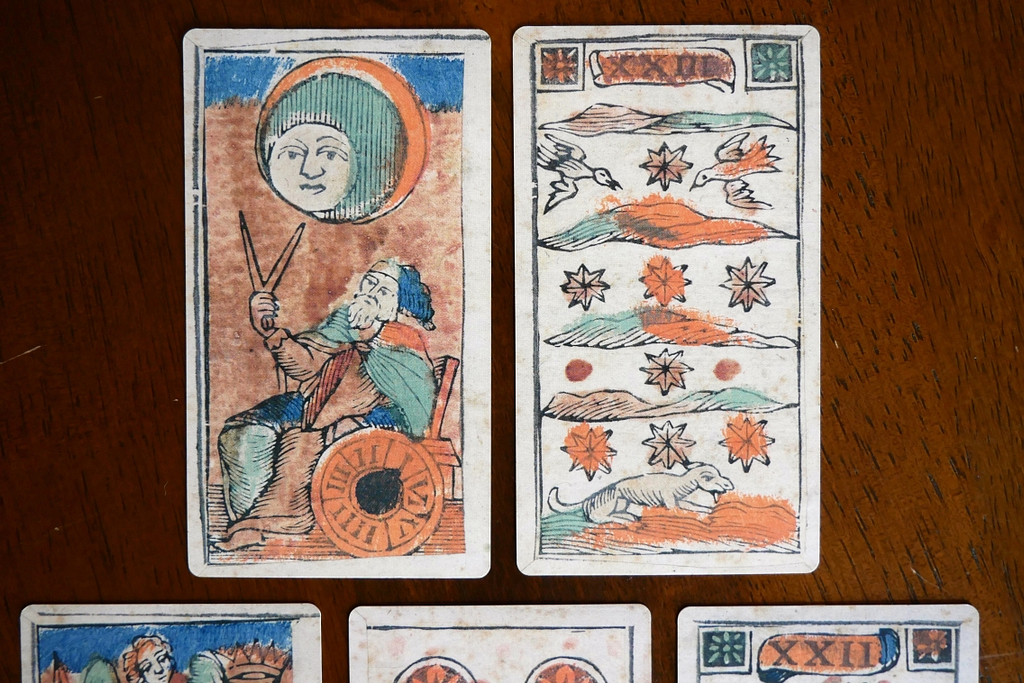
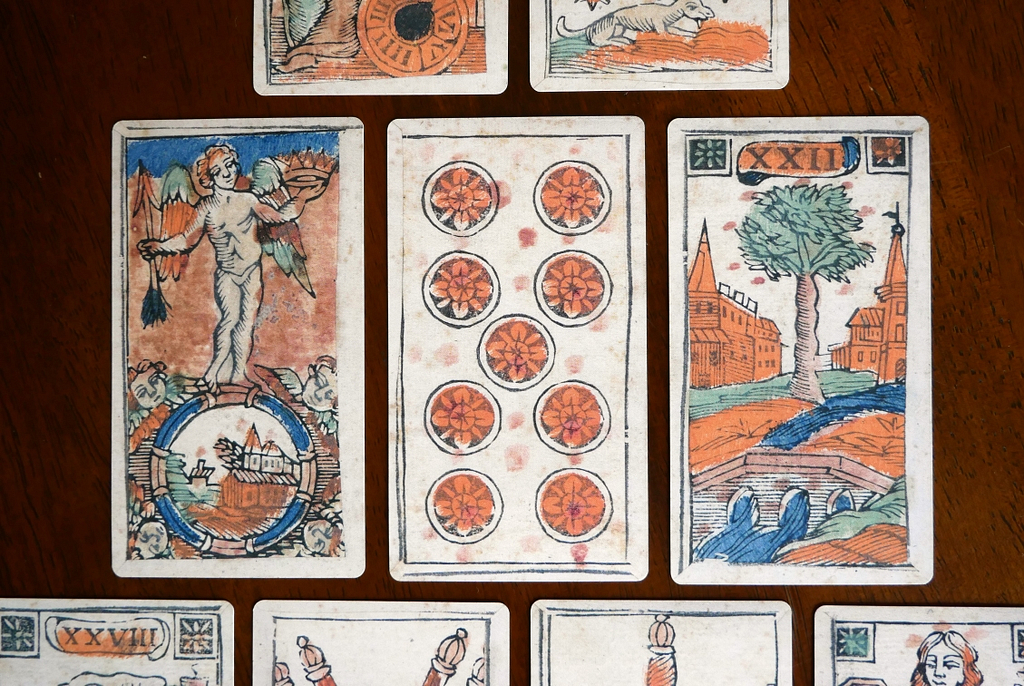
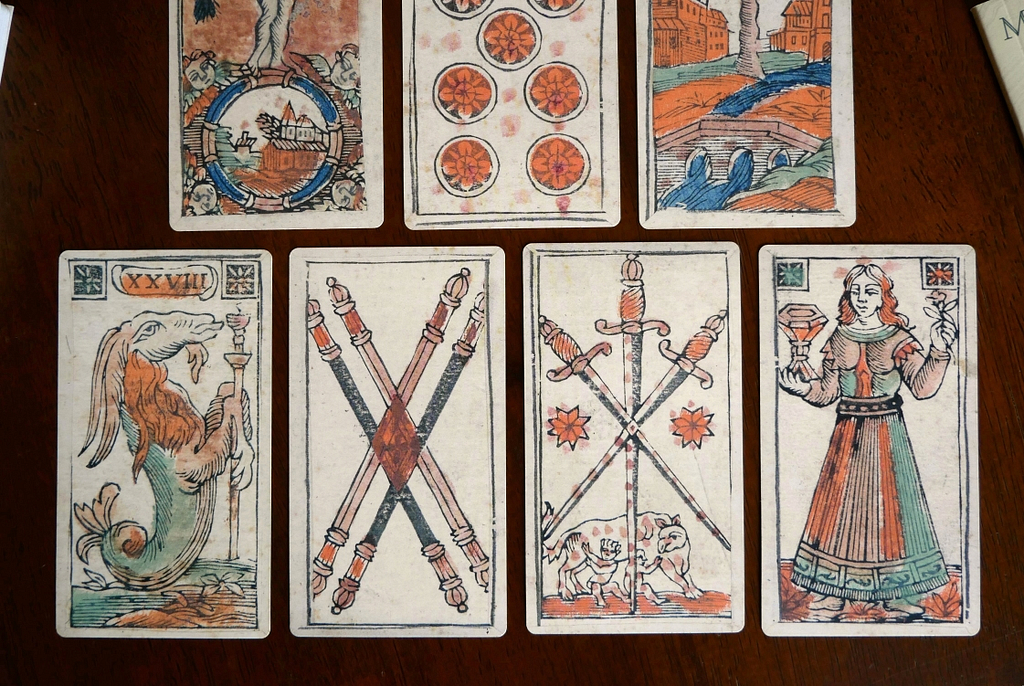
Here are some purposefully drawn 18th c. Minchiate cards illustrating how card visuals can help you construct doors to Otherworlds and populate them in turn with architecture, characters, and landscape …with pips for ‘scaffolding’!
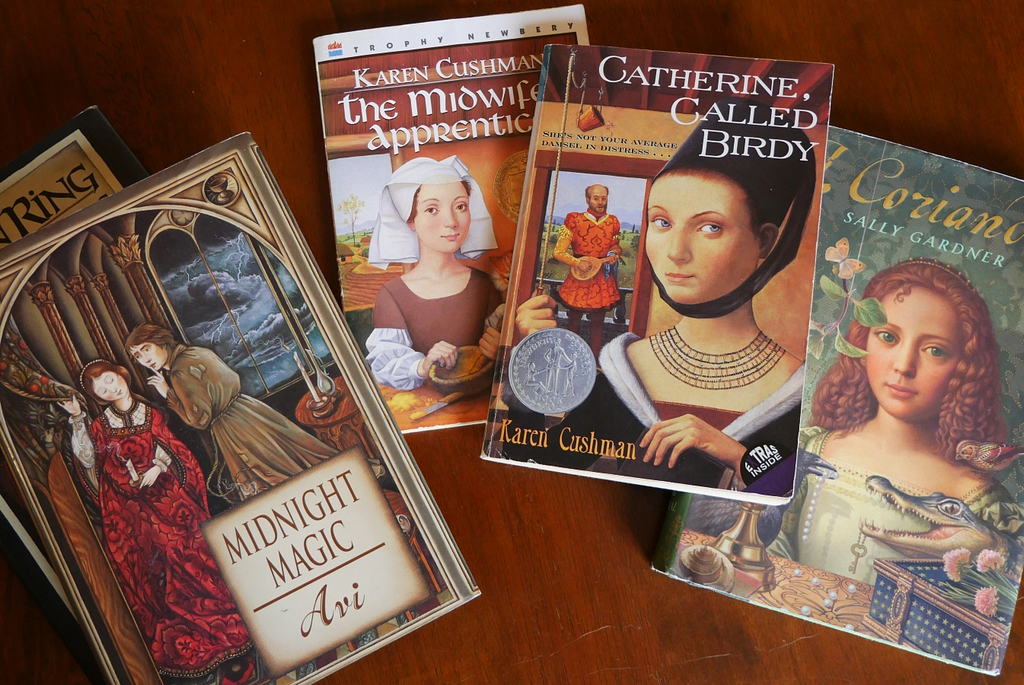
Recently, I revisited some books that were instrumental in helping me to identify myself when I was young. These follow very much in a similar vein to other favourites of mine such as Pish Posh, Said Hieronymus Bosch, The Books of Earthsea, The Chronicles of Prydain, The Hounds of the Mórrígan, or Jonathan Strange & Mr Norrell… and I took special care to obtain secondhand copies of the specific covers I grew up with as well.
I have yet to re-read The Raven Ring although I know I will love it as I can’t remember how many times I would have read it growing up.
There are five books in all (for now) – each of which features scenes relating to tarot, tarocchi, or otherwise emphasise attention to historical detail within their fictional plots.
* Midnight Magic by Avi (part of a series that didn’t exist yet when I was younger. I won’t talk about this one much because – as it turns out – it wasn’t as good as I remembered and it’s representation of tarot is tangential to the plot and seems fairly ignorant of what tarot is. I still LOVE the cover though!)
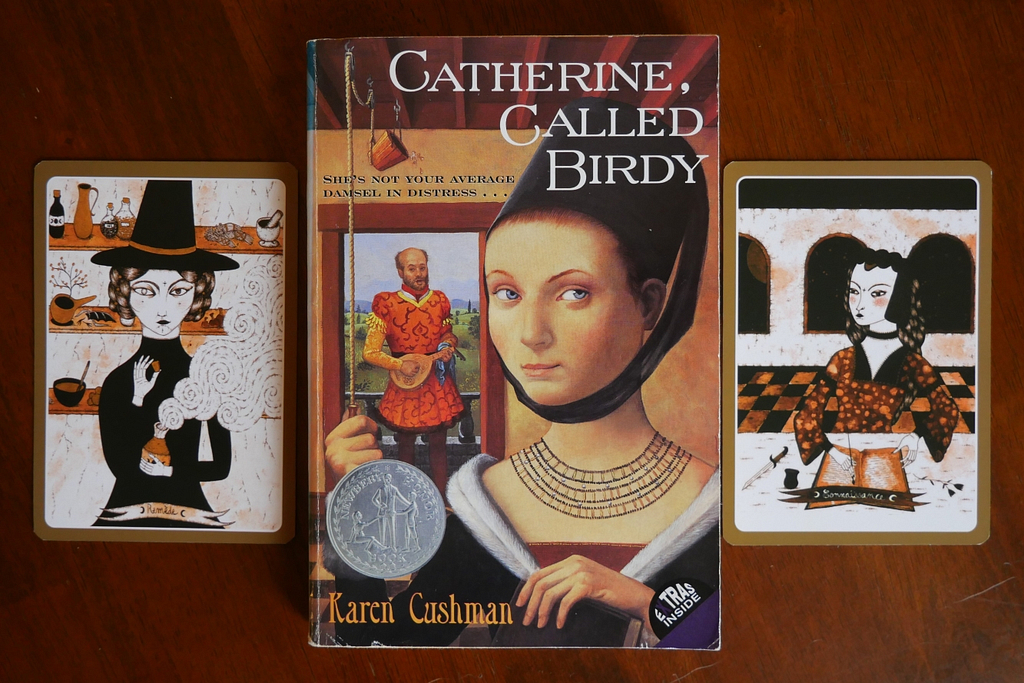
* Catherine, Called Birdy by Karen Cushman (no, I am not going to watch the new film abomina…I mean, adaptation of this beautiful wonderful highly intelligent book.)
* The Midwife’s Apprentice by Karen Cushman
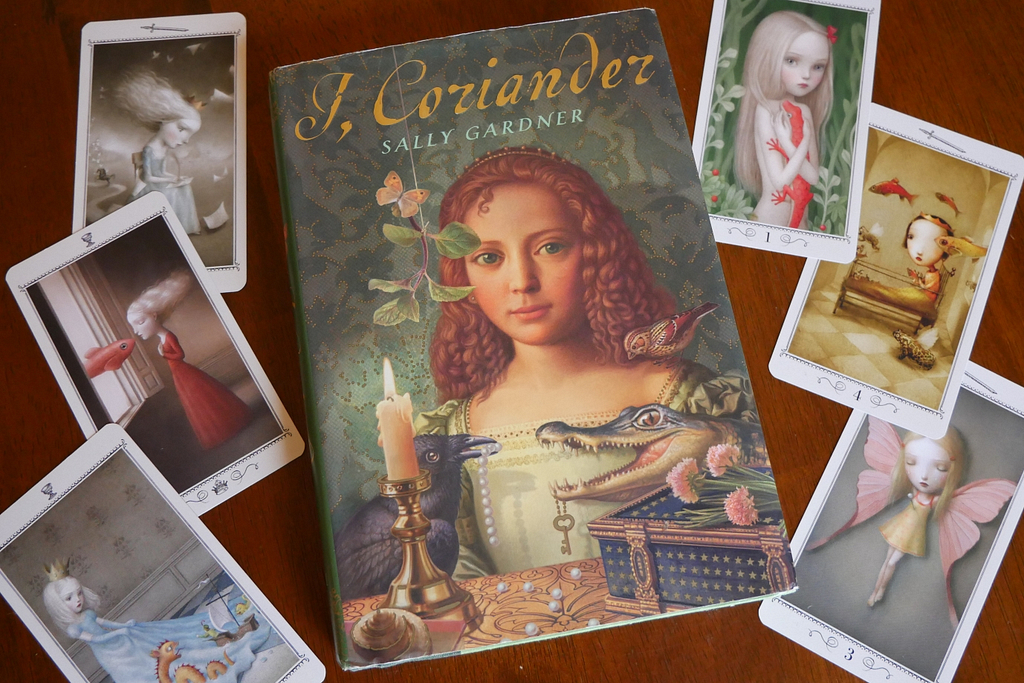
* I, Coriander by Sally Gardner
* The Raven Ring by Patricia C. Wrede (part of the Lyra series but I have not read any of the others.)
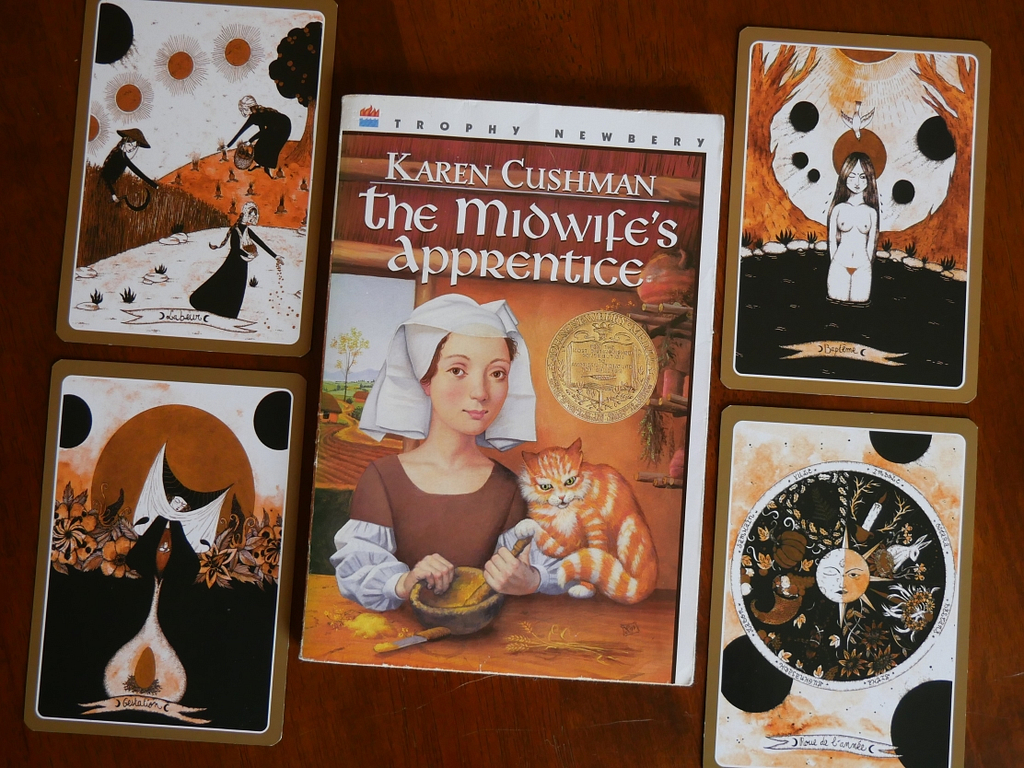
The Midwife’s Apprentice is pictured here with selected plot-relevant cards from Oracle Médiéval et Merveilleux by Gulliver l’Aventurière & Julien Miavril. (No spoilers!)
For one thing, all of these books (except Midnight Magic) were aimed, perhaps, at Young Adult readers generally socialised as feminine but at no point did they talk down to them. They were an excellent foray into how creative and narrative detail coexists wonderfully with good historical enquiry. There is an emphasis on trade and commerce. Some of these feature port cities or otherwise thriving commercial principalities and their conflicts with rural living and tradition. They discuss textiles as if their readers can and will care about how they affect plot. And they treat Otherworlds and/or magic with the same expectation: that readers are curious to know detail and will put in the imaginative effort. To me, this is how the imagination grows.
Catherine, Called Birdy is pictured here with two cards from the Oracle Médiéval et Merveilleux that are… relevant to the story. 😉
Artistically, a glance at these covers will possibly explain a thing or two about my own preference for facial portraiture and the art of the late middle ages and early renaissance. The time periods in the books vary a little more widely than the covers. I, Coriander, for example, is set mostly in Cromwellian England and the time period represented art historically on Catherine, Called Birdy is about 200 years later than the setting of the book (i.e. 15th century visuals [1] vs 1290-1291 book setting.) I was lucky enough, however, to have an aunt who overlooked things like that. For example, she focused instead on showing me how the play in perspective with the rope and bucket and the figural proportions on the cover of Catherine, Called Birdy were all little art historical jokes that the artist had borrowed from real historical painters. The implication was that if I was clever and curious, I could find them out …and I did!
Obviously there is so much to say even just about these books… so for now I will draw a few connections between I, Coriander and a few tarot and oracle decks that I have.
I, Coriander pictured here with selected cards from the Nicoletta Ceccoli Tarot. Once again, the penchant for strange emotionally intelligent portraiture!
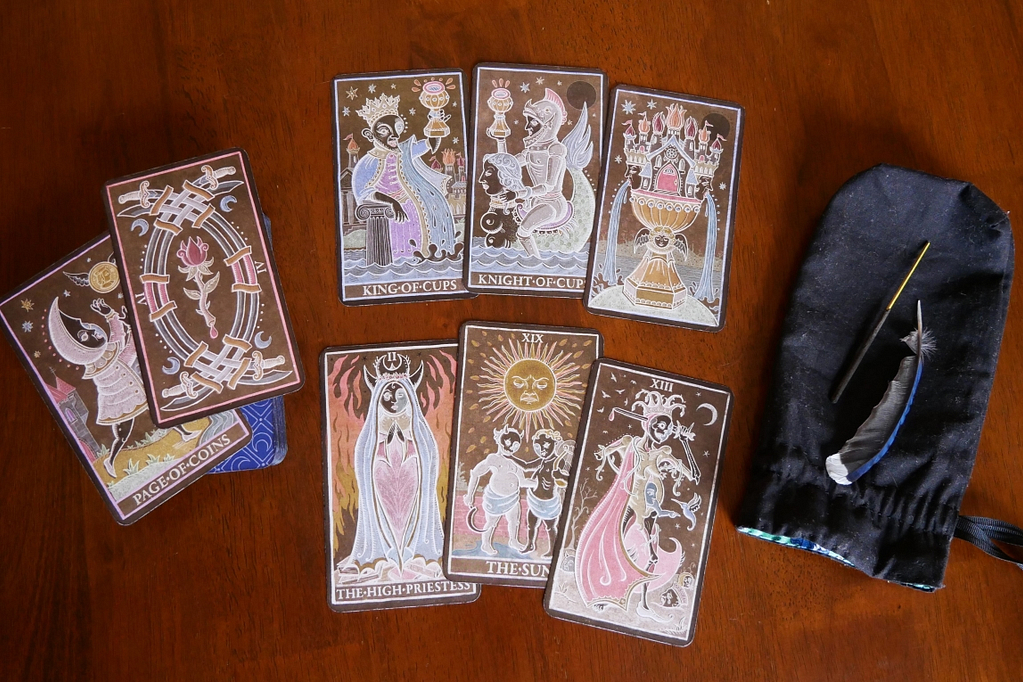
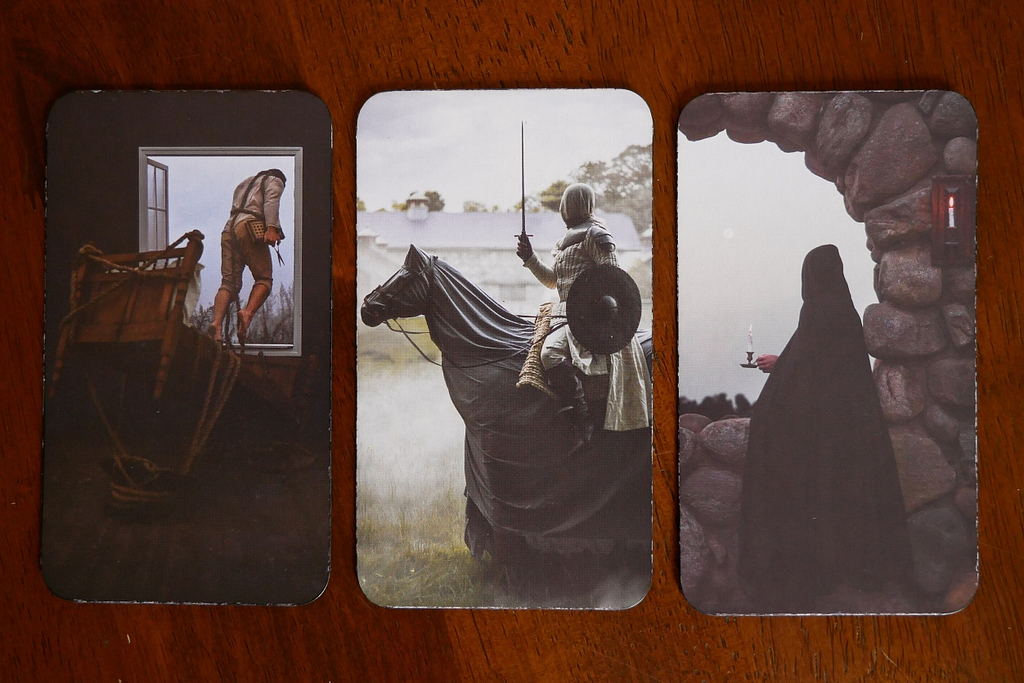
In the first place there is reference to a pair of wedding portraits in I, Coriander …a woman in the foreground holding an oak-leaf, a tiny hunting scene nearly hidden in the wooded middle-ground behind her, and a citadel in the distance. Her spouse is positioned in front of a fantastical city with a river or estuary intended (thematically) to mirror his connection with trade and the Thames. But in this city, there are mermaids and fantastical boats in the water among other things… I couldn’t help but picture certain cards from the Trionfi della Luna (paradoxical pictured below.) Or perhaps wander into a landscape just beyond the borders of such a city… might we find the world of the Somnia tarot there? People in old robes and linen shifts wandering in among the wetlands and sedge grasses gazing at the stars or riding silent sad horses?
Cards chosen from the Trionfi della Luna to mirror aspects of the story in I, Coriander… along with various imaginings of my own about the space we inhabit in the Somnia Tarot.
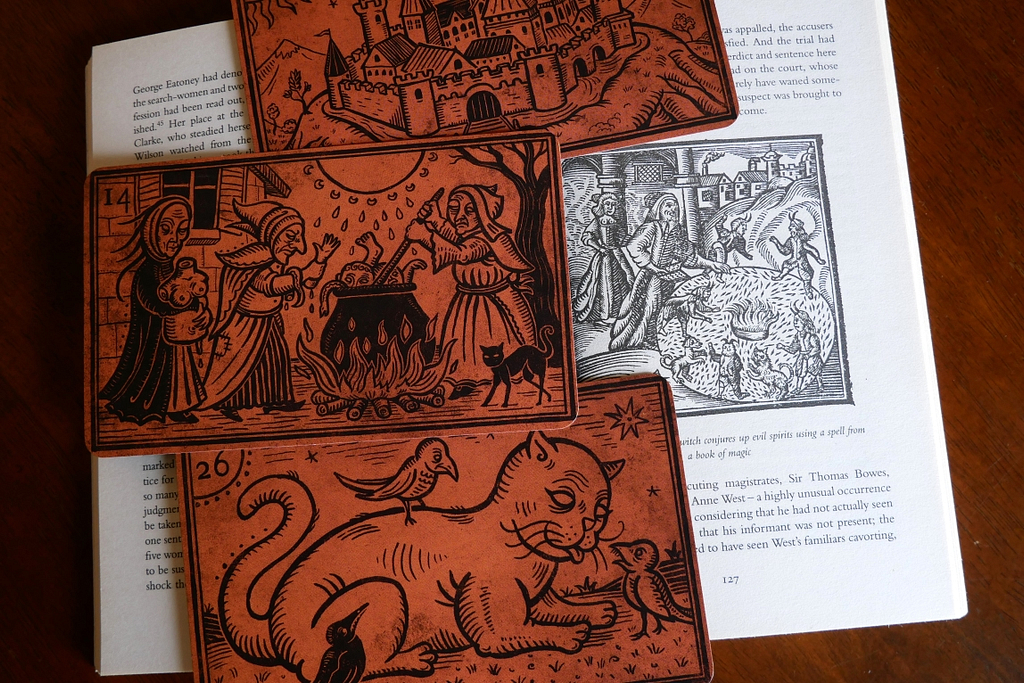
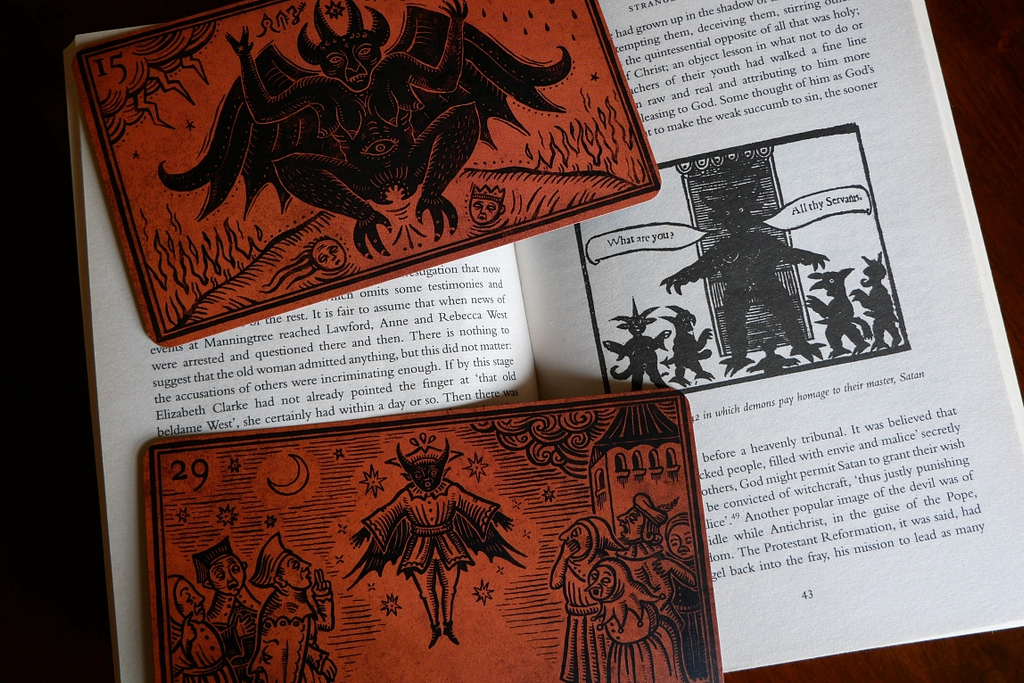
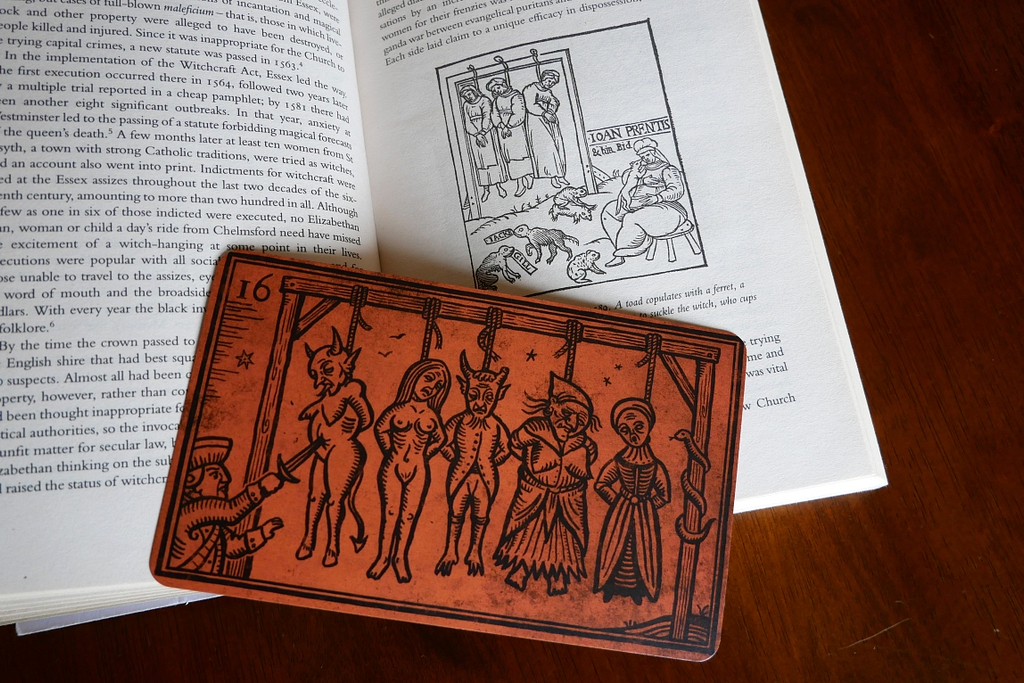
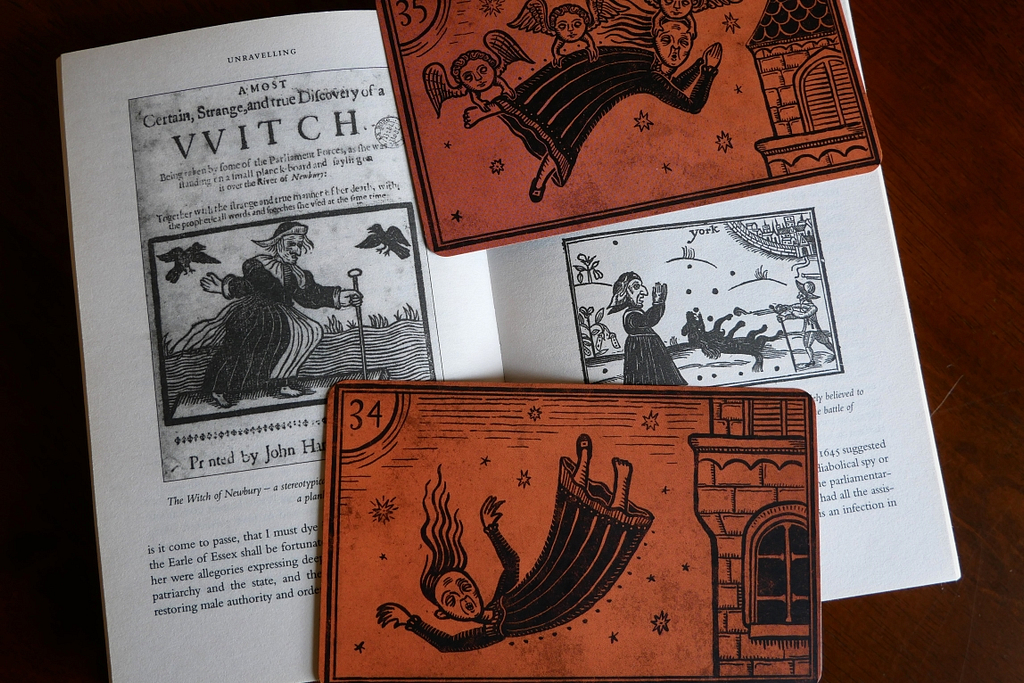
I should note I have also recently read Witchfinders by Malcolm Gaskill and am currently working my way through The Witch: A History of Fear from Ancient Times to the Present by Ronald Hutton… Of course, in so far as witch hunts in England overlapped with civil war tensions between Royalists and Parliamentarians (and occurred along Puritan vs ‘Popish’ lines), I, Coriander made for an excellent fictional backdrop! Also, I really enjoyed drawing cards from the Oracle of Black Enchantment (also by Deviant Moon Inc.) while reading Witchfinders as a visual processing exercise*.
Pages from Malcolm Gaskill’s Witchfinders featured here with various cards from the Oracle of Black Enchantment (Samhain edition.) Patrick Valenza’s art historical source material (at least in part) should be fairly evident…
Lastly, this emphasis on the detail of Otherworlds – their textiles, buildings, landscapes, emotional experiences, social relationships, flora and fauna etc. – is playing a huge role in my current artistic endeavours. I tend to see pip decks as decks full of concepts/characters (in the majors and courts) and their scaffolding and architectural surroundings (in the pips). Sometimes this visual architecture is metaphorical and sometimes it is fairly literal. It depends on the reading. But it’s also helping me to tease out what it feels like to think of tarot decks in this way and what that might mean for creating a tarot deck of my own. Furthermore, I have been rebuilding a former world of mine and have recently begun sewing some clothing that I envisioned there…
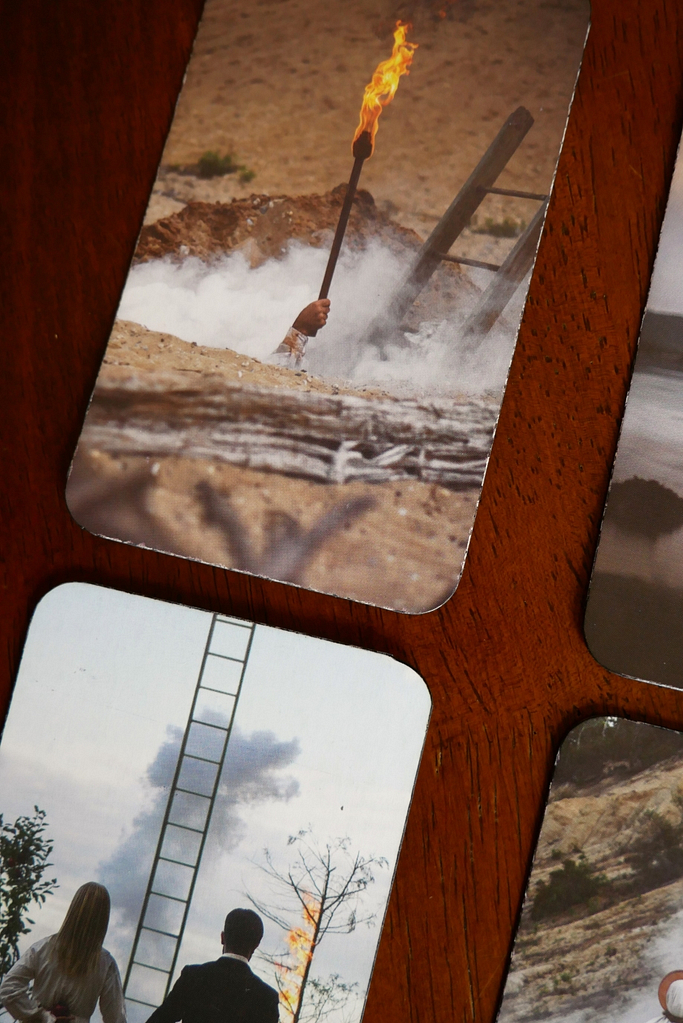
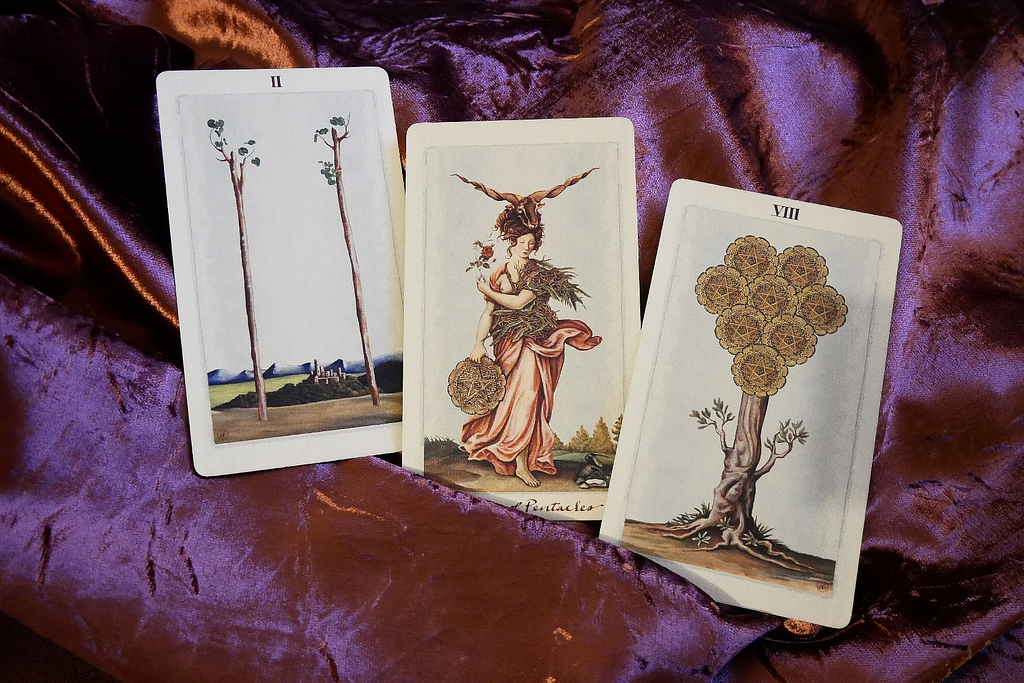
And, of COURSE, the Pagan Otherworlds Tarot… featured here over (deadstock) cognac red crushed velvet ::drool::
Perhaps the act of sewing my own clothes is really the process of bringing fairy clothes over the divide? It would explain the time traveler vibes, don’t you think? 😉
So… this post has mostly been about my own personal explorations and impressions. I plan to return soon, however, with some better grounded and CITED analytical material about art history and technique.
Sincerely,
Saoirse.
* Please note! Literally any deck will aid in visual processing or reinforcing thematic content for literally any book. There is no need to acquire any deck not already within your means or comfort zone. Decks/products/material items are mentioned here for illustrative purposes only! It’s PRAXIS that matters.
** All decks featured here of my own volition and arising from my own use of them. I have neither been invited nor commissioned to do so and I have no affiliation with any of their creators. The TdL (paradoxical) was a private gift from a friend. All others were purchased by me.
[1] See images by artists like Petrus Christus (especially ‘Portrait of a Young Girl’, 1460s) and his contemporaries. The cover here has a very Burgundian look with a single truncated hennin among other distinguishing features…